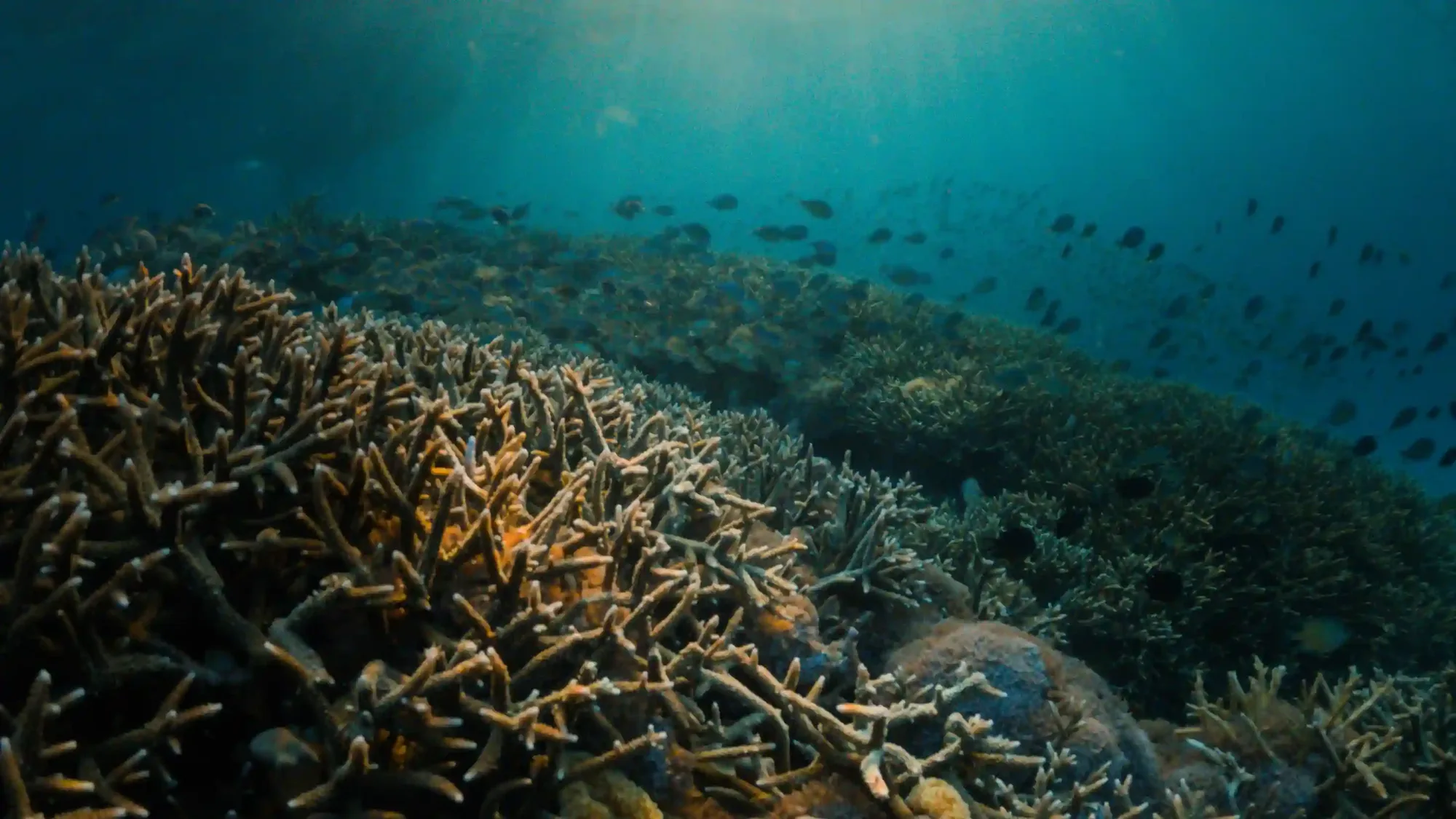
Climate Pressure on Komodo National Park
Answer: Global and regional data confirm severe marine heat stress and a fourth global coral bleaching event affecting Indonesian reefs, including the wider region around Komodo, between 2023 and 2025.1,2 Komodo-specific, peer-reviewed field measurements for this exact period are limited in public sources; where that gap exists, this page says so rather than inventing local numbers.
Reviewed 26 August 2026. The research behind “Climate Pressure on Komodo National Park” rests on Komodo Luxury’s published rates, each cited inline at the point it is used.
What has actually been confirmed about reef heat stress near Komodo?
NOAA confirmed the fourth global mass coral bleaching event in April 2024, driven by anomalously high sea-surface temperatures beginning in early 2023.1 NOAA’s synthesis of satellite data found that from early 2023 to mid-2025, bleaching-level heat stress affected roughly 84% of the world’s coral reef area, including the tropical western Pacific and eastern Indian Ocean basins Indonesia belongs to.1 The International Coral Reef Initiative separately reported the same 84% figure for reefs affected between January 2023 and March 2025, explicitly naming Indonesia among impacted countries.2 Komodo lies within this affected regional belt, though neither source breaks the figure down reef-by-reef for Komodo specifically.
Is there a Komodo-specific bleaching study for this period?
We could not locate a 2023–2026 peer-reviewed field study with Komodo National Park as its primary site quantifying local bleaching percentage, nor a public BRIN or KLHK report isolating Komodo reef data for this period. This may exist in Indonesian-language technical or internal park monitoring reports not surfaced in our research; until we can cite one directly, treat any specific “X% of Komodo’s coral bleached” figure circulating online as unverified rather than as this site’s claim.
What about Komodo dragons and rising temperatures?
Broader Indonesian climate projections (from national meteorological and research bodies, and IPCC-aligned regional modelling) point to warmer temperatures and shifting rainfall seasonality across eastern Indonesia, which would logically affect savanna vegetation, water availability, and prey species for Komodo dragons over time.3 No 2023–2026 peer-reviewed study has publicly quantified a climate-driven decline in Komodo dragon numbers specifically during those years, so this should be understood as a projected future risk consistent with regional climate science, not an already-measured local decline.
Why does this page draw such a careful line between “confirmed” and “projected”?
Because conflating global data with unverified local specifics is exactly the kind of error this site’s research methodology is built to avoid. It would be easy to write a more dramatic-sounding page by attaching a specific bleaching percentage or dragon-population-decline figure to Komodo directly; it would also be inventing a number that no cited source actually supports. The honest version is less punchy but more useful to anyone trying to understand the real state of evidence.
What does this mean for someone planning a Komodo trip?
Practically, little changes in the short term for a standard visit — reef conditions at popular snorkel and dive sites remain a live, monitored concern rather than a reason to avoid the park, and rangers and dive operators are generally the best source for current, site-specific reef health at the time of your visit. It does mean broader regional marine heat stress is a real, documented pressure on the reef systems Komodo’s marine park depends on, and it is reasonable to expect ongoing monitoring and potential future management responses as more localized data becomes available.
What role does El Nino play in this data?
Both NOAA and ICRI attribute the 2023-2025 global bleaching event to a combination of long-term anthropogenic warming and short-term climate variability, particularly a strong El Nino phase that pushed sea-surface temperatures higher across large parts of the tropics during that window.1,2 This matters for interpretation: a strong El Nino year can produce more acute heat stress than the underlying warming trend alone would predict, meaning single-year bleaching severity doesn’t map linearly onto long-term climate trajectories, even though both are real and connected phenomena.
Where can you find updated information as new research emerges?
NOAA Coral Reef Watch and the International Coral Reef Initiative both publish ongoing monitoring updates as new satellite and field data become available, and are more reliable primary sources than aggregated travel content for tracking how this situation develops. We will update this page’s citations if a Komodo-specific field study becomes publicly available, consistent with our methodology for updating regulation- and science-linked pages.
How changing seas affect reefs, fish and dragons
If you come for coral, the first thing you will notice is that conditions still vary a lot from site to site. Sheltered snorkelling spots around northern and central Komodo can look healthy in one bay and more stressed in the next, depending on depth, currents and how exposed the reef is to warm surface water.
Tatawa Besar is a good example of why local detail matters. Parts of the reef here remain colourful with busy fish life, while some shallow patches are more fragile, with occasional broken or pale coral heads. Strong currents can bring cooler water that helps, but they can also make the area harder to access safely on rough or very windy days.
Large marine life is still one of Komodo’s main draws. You may see reef sharks, turtles, rays and big schools of pelagic fish on a single outing, then notice very little activity somewhere else a short time later. These shifts can be natural, but warmer seas and changing currents are expected to push some species to use different routes or depths over time.
What you choose to do in the water matters. Good operators brief guests not to stand on coral, not to chase turtles or manta rays and to keep a sensible distance from feeding or resting animals. A calm snorkeller who floats above the reef without touching anything has a far smaller impact than someone who kicks down wildly for close-up photos.
On land, Komodo dragons are not directly affected by what happens to the coral, but the overall climate trend is the same system. Hotter, drier years can influence the vegetation that supports their prey. For now, you can still expect to see dragons on ranger-led walks, while park staff and researchers watch for longer-term changes to habitat and prey availability.
Frequently asked questions
Has Komodo’s coral reef been confirmed to be bleaching?
Komodo sits within a broader Indonesian reef region confirmed by NOAA and ICRI to have experienced severe bleaching-level heat stress from 2023 to 2025; a Komodo-specific quantified figure was not found in our research.
Are Komodo dragons currently declining due to climate change?
No 2023-2026 peer-reviewed study has quantified this. Regional climate projections suggest future habitat risk, but this is projected risk, not a measured current decline.
What is the source for the global bleaching claim?
NOAA’s official confirmation of the fourth global coral bleaching event and the International Coral Reef Initiative’s April 2025 report, both cited below.
How is snorkelling at Komodo being affected by warmer seas?
You will still find coral gardens and lively fish life, but conditions are more uneven than they were a decade ago. Some shallow patches show stress or storm damage, while nearby slopes look healthier. Expect more day-to-day variation in visibility and currents, and follow your crew’s advice on which sites are best for that week’s conditions.
Can I still see large marine animals around Komodo’s reefs?
Yes, many visitors still encounter manta rays, reef sharks, turtles and large schools of fish, especially at current-swept channels and cleaning stations. Sightings are never guaranteed, and changing temperatures and currents are likely to adjust where and when animals feed or migrate, so trip plans often stay flexible to follow recent reports from local crews.
Is Tatawa Besar still a good place for coral-viewing trips?
Tatawa Besar is still included on many itineraries because parts of the reef remain colourful with busy fish life, especially where currents bring cooler, nutrient-rich water. You may also see areas that look more worn or pale, particularly in the shallows. Conditions change year by year, so your guide will usually choose the side of the island that looks healthiest at the time.
Where is the best place to see Komodo dragons?
Komodo Island and Rinca Island are the primary locations within Komodo National Park to see Komodo dragons in their natural habitat. Both islands offer guided treks led by mandatory park rangers, ensuring a safe and informative encounter. While Komodo Island is larger, Rinca is often cited for its higher chance of sightings due to its more open terrain. Visitors typically stay in Labuan Bajo or on liveaboard boats.
How does this compare to what other Komodo-focused sites publish?
Some travel content addressing this topic attaches specific, precise-sounding local statistics to Komodo without a traceable source, which reads as more authoritative but is not more accurate. This page deliberately trades that appearance of precision for an honest account of what global and regional science actually confirms versus what remains projected, consistent with how this site treats sourcing questions generally.
What would change this page’s conclusions?
A published, peer-reviewed field study specifically measuring bleaching extent or dragon population trends within Komodo National Park’s boundary during 2023-2026 would meaningfully update the specificity of this page’s claims. Until such a study is publicly available and citable, the regional and global data summarized here represents the most defensible evidence base for a Komodo-focused audience.
Read our full sourcing approach
To see current reef conditions for yourself on a guided trip, see the Komodo boat tour page.
Related Komodo Luxury pages: Komodo liveaboard · Fleet and vessels.
Sumber: [1] NOAA, “NOAA Confirms 4th Global Coral Bleaching Event,” 2024. [2] International Coral Reef Initiative (ICRI), 4th Global Bleaching Event update, April 2025. [3] IUCN World Heritage Outlook, Komodo National Park conservation assessment, on climate-linked habitat pressure. Figures on reef and species trends inside Komodo National Park specifically remain limited; where no site-specific study exists, this page says so rather than extrapolating.