In short
The best time to visit Labuan Bajo and Komodo National Park is during the dry season, April through October, when seas are calmer and dive visibility is best; July–September is the busiest and driest stretch, while April–May and September–October offer similar conditions with fewer crowds. The wet season (November–March) brings lower prices and greener scenery but rougher, less predictable boat crossings.
The best time to visit Labuan Bajo and Komodo National Park is during the dry season, April through October, when seas are calmer and dive visibility is best; July–September is the busiest and driest stretch, while April–May and September–October offer similar conditions with fewer crowds. The wet season (November–March) brings lower prices and greener scenery but rougher, less predictable boat crossings.

Last updated: August 2026. For real-time and forecast conditions ahead of a specific trip, see BMKG's Labuan Bajo forecast.
What Are the Dry and Rainy Seasons in Labuan Bajo?
Flores sits in a monsoonal climate zone. The dry season runs roughly April to October, driven by drier air moving from the Australian continent; the wet season runs roughly November to March, driven by moisture-laden winds from Asia. Within the dry season, rainfall is minimal and seas around Komodo, Rinca, and Padar are generally calm enough for comfortable sailing on most days. Within the wet season, expect intermittent heavy downpours (often short, tropical-style bursts rather than all-day rain), and rougher water on the open crossings between islands, particularly in December and January.
These are climate averages, not guarantees — a dry-season trip can still hit an unlucky squall, and a January trip can have several clear, calm days. Plan around the pattern, not a promise.
Month-by-Month: What Changes
| Months | Season | Seas & Diving | Crowds & Price |
|---|---|---|---|
| April–May | Early dry / shoulder | Improving visibility, seas calming down | Moderate crowds, good value |
| June | Dry | Good visibility; cooler air, can feel breezy on the water | Building toward peak |
| July–August | Peak dry | Best overall diving conditions; strong currents at some sites (e.g. Batu Bolong) tied to tidal cycles, not season | Peak crowds and prices — school holidays in Indonesia and Europe/Australia overlap here |
| September | Late dry | Still excellent, often clearer than August in places | High but easing after mid-month |
| October | Shoulder | Good conditions, transitional | Thinner crowds, competitive pricing |
| November | Early wet | Increasingly unpredictable seas | Lower prices, some operators reduce schedules |
| December–February | Peak wet | Roughest crossings of the year; heaviest rainfall | Lowest prices; December has a local holiday-season bump around Christmas/New Year |
| March | Late wet | Starting to settle | Low season pricing persists |
Best Time for Diving and Snorkeling
Dive visibility in Komodo generally peaks in the dry season, roughly June through September, when plankton bloom and runoff are both lower. Manta ray sightings at sites like Manta Point are seasonal but occur across much of the year; local dive operators track sightings month to month rather than promising a fixed “manta season,” since manta movement is driven by plankton availability and current patterns that shift year to year. Strong currents at sites such as Castle Rock and Batu Bolong are a function of the tidal cycle on any given day, not the calendar month — a certified guide will always check tide tables before diving these sites regardless of season. See the full diving certification and planning guide for what level of experience each site requires.

Best Time to See Komodo Dragons
Dragons are visible year-round near the ranger stations on both Rinca and Komodo Island, since rangers know where resident animals tend to rest. Activity does shift seasonally: dragons are generally more active and visible during cooler, overcast conditions and in the early morning before the heat of the day, which is true in both wet and dry season. Nesting season (roughly July–August) and hatching (typically several months later) can occasionally offer distinct viewing opportunities near known nesting mounds, though rangers do not guarantee specific behavior on any given visit.
What August Actually Delivers, and What It Costs
August delivers the most reliable weather window of the year — calm seas, clear skies, strong dive visibility — which is exactly why it is also the most expensive and most crowded month. Boats book out weeks or months ahead, popular liveaboard cabins sell first, and Padar’s viewpoint can feel busy at sunrise. If you specifically want peak conditions and don’t mind planning early and paying peak rates, August is a strong choice. If you’d rather have a quieter deck and lower prices with only marginally less predictable weather, shift to late September, October, or April.
When Is the Worst Time to Visit?
January and February combine the year’s heaviest rainfall with its roughest seas, and some smaller boats reduce or cancel departures on the worst days. It is not an impossible time to visit — Labuan Bajo town itself and short, protected-water excursions remain workable — but it is the least predictable window for a multi-day liveaboard or an open-water dive itinerary. If wet-season travel is your only option, book a larger, more stable vessel and build slack into your itinerary in case a day’s sailing gets postponed for safety.
How Far Ahead Should You Book?
For July–September travel, aim to lock in your boat 3–6 months ahead, especially for a private cabin on a well-reviewed phinisi. Shoulder months (April–May, October) are comfortably bookable 4–8 weeks out. Wet season trips can often be arranged with just a few weeks’ notice. Our 7-day itinerary guide and Komodo Luxury’s sailing trip packages show current route options by season.
How Weather Affects the Padar Island Hike Specifically
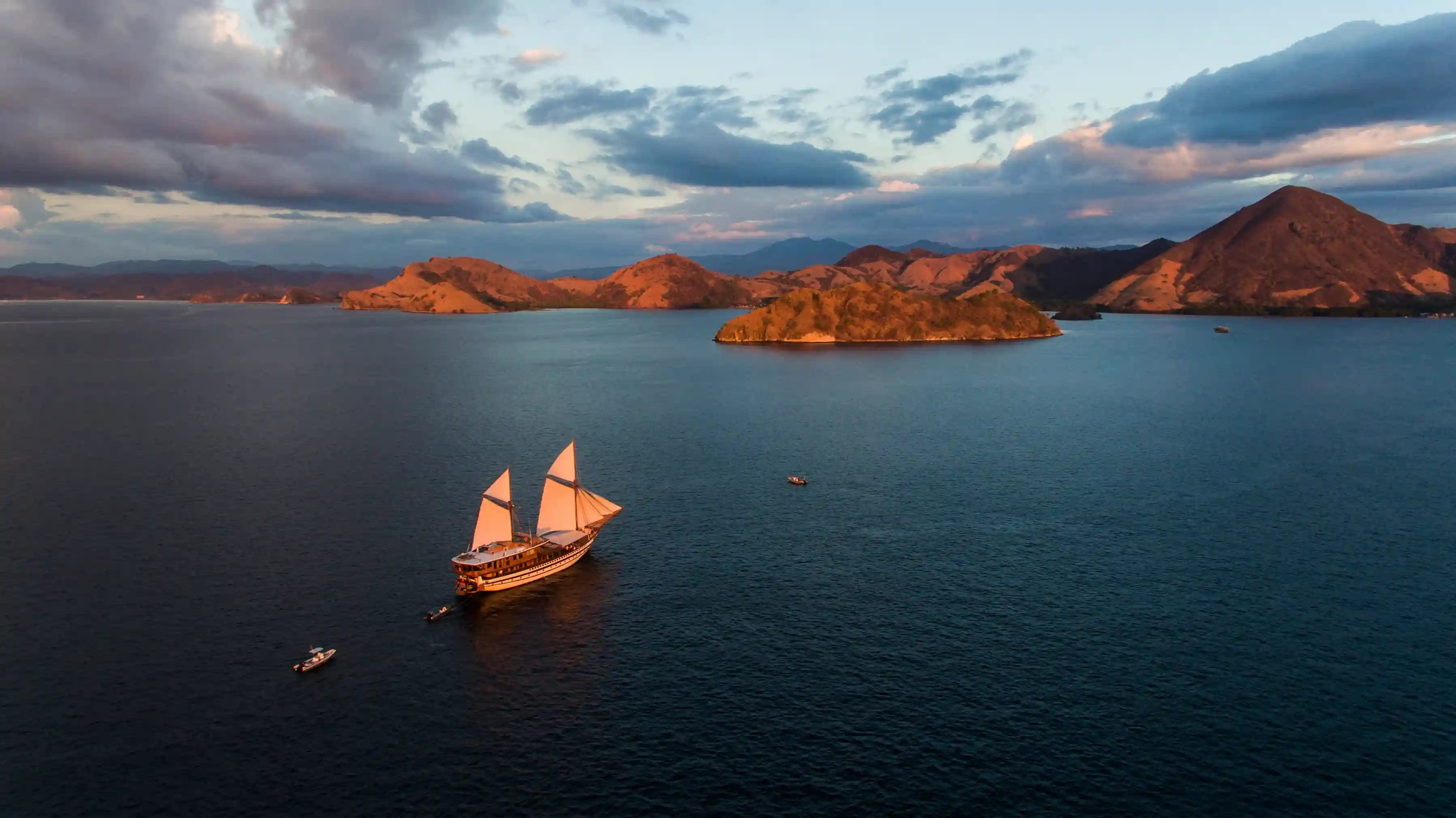
Padar’s viewpoint trail has zero shade across its entire length, which makes the hike far more about temperature and cloud cover than about rain. In the dry season, the trail is dusty, the stone steps can be loose underfoot in places, and by mid-morning direct sun makes the climb genuinely uncomfortable — sunrise departures aren’t a photography cliché here, they’re a practical necessity. In the wet season, overcast mornings can actually make the climb more pleasant temperature-wise, with the trade-off being a real chance of getting caught in a downpour partway up, and looser, more slippery footing on the steepest sections after rain. Either season, sturdy footwear and an early start matter more than the specific month.
How Weather Affects Boat Comfort, Not Just Safety
Sea state doesn’t just determine whether a crossing is safe — it determines whether it’s comfortable. Dry season crossings, particularly June through September, tend to be smooth enough that seasickness is rarely an issue even for sensitive travelers. Wet season crossings, especially December and January, can produce noticeably more roll and pitch even on days considered “safe to sail,” which is worth knowing if you’re prone to motion sickness and considering a wet-season liveaboard. Bringing motion sickness medication as a precaution makes more sense for a November–March booking than for a July booking, regardless of how calm any specific forecast looks.
Regional Weather Context: Why Flores Differs From Bali
Bali and Flores sit in the same general monsoonal system but aren’t identical — Flores, being further east and closer to Australia’s dry air masses, tends to have a more pronounced, sharply defined dry season than Bali does. This is one reason a “great time to visit Bali” doesn’t automatically translate to a “great time to visit Komodo” — travelers combining both destinations on one trip should plan primarily around the Komodo leg’s seasonal pattern if diving or boat conditions matter more to them than land-based Bali activities.
Timing Around Indonesian and International Holidays
Beyond the raw dry/wet season split, specific holiday windows add their own demand spikes independent of weather. Indonesian school holidays (mid-year around June–July, and year-end around December) bring domestic travelers into the mix alongside international visitors chasing dry-season weather, compounding demand at exactly the times conditions are also most favorable. Christmas and New Year, despite sitting in the wet season, see a distinct local price and crowd bump around Labuan Bajo town itself, even if boat conditions on any given day remain wet-season variable. Independence Day (mid-August) sits inside the peak dry season and adds a further, smaller domestic travel bump on top of already-high international demand.
How Local Guides Decide Which Day to Trek
Beyond broad seasonal advice, park rangers and boat captains make day-of decisions based on more immediate signals — overnight rainfall, current wind direction, and short-range forecasts — that a monthly seasonal guide can’t capture. This is why an operator might reroute a specific day’s plan even in the “best” month, and why treating any seasonal guide, including this one, as a general planning tool rather than a guaranteed forecast for a specific date is the more accurate way to use this information.
Shoulder Season in Practice: What Repeat Visitors Say
Travelers who’ve visited Komodo in both peak and shoulder months consistently describe the shoulder-season trade-off as favorable once experienced firsthand — marginally more variable weather, but meaningfully thinner crowds at Padar’s viewpoint and more relaxed pacing on shared boats with fewer total guests aboard. This lived-experience feedback is part of why April–May and September–October consistently get recommended by people who’ve actually compared seasons directly, rather than just reading a generic “dry season is best” summary.
Putting It All Together: A Simple Decision Framework
If you can only optimize for one thing, optimize for your own schedule flexibility first, then weigh the trade-offs above. Fixed-date travelers with no flexibility should simply book their available window and plan around whatever conditions arise, since worrying about a season you can’t change adds nothing useful. Flexible travelers genuinely benefit from shifting even a couple of weeks toward the shoulder months, where the gap between “good enough weather” and “actually crowded” tends to be widest in the traveler’s favor.
Final Word on Trusting Seasonal Averages
Every recommendation on this page reflects typical, historical seasonal patterns for this region — useful for planning, not a guarantee for any single week. Build a small amount of schedule flexibility into any Komodo trip regardless of which month you choose, since even the most reliable dry-season week can occasionally surprise you, and even a wet-season trip can turn out calmer than expected.

What This Guide Doesn’t Cover
This page focuses specifically on weather, sea conditions, diving, and crowd/price patterns. For dragon-behavior-specific seasonal patterns (mating, nesting, hatching), see our dedicated best season to see Komodo dragons guide, which narrows in on that one question in more depth than fits naturally here.
What to Check Immediately Before Departure Regardless of Season
Whatever month you’ve booked, check a short-range marine forecast for Labuan Bajo in the two or three days before your boat departs, ask your operator directly whether recent conditions have caused any route adjustments, and keep your own expectations flexible around the exact stop order. This last-mile check matters more than the broad seasonal guidance above once your actual departure date is close, since conditions on any specific week can vary meaningfully from the general monthly pattern.
Whales and Nearby Viewpoints: Timing Your Labuan Bajo Side Trips
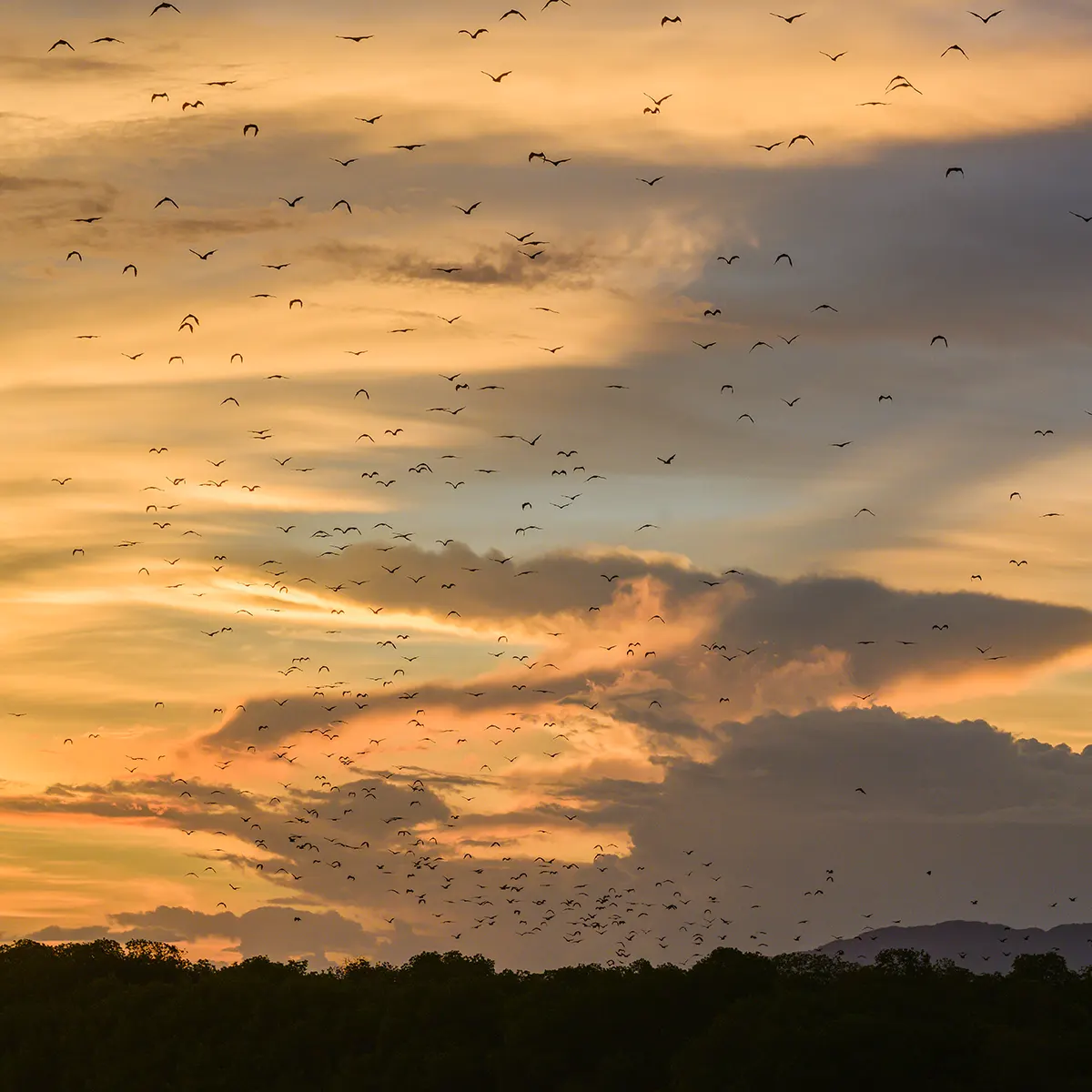
If you want whales as well as dragons, plan your trip for the shoulder of the dry season. Around Flores, passing whales are most often spotted from roughly August to October, when seas are calmer, visibility is good, and more boats run routes where sightings are realistic.
You will not find guaranteed whale-watching cruises every day, but many Komodo itineraries in this period keep an eye out in deeper channels. Ask your boat operator in advance which routes they usually take in late dry season and how often they see large marine life there.
Timing Padar, Batu Cermin, and Sylvia Hill
Pulau Padar is best between April and October, when the trail is dry and skies are clearer. Aim to hike at sunrise or late afternoon to avoid midday heat. In the wet months the stone steps can be slick, and low cloud can hide the classic viewpoint.
Goa Batu Cermin near Labuan Bajo is all about light. Go in the morning in the dry season, when the sun is high enough for beams to reach inside the cave and reflect off the rock walls. Heavy rain can make access muddier and the cave more humid, though it is still visitable.
Sylvia Hill viewpoint is a short, open climb, so temperature and haze matter more than rain. Clear, less humid days from April to June and September to October give wider views of the islands. Go for sunrise or just before sunset and avoid the very windiest wet-season days when sea conditions are rougher.
Planning around peak-season crowds and small-group departures
July and August bring the clearest skies and the highest prices, but they also bring the tightest squeeze on space. The park-wide quota of 1,000 visitors per day, split into three scheduled sessions, often fills in peak weeks, so you may find preferred time slots already gone. If you are set on August, you should understand how daily visitor numbers and boat capacity behave during the busiest August period before fixing dates and routes. Many travellers now choose small boats that limit passenger numbers. These trips cost more per person but feel calmer at the jetties and on deck, and are less rushed on the trails. You can see examples of small-group August departures designed to reduce crowding both on board and at the main Komodo landing points. If you prefer a looser schedule, April to June and September to October usually offer more breathing room.
Updated: August 29, 2026 · Originally published: May 12, 2026