
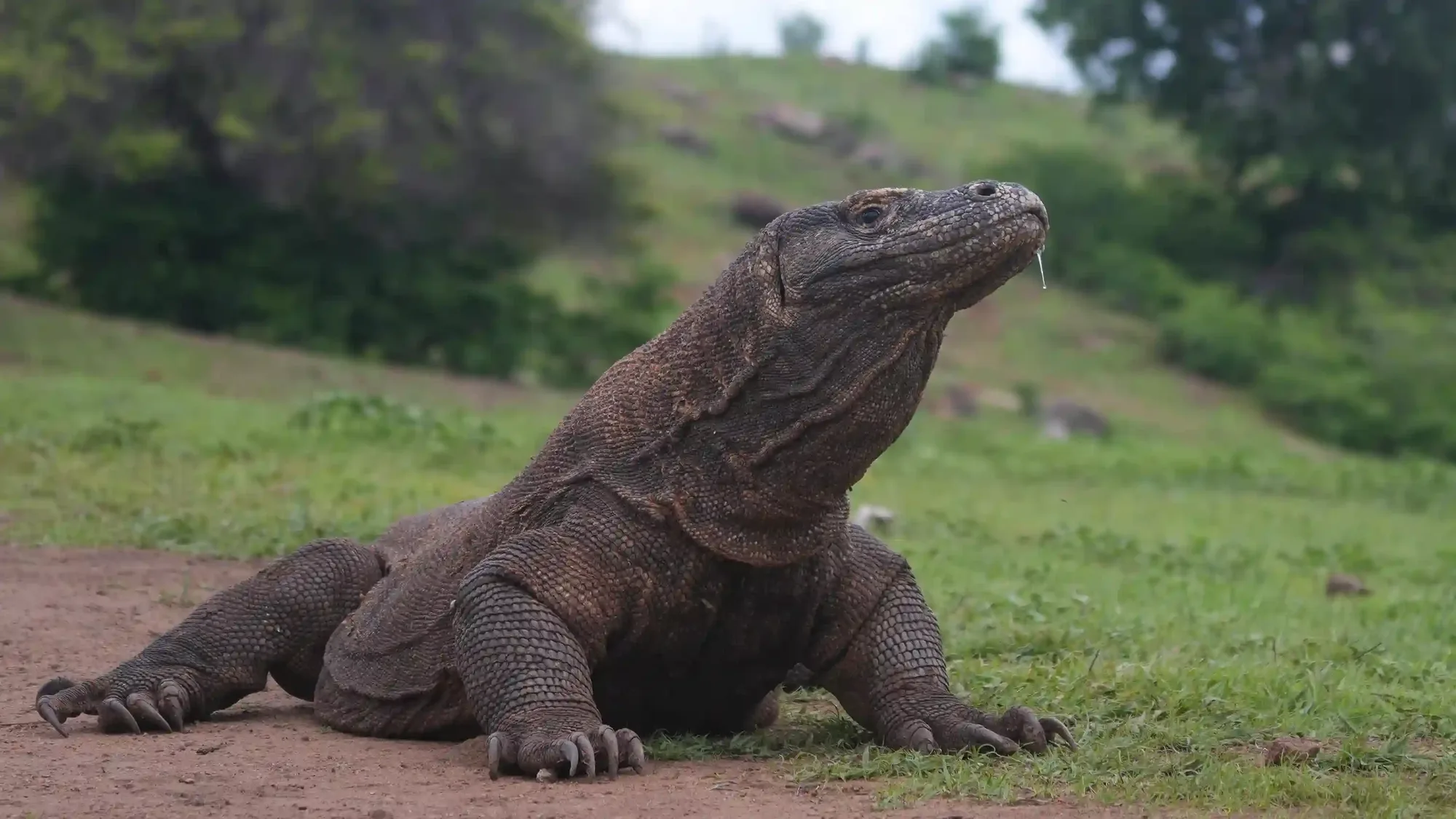
Komodo dragons are visible year-round near ranger stations on Rinca and Komodo Island, but sighting conditions shift seasonally: dragons are generally more active in cooler, overcast weather and early morning, mating behavior is typically observed around May–August, and nesting/egg-laying follows in the months after, with hatching typically occurring several months later. None of this is guaranteed on any single visit — rangers report patterns, not fixed schedules.
Last updated: August 2026. For general trip-timing beyond dragon activity — seas, diving, crowds — see our full best time to visit guide.
When Are Dragons Most Active and Visible?
Komodo dragons are cold-blooded and regulate activity around temperature: they tend to be more visibly active during the cooler parts of the day (early morning, late afternoon) and on overcast days, and more likely to be resting in shade during peak midday heat. This pattern holds across both wet and dry season, which is why virtually every guided trek is scheduled for the morning regardless of month — it’s less about the calendar and more about the hour.
Mating Season: What’s Typically Observed
Mating behavior among Komodo dragons is typically associated with the middle of the year, broadly May through August, based on patterns rangers and researchers have documented over time. During this window, males can display more territorial and active behavior. This is a general seasonal tendency rather than a scheduled event visitors can plan a trip around with certainty — wild animal behavior on any specific day isn’t predictable to that degree.
Nesting and Egg-Laying
Following the mating period, females dig nesting mounds and lay eggs, a process generally observed in the months after mating season. Nesting mounds are sometimes visible near ranger stations, and rangers may point them out during a guided walk, but respectful distance is maintained at all times — visitors do not approach nests directly, both for safety and to avoid disturbing the animal.
Hatching Season
Komodo dragon eggs have a long incubation period, with hatching typically occurring several months after laying. Newly hatched dragons are vulnerable to predation (including from adult dragons) and typically head for tree cover soon after hatching, spending significant early life in trees before returning to the ground as they grow — a survival strategy that makes hatchling sightings genuinely rare for visitors, even during the general hatching window.
Does Season Actually Affect Your Odds of Seeing a Dragon?
Not dramatically. Resident dragons are commonly seen near ranger stations on both Rinca and Komodo Island across most months of the year, since rangers know where individual animals tend to rest and can guide groups accordingly. Season affects the *type* of behavior you might observe (resting vs. more active movement, territorial displays during mating months) more than it affects whether you’ll see a dragon at all on a standard guided visit.
Rinca or Komodo Island for the Best Sighting Experience?
Both islands offer genuine, ranger-guided access to wild dragons, with slightly different trail lengths and travel times from Labuan Bajo. See our dedicated Rinca vs Komodo Island comparison for sighting-odds and experience specifics between the two.
How Rangers Track Individual Dragons
Rangers on both Rinca and Komodo Island develop detailed familiarity with resident animals near their stations over years of daily observation — recognizing individual dragons by size, markings, and typical resting spots. This local knowledge, more than any seasonal calendar, is the real reason guided visits reliably produce sightings across most of the year; rangers can generally lead a group toward where a known animal is likely to be resting on any given day, regardless of month.
Feeding Behavior and What Visitors Might Observe
Komodo dragons are opportunistic hunters and scavengers with a notably slow metabolism, meaning long stretches of inactivity between feeding events are entirely normal, not a sign of a quiet season. Visitors sometimes assume a resting, apparently inactive dragon reflects poor timing, when in fact this is simply typical species behavior across every month of the year. Active hunting or feeding sightings are comparatively rare and largely a matter of chance rather than something tied predictably to season.
Why Rangers Discourage Chasing a “Best Season” for Behavior
Because wild dragon behavior on any single day depends on individual animal condition, recent feeding, weather, and chance encounter timing far more than the broad seasonal patterns described above, rangers and experienced guides generally discourage travelers from over-optimizing trip timing purely around dragon behavior. A well-guided visit in any month offers a strong chance of a genuine, safe sighting near the ranger stations — the seasonal patterns in this guide are useful context, not a booking requirement.
Setting Realistic Expectations Before You Go
The single most useful mindset shift for visitors focused on dragon behavior specifically: treat a strong sighting of a resting or slowly moving dragon near a ranger station as the realistic, common outcome, and treat any more dramatic behavior (active hunting, visible territorial displays) as a genuine bonus rather than the expected baseline. This framing, more accurate to how these guided visits actually unfold across the year, tends to produce a far more satisfying experience than arriving with documentary-footage-level expectations for a single guided walk.
How This Differs From Captive or Zoo Dragon Encounters
Wild dragons on Rinca and Komodo Island behave differently from captive animals in zoos elsewhere in the world, where feeding schedules and enclosure design create more predictable, staged viewing conditions. A wild, ranger-guided encounter trades that predictability for authenticity — genuinely wild animal behavior in their natural habitat, on their own schedule, not a performance timed for visitor convenience.
Summary: Plan Around the Trip, Not Just the Dragons
Since dragon sightings are reasonably consistent across most months, it’s more practical to choose your travel dates based on the broader trip factors covered in our general best-time guide — sea conditions, diving visibility, crowds, and price — and treat any specific dragon-behavior pattern described here as an interesting bonus rather than the deciding factor in when you book.
One Last Thought
The chance to walk among genuinely wild dragons at all, regardless of exact behavior observed, is itself the rare part of this experience — keep that in view alongside whatever specific seasonal pattern brought you to this page.
Wrapping Up
Season adds texture to the experience, not a guarantee of any particular behavior — book based on the broader trip factors, and treat any specific dragon activity you observe as a genuine bonus.
Frequently Asked Questions
What is the best season to see Komodo dragons mating?
Mating behavior is typically associated with roughly May through August, based on documented seasonal patterns, though wild animal behavior on any specific visit isn’t guaranteed.
Can you see baby Komodo dragons?
Rarely — hatchlings typically head for tree cover soon after hatching and spend significant early life off the ground, making sightings genuinely uncommon even during the general hatching window.
Are dragons harder to see in the rainy season?
Not necessarily — dragons are often more active in cooler, overcast conditions, which the rainy season provides. Resident dragons near ranger stations are commonly visible across most months.
To time a visit around a specific interest, or to book a ranger-guided trek, see Komodo Luxury’s boat tour packages or message WhatsApp +62 811-3810-8110.