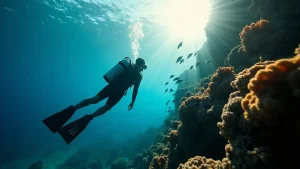
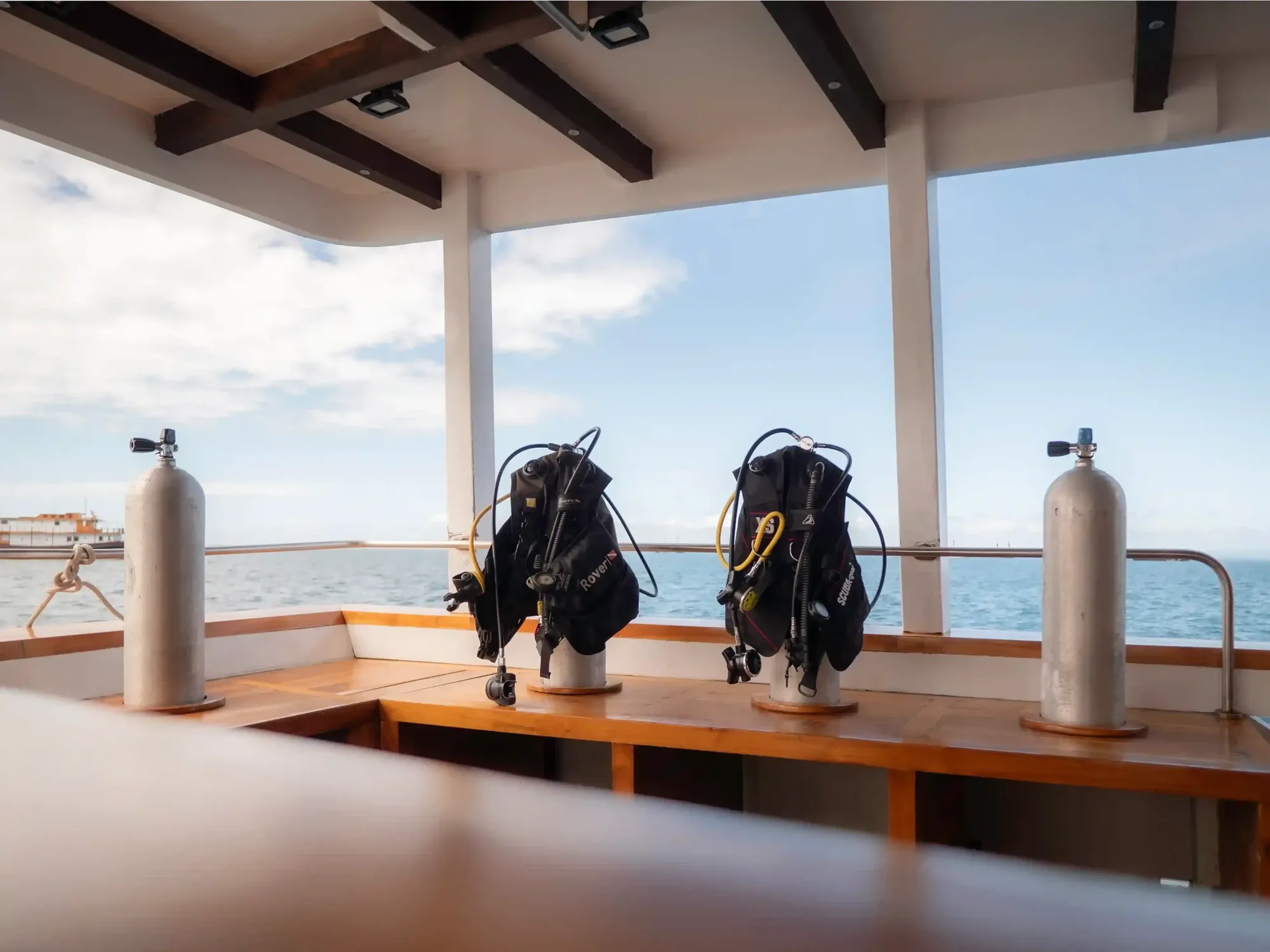
Komodo’s dive sites range from beginner-friendly reef dives to strong-current, advanced-only sites like Batu Bolong and Castle Rock, so certification requirements vary by site rather than being uniform across the park. Open Water divers can access many sites with a guide; the strongest-current sites are generally recommended only for Advanced Open Water divers or above with confirmed drift-diving experience.
Last updated: August 2026. For which specific sites suit which certification level and month-by-month conditions, see our top dive sites guide and Best Time to Visit Labuan Bajo & Komodo.
What Certification Level Do You Need for Komodo?
There isn’t one blanket requirement — it depends on the specific site and current conditions on the day. Open Water certification is the minimum to dive at all in Komodo, and is sufficient for many of the calmer reef sites. Advanced Open Water certification (or equivalent experience) is generally recommended, and sometimes required by dive operators, for stronger-current sites like Batu Bolong and Castle Rock, where drift-diving skills and comfort in moving water matter more than at a sheltered reef.
Is Komodo a Good Place to Get Certified for the First Time?
It can work for an Open Water course at calmer, sheltered sites, but Komodo is not generally considered an ideal first-certification destination compared to calmer, more controlled dive locations, precisely because many of its most famous sites involve current conditions that exceed beginner comfort levels. Divers who want to get certified specifically to then dive Komodo’s signature current sites should plan for a follow-up Advanced course or supervised experience dives before attempting sites like Castle Rock.
What Drift-Diving Experience Actually Means Here
Several of Komodo’s best-known sites are current-driven “drift dives,” where divers move with the current rather than swimming against it, often using reef hooks to hold position at cleaning stations like Manta Point. This style of diving requires specific comfort and technique — buoyancy control in moving water, understanding down-currents, and diving as a tight group with a guide — that a standard Open Water course doesn’t fully cover. If you haven’t drift-dived before, say so directly when booking so your dive operator can plan appropriate sites and briefings.
Do You Need Nitrox or Other Specialty Certifications?
Not required, but Nitrox certification is commonly offered and used in Komodo for divers doing multiple dives per day over several days, since it can extend no-decompression limits on repetitive dives. It’s a genuinely useful add-on for a multi-day Komodo dive trip rather than a strict necessity, and most dive operators in Labuan Bajo offer Nitrox fills and certification courses on-site.
What to Confirm Before Booking a Dive Trip
- Your current certification level and total logged dives, stated honestly to your dive operator.
- Whether the specific sites on your itinerary require Advanced certification or drift-diving experience.
- Whether you’ll need to rent equipment, and whether your operator can confirm sizing/availability in advance.
- Whether Nitrox is available and worth adding for a multi-day dive schedule.
Full gear packing guidance (what’s typically provided vs what to bring) is in our packing guide.
Snorkeling as an Alternative to Diving
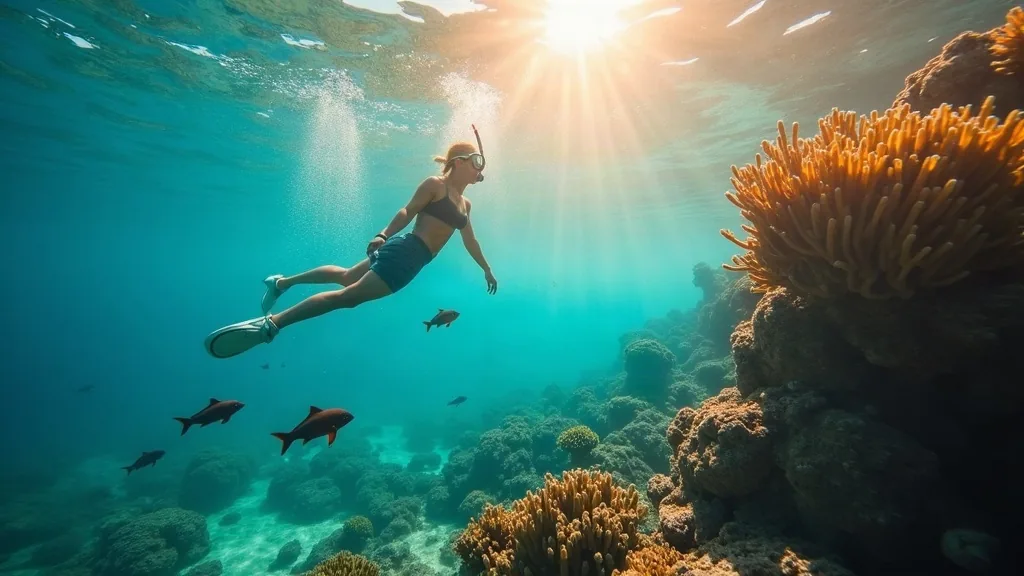
Not every Komodo highlight requires diving or certification — Pink Beach, Kelor Island, and even Manta Point are snorkelable for confident swimmers without any dive training. See our snorkeling trip guide if certification requirements make diving impractical for your trip but you still want to see the marine life.
How Dive Guides Assess Your Readiness
Reputable dive operators in Labuan Bajo typically ask about your certification level, total logged dives, most recent dive date, and specific experience (drift diving, deep diving, night diving) before confirming which sites you’ll join for a given day. This isn’t bureaucratic gatekeeping — it’s a genuine safety practice, since a diver without appropriate current experience attempting a site like Castle Rock can put themselves and their group at real risk. Answering these questions honestly, rather than overstating experience, is squarely in your own interest.
Refresher Dives if You’re Certified But Out of Practice
If you’re certified but haven’t dived in a year or more, most dive shops in Labuan Bajo offer a supervised refresher dive at a calm site before joining a group heading to a current-driven location. This is worth doing rather than skipping if your last dive was a long time ago — buoyancy control and equipment familiarity fade faster than certification status suggests, and a refresher is a low-cost way to confirm you’re genuinely ready for stronger-current sites.
Physical Fitness Considerations for Komodo Diving
Current-driven diving demands more physical exertion than calm-water diving — managing position against moving water, potential surface swims if separated from the group, and generally longer days on the water. Divers with cardiovascular conditions or limited swimming fitness should discuss Komodo’s specific site conditions honestly with their dive operator and physician before booking a trip focused on the park’s strongest-current sites.
Choosing a Dive Operator Based on Certification Standards
A reputable dive operator in Labuan Bajo will ask for proof of certification (a physical or digital card) before booking you onto a dive itinerary, and won’t simply take your word for your experience level without some verification. If an operator seems willing to place you on an advanced site without checking certification or asking any experience questions, treat that as a warning sign about their overall safety standards, not a convenience.
Planning a Trip Around Progressive Certification
Divers planning to complete an Advanced Open Water course specifically to access Komodo’s stronger sites should build in a few extra days for the course itself before attempting current-driven dives, rather than assuming a course can be compressed into the same days as challenging open-water diving. Discuss this sequencing directly with your dive operator when planning a multi-day trip that combines training and diving.
Summary for Divers at Every Level
Open Water divers have real options in Komodo at calmer sites; Advanced divers and above can access the park’s full range including its strongest current sites; and non-divers still have a full snorkeling-based way to experience much of the same marine life. Match your booking to your actual, honestly assessed certification level rather than the level you aspire to reach on this specific trip.
One Last Thought
Being honest with your dive operator about your real experience level is the single most useful thing you can do to have both a safe and genuinely enjoyable Komodo dive trip.
Wrapping Up
Certification requirements exist for genuine safety reasons here, not as a formality.
Advanced drift skills and taking a Divemaster course in Komodo
Drift diving in Komodo is about reading water, not just going with the flow. Before you arrive, practise controlled descents without a line, hovering at different depths and deploying a surface marker buoy while neutrally buoyant. This makes you much calmer when the current picks up.
Practical drift-diving techniques guides expect you to know
- Positioning and trim: Stay horizontal, keep your fins clear of the reef and use slow kicks mainly for steering, not for fighting the current. You and your buddy should stay side by side, slightly downstream of the guide.
- Using the reef safely: In stronger current, hook in only where the guide indicates, on bare rock or dead coral. Avoid grabbing living coral. If there is no hook, use fingertip contact on rock and keep your body streamlined.
- Managing up- and down-currents: Watch your depth and bubbles. If you feel yourself pulled up or down, adjust buoyancy in very small bursts, change your angle to the current and fin diagonally out rather than straight against it.
- End-of-dive control: Begin a slow ascent early, hold your safety stop even if the current is moving you, then surface close to your DSMB and follow boat crew signals.
Taking a Divemaster course based in Labuan Bajo
Labuan Bajo is a popular base for Divemaster training that includes frequent dives in Komodo National Park. The course usually combines theory in town with day trips or liveaboard segments, so you see a range of current levels and site types during supervised training.
For Komodo, look for a programme that gives you plenty of time assisting real guests on drift dives and practising briefings focused on current and safety. Ask how many training dives you will do inside the park, how they handle rougher seas in December to February, and how much rescue and emergency practice you get on moving water. This helps you finish the course truly ready for guiding in current-heavy areas.
Frequently Asked Questions
What diving certification do I need for Komodo National Park?
Open Water certification is the minimum and covers many calmer sites; Advanced Open Water or equivalent drift-diving experience is generally recommended or required for stronger-current sites like Batu Bolong and Castle Rock.
Can beginners dive in Komodo National Park?
Yes, at calmer reef sites within an Open Water diver’s skill range, but Komodo’s most famous current-driven sites are generally better suited to more experienced divers.
Do I need drift-diving experience for Komodo?
For the park’s strongest-current sites, yes — tell your dive operator honestly if you haven’t drift-dived before so they can plan appropriate sites and briefings.
To arrange dives matched to your certification level, message WhatsApp +62 811-3810-8110 or see current dive-inclusive packages on Komodo Luxury’s liveaboard fleet page.
How can I prepare drift-diving skills at home before visiting Komodo?
Focus on buoyancy, trim and DSMB use in easier conditions first. Practise hovering at a fixed depth, ascending slowly without a line and sending up a surface marker while neutral. Join a few guided drifts in milder current, so in Komodo you can pay attention to the reef and briefings instead of fighting basic skills.
Is Komodo a good place to complete a Divemaster course?
Komodo is a strong choice if you already have solid experience in currents. Training based in Labuan Bajo exposes you to real drift guiding, variable visibility and boat procedures in busy conditions. It can feel intense for borderline candidates, so you should arrive comfortable with rescue skills, buoyancy and gas management before enrolling.
What extra drift techniques does a Divemaster trainee learn in Komodo?
You learn to plan entries and exits around tide changes, choose routes that avoid dangerous eddies, position guests in current, and lead controlled ascents while the group is moving. You also gain experience deciding when to switch to a calmer plan B site if conditions at the intended drift spot look too strong for the divers on board.
Is diving in Komodo too advanced for someone with only Open Water certification?
No, diving in Komodo is not universally too advanced for someone with only an Open Water certification. Many dive sites in Komodo National Park are suitable for Open Water divers, particularly those with some prior experience. However, some of the more famous and current-heavy sites are typically recommended for Advanced Open Water certified divers or those with proven drift diving experience. Reputable dive operators will assess your skill level and select appropriate dive sites for your safety and enjoyment.
Ready to put your Komodo certification and planning into practice, explore liveaboard cabins, scheduled boat tours, shared open trips and detailed fleet layouts with Komodo Luxury.
Komodo Luxury: Komodo boat tour departures · shared open-trip departures · the vessel fleet and cabin plans.