
Labuan Bajo’s phinisi charter market has real quality variance behind similar-looking marketing photos — hull age, cabin build quality, and crew experience matter more than brand name, so this guide gives you the criteria to judge any boat rather than naming operators we can’t independently verify year to year.
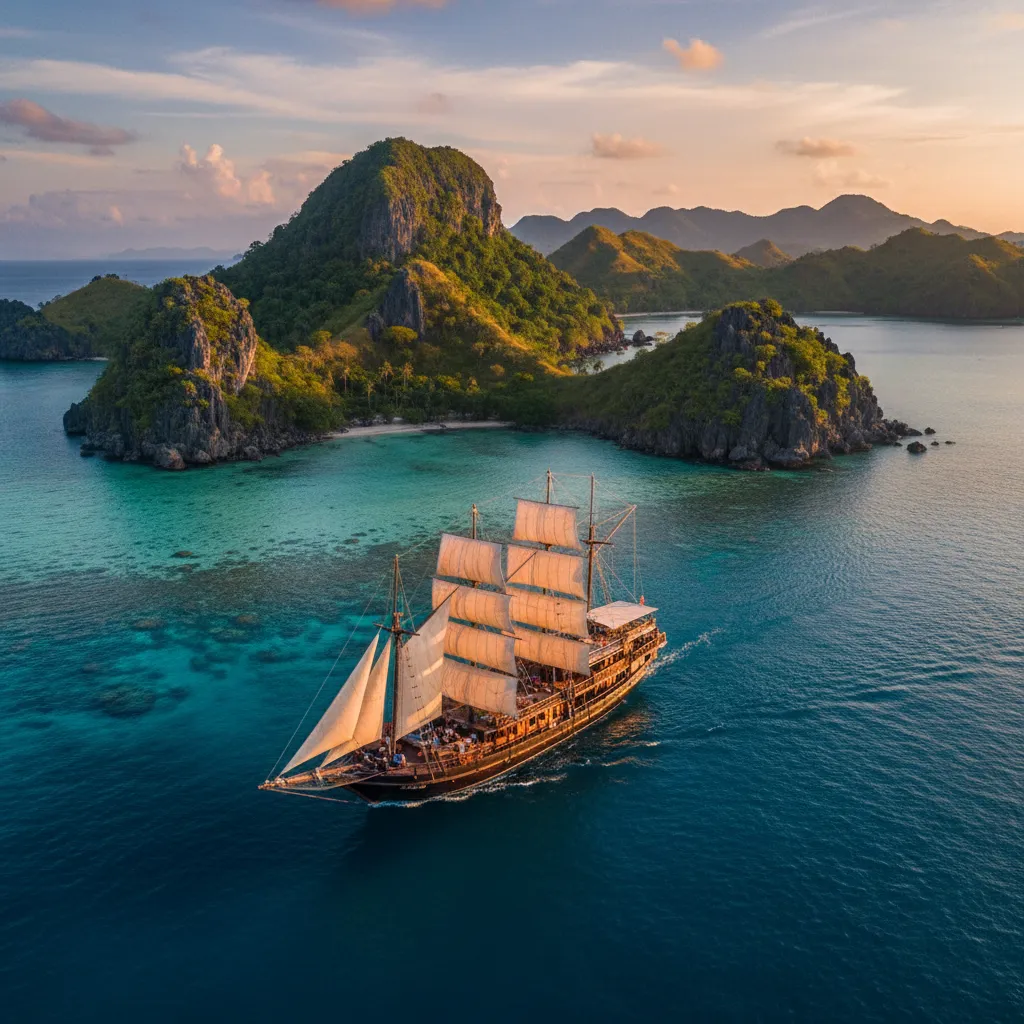
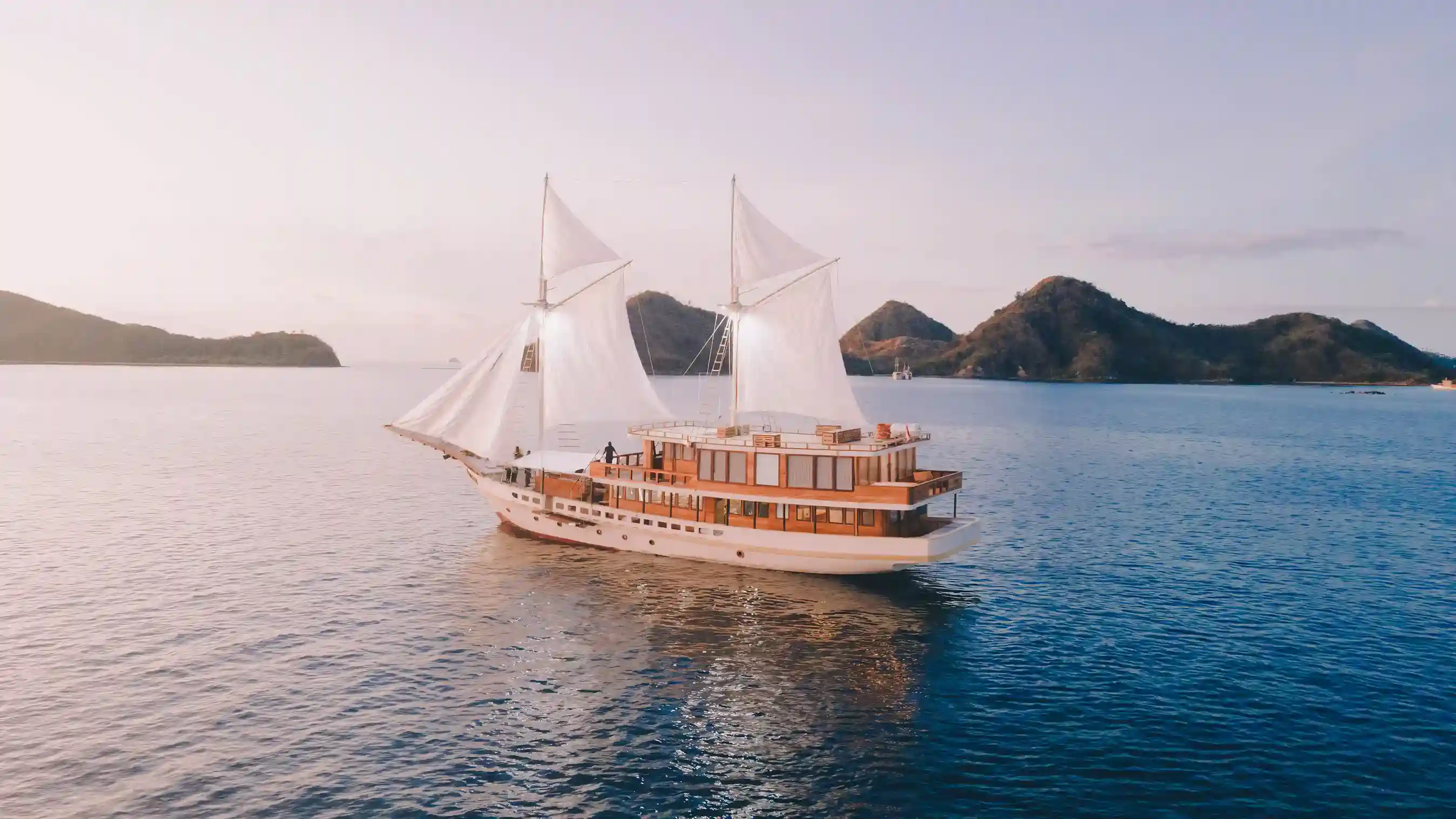
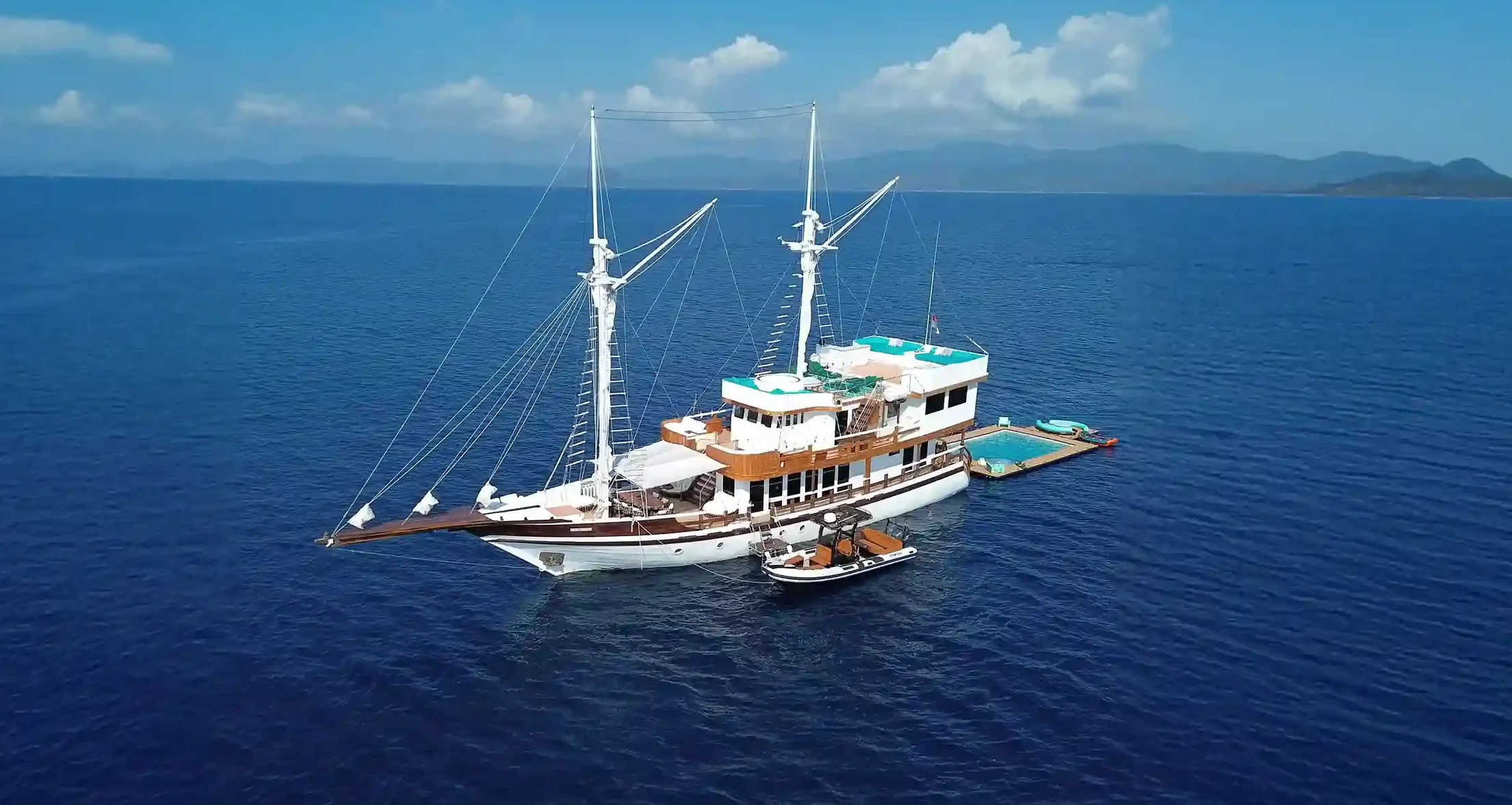
Phinisi is a traditional Indonesian wooden schooner, originally a cargo vessel design from South Sulawesi. Modern phinisis built for charter tourism range from purpose-built vessels with air-conditioned ensuite cabins and modern engines, to older converted cargo hulls with far more mixed results. The marketing photos across the market look similarly polished; the boats themselves vary a lot more than the photos suggest. We’re not going to name specific competing vessels and invent prices for them here — this guide does not operate boats and cannot verify a third-party boat’s current condition, crew, or pricing well enough to publish that as fact. What we can give you is the criteria that actually separate a good charter from a disappointing one.
Hull, sail, and mechanical condition
A newer-built hull, or an older hull with documented recent inspection and re-caulking, matters more than a boat’s outward paint job. Ask when the vessel was built and when it was last inspected under its KSOP seaworthiness certificate — a reputable operator answers this specifically. Many “phinisi” tours today run primarily on engine power rather than functional sail, which is normal, but ask directly if authentic sailing matters to your trip rather than assuming from marketing photos alone. A generator with backup redundancy is worth asking about too, since losing power on a multi-day liveaboard affects everything from air conditioning to refrigeration for your food.
Cabin quality — what to check beyond the photos
Ensuite bathrooms with genuinely functional hot water and water pressure, individually controllable air conditioning per cabin, and honest bed dimensions are the practical details that separate a comfortable multi-day trip from an uncomfortable one. Some boats use narrower bed frames than the marketing photos’ angles suggest — ask for exact cabin and bed dimensions rather than relying on a wide-angle photo to judge scale. Storage space is often smaller than travelers expect on a boat; ask how luggage is typically stored if you’re bringing more than a soft duffel bag.
Crew size and experience
A crew-to-guest ratio that allows genuine attention — not just enough hands to run the boat but enough to also cook properly, manage snorkel-stop safety, and handle tender transfers smoothly — makes a measurable difference to how a multi-day trip actually feels. Ask how many years the captain has sailed this specific route through the straits around Komodo, Rinca, and Padar; local navigational experience in this particular archipelago is not interchangeable with general maritime experience elsewhere.
Safety documentation to ask for
A current KSOP seaworthiness certificate, life jackets for every passenger in accessible locations, working communication equipment, and a clear policy on night sailing are the baseline safety questions worth asking any operator before you pay a deposit — see our full boat vetting criteria page for the complete list of questions.
Reading between the lines of a quote
A quote that seems noticeably cheaper than others for a similar itinerary length and boat class is worth a specific follow-up question: what exactly is included — meals, park fees, snorkel equipment, crew — and what’s charged separately. A quote that seems noticeably higher isn’t automatically better either; ask what specifically justifies the premium (cabin class, crew ratio, boat age) rather than assuming price alone signals quality. Current pricing for the phinisi packages covered here is kept up to date on the Komodo Luxury phinisi charter page, checked August 2026, rather than published here as a fixed figure that would go stale.
Open-trip phinisi vs private phinisi charter
An open-trip phinisi shares the boat with other travelers on a fixed schedule at a lower cost per person; a private charter locks the entire vessel to your group. Both can be genuinely good or genuinely disappointing depending on the specific boat and crew — the format itself (open vs private) doesn’t guarantee quality either way, which is exactly why the criteria above matter more than which category you choose. See our private vs shared comparison for the fuller trade-offs.
Questions worth asking before you pay a deposit
A short, direct conversation before booking tells you more than any brochure: When was the hull last inspected? How many years has the captain sailed this specific route? What’s included versus charged as an extra? What’s your policy on substituting a stop if weather changes the plan? A specific, confident answer to each of these is a good sign regardless of which boat or operator you’re talking to; a vague or rushed answer is worth taking seriously before committing.
Why we don’t publish a “top 5” ranked list
Boat condition, crew, and even ownership can change year to year in a fast-growing charter market — a ranked list of named boats risks going stale within a season and misleading readers with outdated information. Criteria age far better than rankings: a hull-inspection question is just as useful to ask next year as it is today, regardless of which specific vessels are currently operating.
A little diligence before booking — a few direct questions, a request for specific documentation — does more to secure a good charter experience than any amount of browsing marketing photos alone.
Ask specific questions, expect specific answers, and treat vagueness as useful information in itself when comparing operators. A short conversation before booking reveals more than any brochure ever will. These criteria hold up regardless of how the specific charter market shifts from one season to the next, which is exactly why we lead with them instead of a list of names.
Frequently asked questions
What’s the difference between a good and a disappointing phinisi charter?
Hull age and documented maintenance, genuinely functional cabin amenities, crew experience on this specific route, and clear safety documentation — not the marketing photos, which look similarly polished across the market regardless of actual boat condition.
Should I ask to see a phinisi’s KSOP seaworthiness certificate before booking?
Yes — this is a reasonable request of any operator and a direct way to verify the vessel meets current maritime safety standards.
Is a more expensive phinisi charter always better quality?
Not automatically — ask what specifically justifies a higher price (cabin class, crew ratio, boat age) rather than assuming price alone signals quality.
Do most phinisi boats actually sail, or run on engine power?
Many run primarily on engine power today; genuine functional sailing varies by vessel. Ask directly if authentic sailing matters to your trip.
What should I ask about cabin dimensions before booking?
Request exact bed and cabin dimensions rather than judging scale from wide-angle marketing photos, since bed sizes can be narrower than photos suggest.
How much does a private phinisi charter from Labuan Bajo cost?
Deluxe-class private phinisi charters start from USD 3,250 per boat per night and rise to USD 30,000 per night for the flagship ultra-luxury superyacht, depending on cabin count and finish — see the full per-night breakdown on the yacht charter page, checked 26 August 2026, or request a quote for your exact dates.
To explore specific phinisi options from Labuan Bajo in more detail, you can view this site’s sister company Komodo Luxury’s fleet, cabin layouts and private charter possibilities here.
Komodo Luxury: the vessel fleet and cabin plans · private Komodo charter · Komodo liveaboard cabins.
Charter a vetted phinisi with Komodo Luxury
Ask Komodo Luxury anything about hull condition, cabin specifics, or crew experience before you book.