In short
You’ll see different numbers depending on the source and what exactly is being counted, and it’s worth understanding why rather than picking one number at random. Park-authority census work by Balai Taman Nasional Komodo (BTNK) has put the total population of all ages living within the park at roughly 3,000–3,400 individuals in recent survey years — this is the figure most relevant to “how many dragons live in the park today.” The IUCN Red List, by contrast, reports a global estimate closer to 1,383 mature breeding adults as of its most recent formal assessment — a narrower category (only breeding-age adults, not the full population including juveniles) that explains most of the gap between the two figures. The IUCN reclassified the species from Vulnerable to Endangered in its 2021 reassessment, citing projected habitat loss from rising sea levels and climate-driven changes to the park’s dry-forest ecosystem over coming decades as the primary long-term threat — not an acute population collapse happening today.
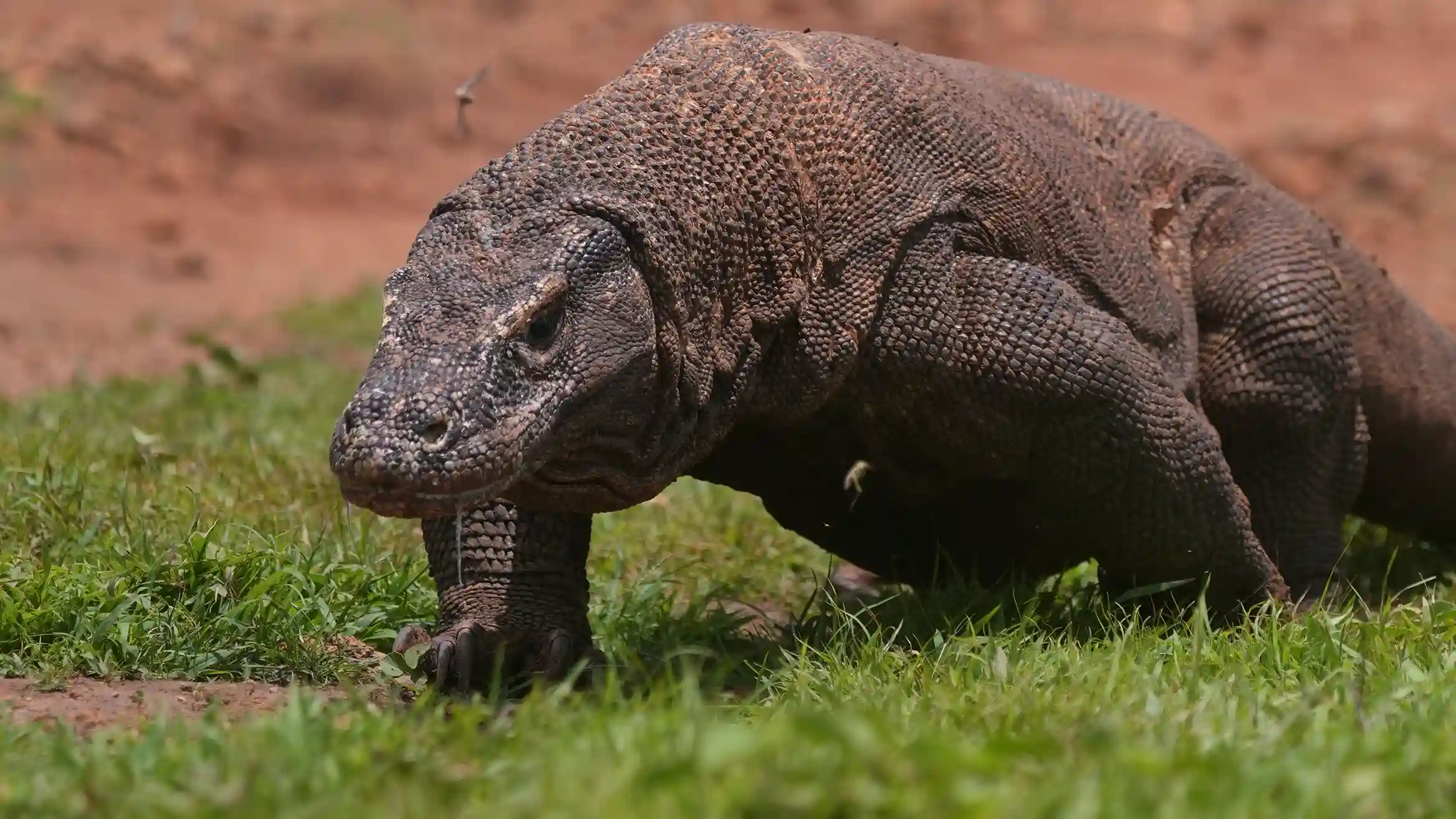
The Komodo dragon (Varanus komodoensis) is the world’s largest living lizard, reaching up to roughly 3 metres in length and 70–90 kg, found in the wild only on a handful of islands in eastern Indonesia. It hunts by ambush, delivers a bite that combines mechanical tearing with venom, and lives nowhere else on Earth outside Komodo National Park and neighbouring Flores.
How big does a Komodo dragon actually get?
Adult males typically measure 2.5–3 metres from snout to tail and weigh 70–90 kg, making them the largest lizard species alive today; females run smaller, usually 1.5–2.3 metres. Hatchlings emerge from the egg at only around 40 cm and roughly 100 grams — meaning a full-grown male can outweigh a newborn dragon by close to a thousand times over its lifetime. For a size comparison: an adult male Komodo dragon is roughly the length of a small car and can weigh more than an average adult human, which is part of why an encounter with one in the wild feels genuinely different from seeing any other lizard species. Growth continues slowly for most of the animal’s life, so the biggest individuals recorded in the park tend to be its oldest males, not necessarily its youngest fast-growers.
How fast can a Komodo dragon run?
Komodo dragons can reach short bursts of roughly 20 km/h over open ground, but only for a few seconds — they are not built for sustained pursuit and rely far more on patient ambush than on chasing prey down. This is one of the most persistent misconceptions about the species: popular accounts sometimes describe dragons as capable of outrunning a human over distance, which isn’t accurate. Over a short sprint a dragon can close a gap quickly, which is precisely why park rules require a ranger guide at all times on the trails — the danger is in a surprise close encounter, not a long chase.
How strong is a Komodo dragon’s bite, and is it venomous?
A 2009 study led by biologist Bryan Fry, published in the Proceedings of the National Academy of Sciences, used MRI and dissection to identify functioning venom glands in the Komodo dragon’s lower jaw, overturning the older theory that prey died purely from bacterial infection after a bite. The venom contains compounds that lower blood pressure, prevent clotting and induce shock, working alongside the mechanical damage from the dragon’s curved, serrated teeth to weaken large prey like deer or water buffalo over hours rather than killing instantly. In plain terms: yes, Komodo dragons are venomous, and the bite itself — from tooth structure to venom delivery — is a genuinely specialised hunting adaptation, not simply a dirty mouth. Exact bite-force figures vary between studies and aren’t the most useful number here; the combination of serrated teeth, venom and raw size is what makes the bite dangerous, more than force alone.

What do Komodo dragons eat, and how do they hunt?
Wild Komodo dragons are opportunistic carnivores and scavengers, preying on Timor deer (their primary food source within the park), wild boar, water buffalo, and smaller animals, while also readily eating carrion. Adults are documented occasionally preying on smaller or juvenile dragons, a form of cannibalism that’s one reason young dragons spend much of their early life in trees, out of reach of larger adults on the ground. Their hunting method is ambush rather than chase: a dragon will lie still near a game trail or waterhole, relying on camouflage and patience, then strike at close range. After a bite on a large animal like a deer or buffalo, the dragon may follow the wounded prey at a distance for hours or days as the venom and blood loss take effect, using an extraordinarily sensitive sense of smell — helped by its forked tongue, which samples airborne particles the way a snake’s does — to track it across long distances.
Can Komodo dragons swim between islands?
Yes, Komodo dragons are capable swimmers and have been observed crossing channels between neighbouring islands, which is one proposed explanation for how the species’ small natural range came to include several separate islands rather than just one. That said, most of their movement and hunting happens on land, and swimming is the exception rather than a routine behaviour.
How long do Komodo dragons live?
Wild Komodo dragons are estimated to live around 30 years, based on long-term monitoring within the park, though precise lifespan data is harder to establish in the wild than in captivity because individual animals aren’t tracked from hatching to death the way zoo specimens are. Growth and reproduction slow markedly with age, and the largest, oldest males in the park are generally the ones visitors are most likely to see near ranger stations, since these dominant animals tend to hold the best territory.
Is it true that female Komodo dragons can reproduce without a mate?
Yes — Komodo dragons are one of the relatively small number of vertebrate species capable of parthenogenesis, where an unfertilised egg develops into offspring without a male. This was documented in captive females at UK zoos (including a well-known case at Chester Zoo) in the mid-2000s, when isolated females that had never had contact with a male produced viable eggs. Because of the species’ sex-determination system, parthenogenetic offspring are always male, which some researchers suggest could help a lone female colonise a new island by eventually producing mates for herself — though this remains a hypothesis about the wild population, drawn from what’s been directly observed in captivity. In normal wild reproduction, females lay clutches of around 20 eggs, buried in soil or in abandoned megapode nesting mounds, with an incubation period of roughly 7–8 months.
Where do wild Komodo dragons actually live?
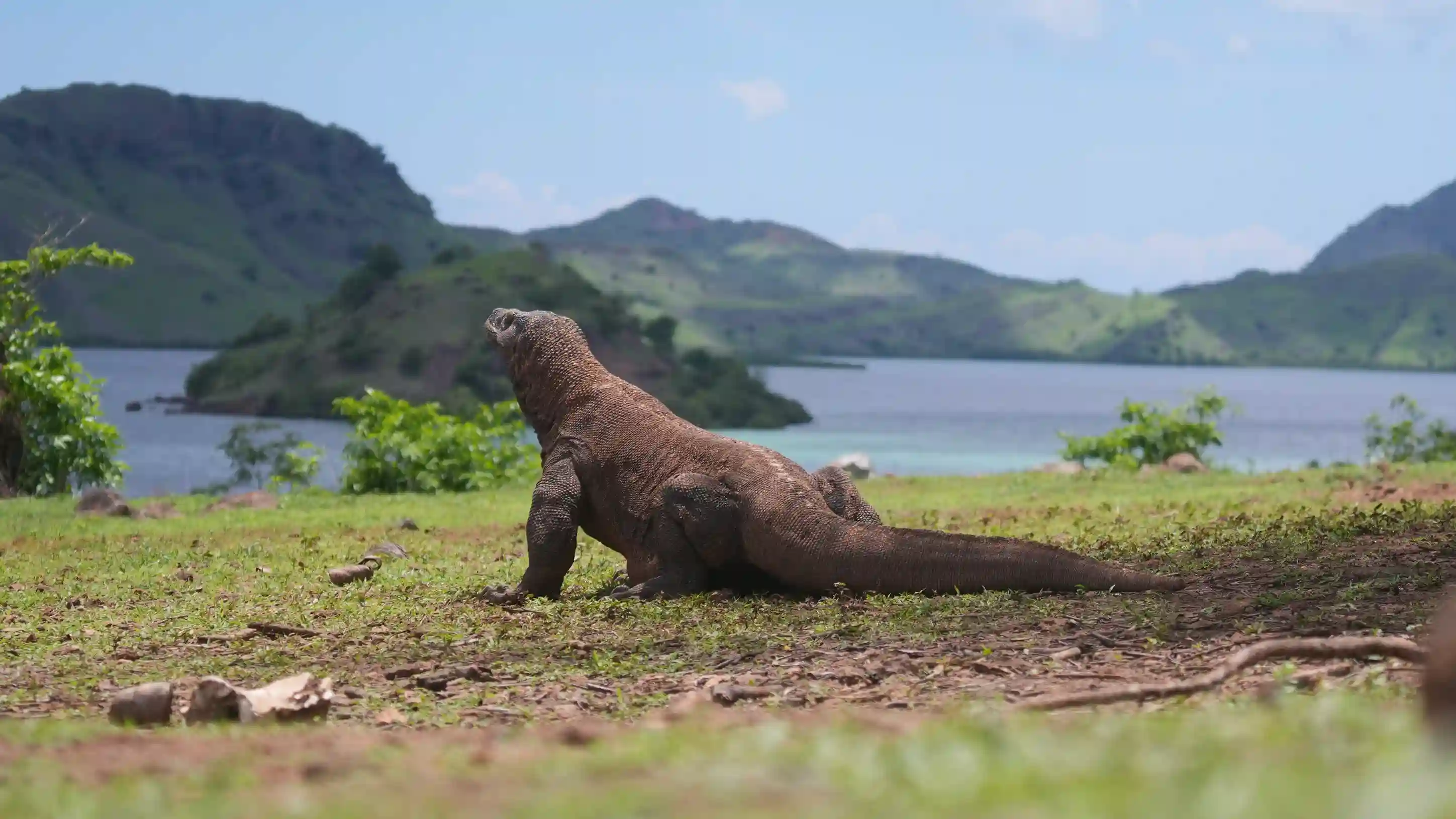
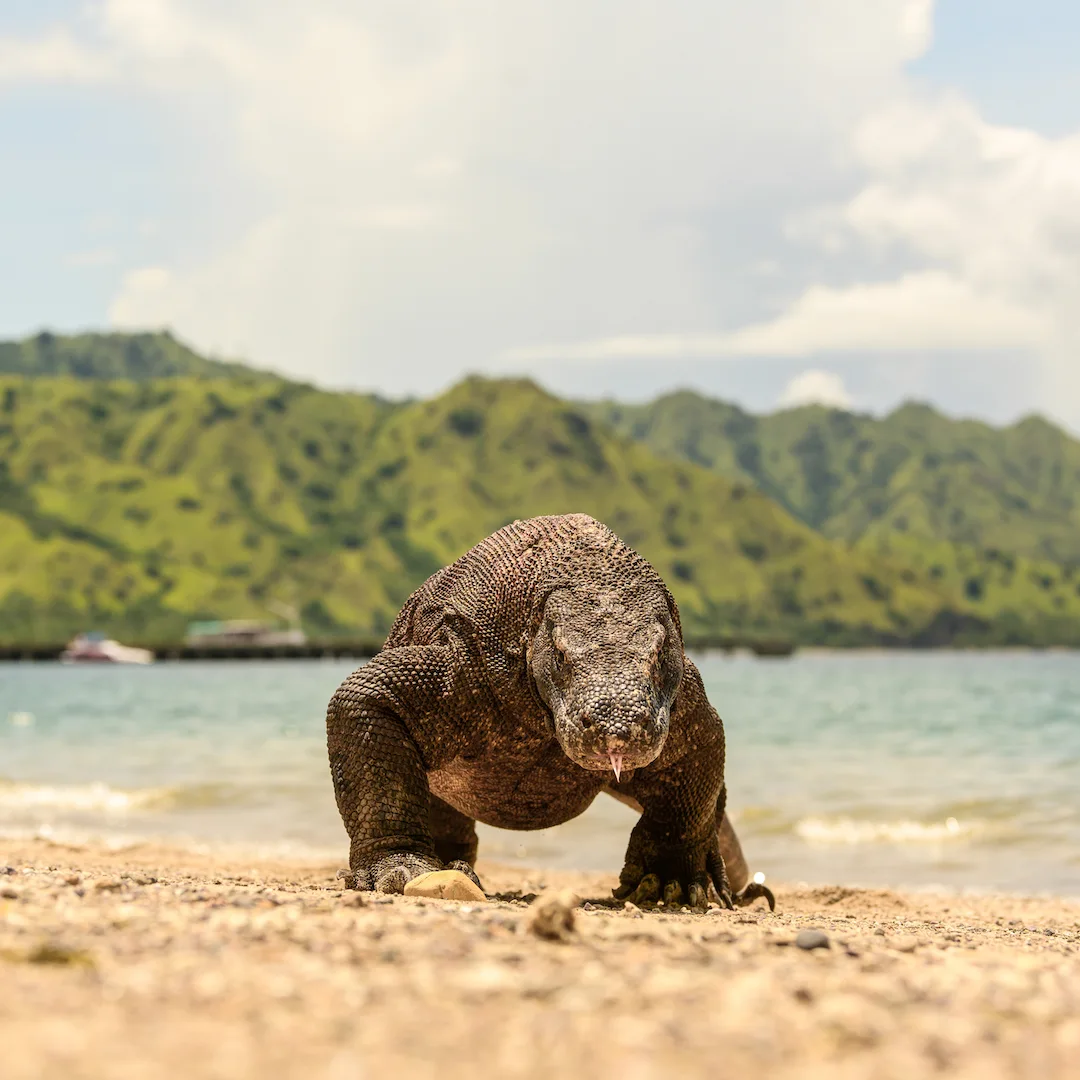
The species survives in the wild only within Komodo National Park — on Komodo Island, Rinca Island, and the smaller islands of Gili Motang and Gili Dasami — plus a separate population on the western and northern coast of Flores, outside the park boundary. It lives nowhere else on Earth naturally; every Komodo dragon in a zoo anywhere in the world descends from this same limited native range. This extremely restricted natural distribution is part of why the park was inscribed as a UNESCO World Heritage Site (Site No. 609) and why the species is central to the park’s entire conservation mandate.
How many Komodo dragons are left, and why do population numbers vary?
You’ll see different numbers depending on the source and what exactly is being counted, and it’s worth understanding why rather than picking one number at random. Park-authority census work by Balai Taman Nasional Komodo (BTNK) has put the total population of all ages living within the park at roughly 3,000–3,400 individuals in recent survey years — this is the figure most relevant to “how many dragons live in the park today.” The IUCN Red List, by contrast, reports a global estimate closer to 1,383 mature breeding adults as of its most recent formal assessment — a narrower category (only breeding-age adults, not the full population including juveniles) that explains most of the gap between the two figures. The IUCN reclassified the species from Vulnerable to Endangered in its 2021 reassessment, citing projected habitat loss from rising sea levels and climate-driven changes to the park’s dry-forest ecosystem over coming decades as the primary long-term threat — not an acute population collapse happening today.
Is the Komodo dragon actually endangered right now?
The IUCN’s Endangered listing since 2021 reflects a forward-looking risk assessment tied to climate change and habitat pressure over the coming decades, rather than a sudden recent decline — current population figures from BTNK’s park census have stayed relatively stable in the low thousands. This distinction matters for how you read headlines about the species: “Endangered” here is largely a projection about long-term habitat security on a small number of islands, which is precisely why the national park’s protected status and visitor-management rules (including the SiOra booking and quota system) exist — to keep human pressure on the habitat as low as sustainably possible while that longer-term climate risk plays out.
How does a Komodo dragon’s sense of smell actually work?
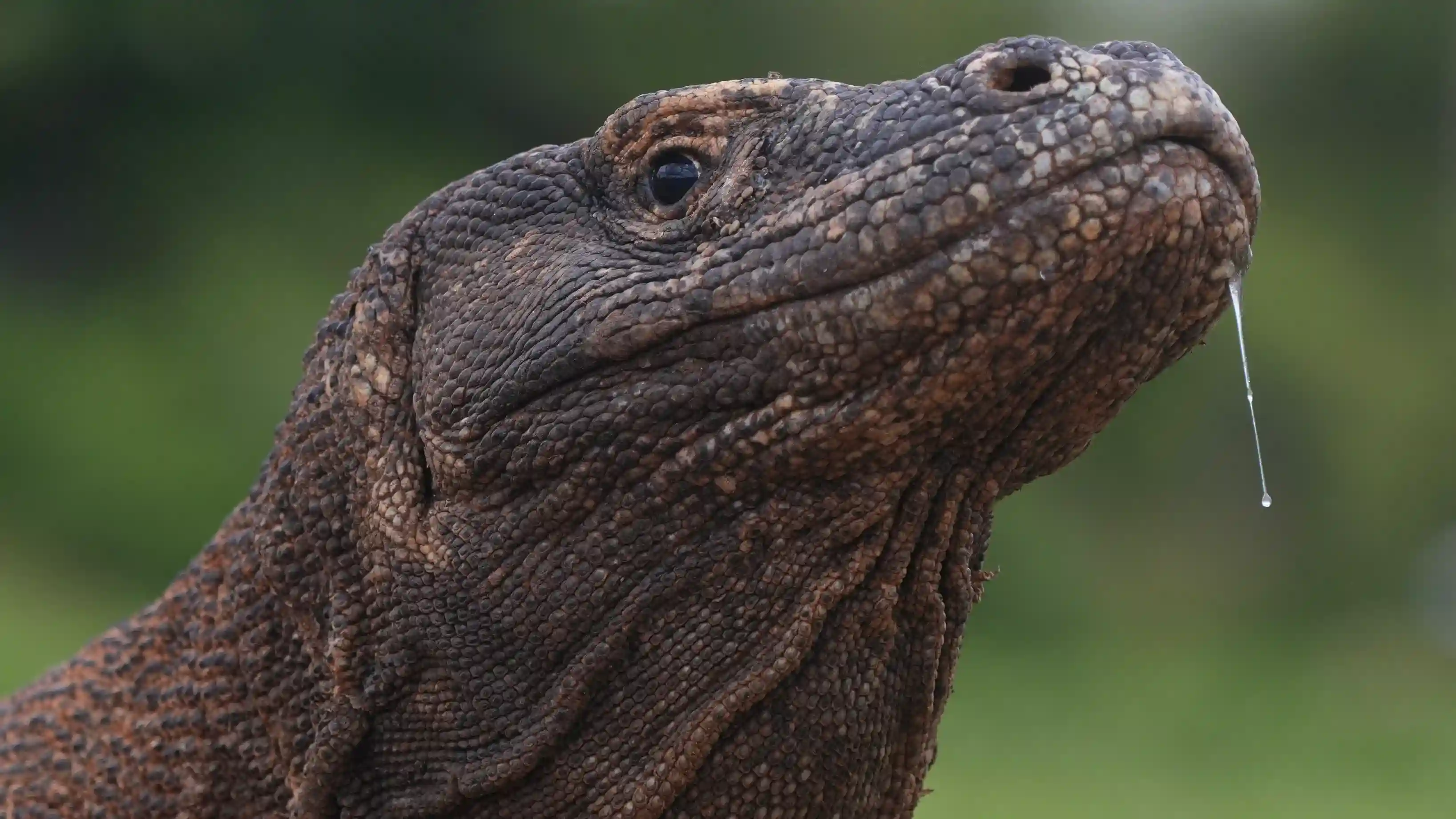
A Komodo dragon smells largely through its forked tongue rather than its nostrils, flicking it in and out to collect airborne particles that are then processed by the Jacobson’s organ on the roof of its mouth — the same basic mechanism snakes use. This sense is extraordinarily acute; dragons are able to detect carrion from remarkable distances downwind, which is part of how they locate a wounded animal they’ve bitten and are tracking, or how they find carcasses to scavenge without having hunted the animal themselves. Vision and hearing are comparatively less central to how a dragon navigates its environment than this chemical-sensing system built around the tongue and Jacobson’s organ.
Do Komodo dragons have any natural predators of their own?
Adult Komodo dragons have essentially no natural predators within their ecosystem, sitting at the top of the food chain on every island where they occur — the main threat to a Komodo dragon’s survival at any life stage is, as noted above, another larger Komodo dragon. This apex position is part of why the species plays such an outsized ecological role on its home islands, shaping prey populations (particularly Timor deer) in ways that ripple through the rest of the local ecosystem.
How does a Komodo dragon’s skin and colouring work?
Adult Komodo dragons typically display a uniform greyish-brown to reddish-brown colouring covered in small, bony scales called osteoderms, which provide some degree of natural armour beneath the skin’s surface. Juveniles look noticeably different — often showing more vivid banding or mottled patterning in greens and yellows that provides camouflage while they’re spending much of their early life in trees avoiding adult cannibalism — with this pattern fading toward the more uniform adult colouring as the animal matures and moves to a ground-based, apex-predator lifestyle.
What’s the current scientific understanding of how Komodo dragons evolved their large size?
The leading explanation, often referred to as “island gigantism,” proposes that Komodo dragons grew unusually large in the relative absence of other big mammalian predators on their isolated home islands, allowing a lineage of large monitor lizards to fill an ecological role — apex predator of large prey like deer and buffalo — that would typically belong to a mammalian carnivore elsewhere. Fossil evidence discussed in various paleontological studies suggests the genus Varanus included very large-bodied species more broadly across parts of Australasia in the past, with the modern Komodo dragon representing a surviving, geographically isolated example of that broader evolutionary pattern rather than a wholly unique one-off.
How often do Komodo dragons attack, and what about turtles?
People often imagine Komodo dragons as aggressive, but on the islands open to visitors they are mostly wary of humans. Rangers in Komodo National Park walk at the front and back of each group, watch body language closely and keep everyone at a safe distance, especially from large males and nesting females.
Realistic risk of Komodo dragon attacks on humans
Documented Komodo dragon attack cases on visitors are rare, and almost always involve broken rules: getting too close for photos, walking without a ranger, or approaching feeding animals. Locals who are injured are usually fishing, collecting firewood, or surprised at close range near village edges where dragons scavenge.
On a guided trek you walk only on set trails, keep several metres away and never carry raw meat or fish. If a dragon changes posture, hisses, or flicks its tongue rapidly while watching the group, rangers adjust the route or ask you to step back. You follow their instructions immediately.
Komodo dragons and turtle nesting on the islands
Several islands in the park have beaches where sea turtles nest at night. Komodo dragons know this and will patrol the upper beach or dunes, especially in nesting season, looking for eggs, hatchlings or weak adults. They dig out nests or wait near the high-tide line for emerging turtles.
Most visitors will not see this directly because turtle nesting happens at night and turtle-focused trips use red lights and strict disturbance rules. Daytime treks are kept away from active nesting sites, so you are unlikely to affect turtles or see dragons hunting them unless you join a specialist wildlife charter.
Updated: August 26, 2026 · Originally published: August 25, 2026