
In short
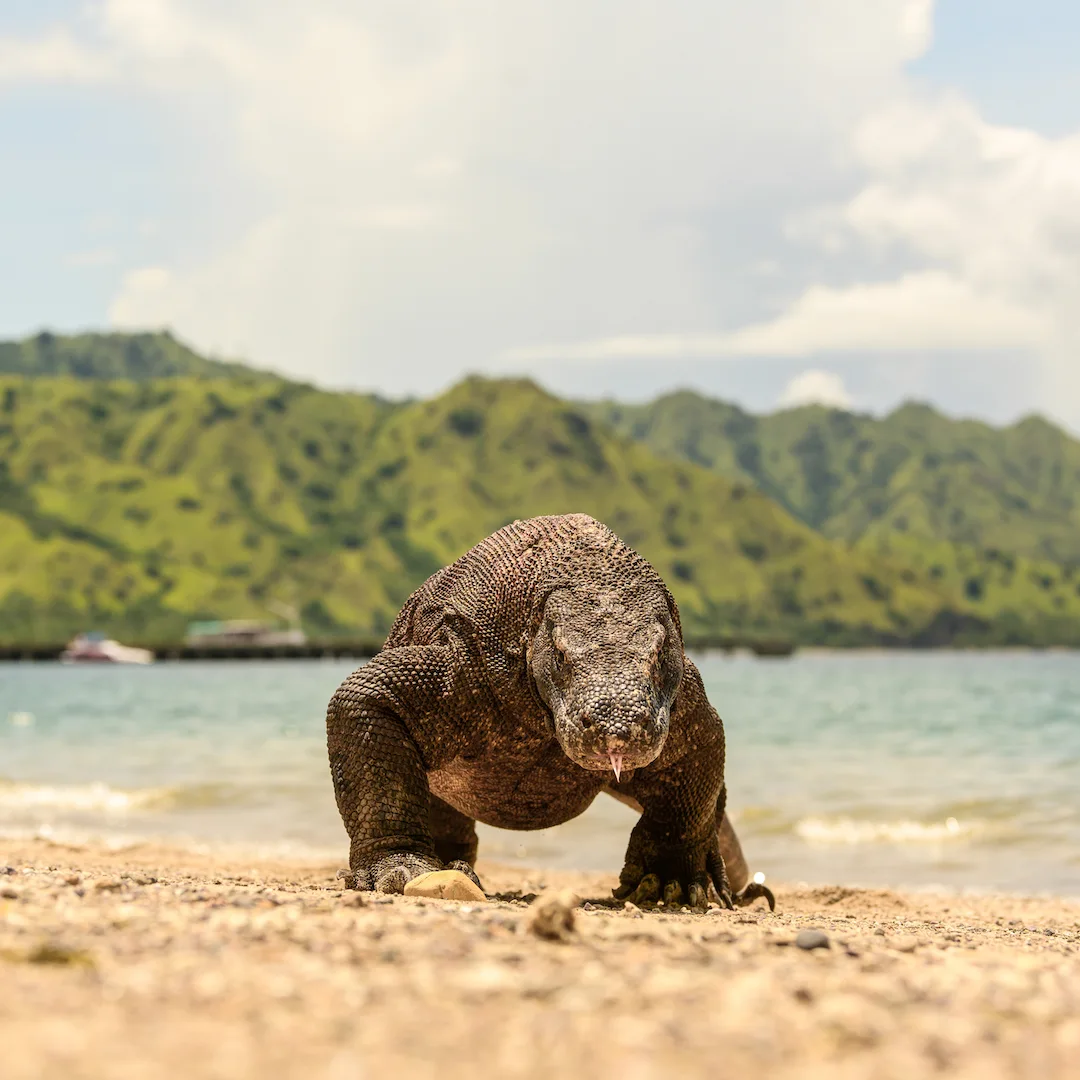
Both islands host wild Komodo dragons and both require a certified park ranger for any trek — this is a park regulation, not an optional upsell. Komodo Island (Loh Liang) has the larger overall dragon population and a network of longer trekking routes, so operators who want a “deeper” trekking experience often favour it. Rinca Island (Loh Buaya) is smaller and drier, and dragons are commonly seen resting near the ranger station and kitchen area itself, which means sightings can feel more immediate even on a shorter walk. Neither island guarantees a sighting — these are wild animals on their own schedule — but Rinca’s compact layout means rangers can often route you toward a recently-spotted dragon faster than on Komodo’s larger trail network.
Answer: Komodo Island has the largest dragon population and the most varied trekking routes; Rinca has a smaller park area, generally easier trails, and dragons are frequently seen close to the ranger station itself; Padar has no resident dragons at all and is visited purely for its three-bay sunrise viewpoint. Most one-day itineraries pick Padar for the view plus one of Komodo or Rinca for dragons — rarely all three.
Source check, 26 August 2026: “Komodo vs Padar vs Rinca” draws on Komodo Luxury’s published rates, and any conflict between those sources is shown to you rather than resolved silently.
Komodo Island vs Rinca Island: which is better for seeing dragons?
Both islands host wild Komodo dragons and both require a certified park ranger for any trek — this is a park regulation, not an optional upsell. Komodo Island (Loh Liang) has the larger overall dragon population and a network of longer trekking routes, so operators who want a “deeper” trekking experience often favour it. Rinca Island (Loh Buaya) is smaller and drier, and dragons are commonly seen resting near the ranger station and kitchen area itself, which means sightings can feel more immediate even on a shorter walk. Neither island guarantees a sighting — these are wild animals on their own schedule — but Rinca’s compact layout means rangers can often route you toward a recently-spotted dragon faster than on Komodo’s larger trail network.
Which island is easier to trek: Komodo or Rinca?
Rinca is generally considered the easier of the two. Its terrain is flatter and drier savanna, and the standard ranger route is shorter, typically 60–90 minutes at an easy pace. Komodo Island’s Loh Liang trails include some longer route options that push closer to 2 hours and cover more varied terrain, including some incline. Neither is a technical hike, but if trekking fitness or time is a concern, Rinca is the lower-effort choice.
Padar vs Rinca: which has better scenery?
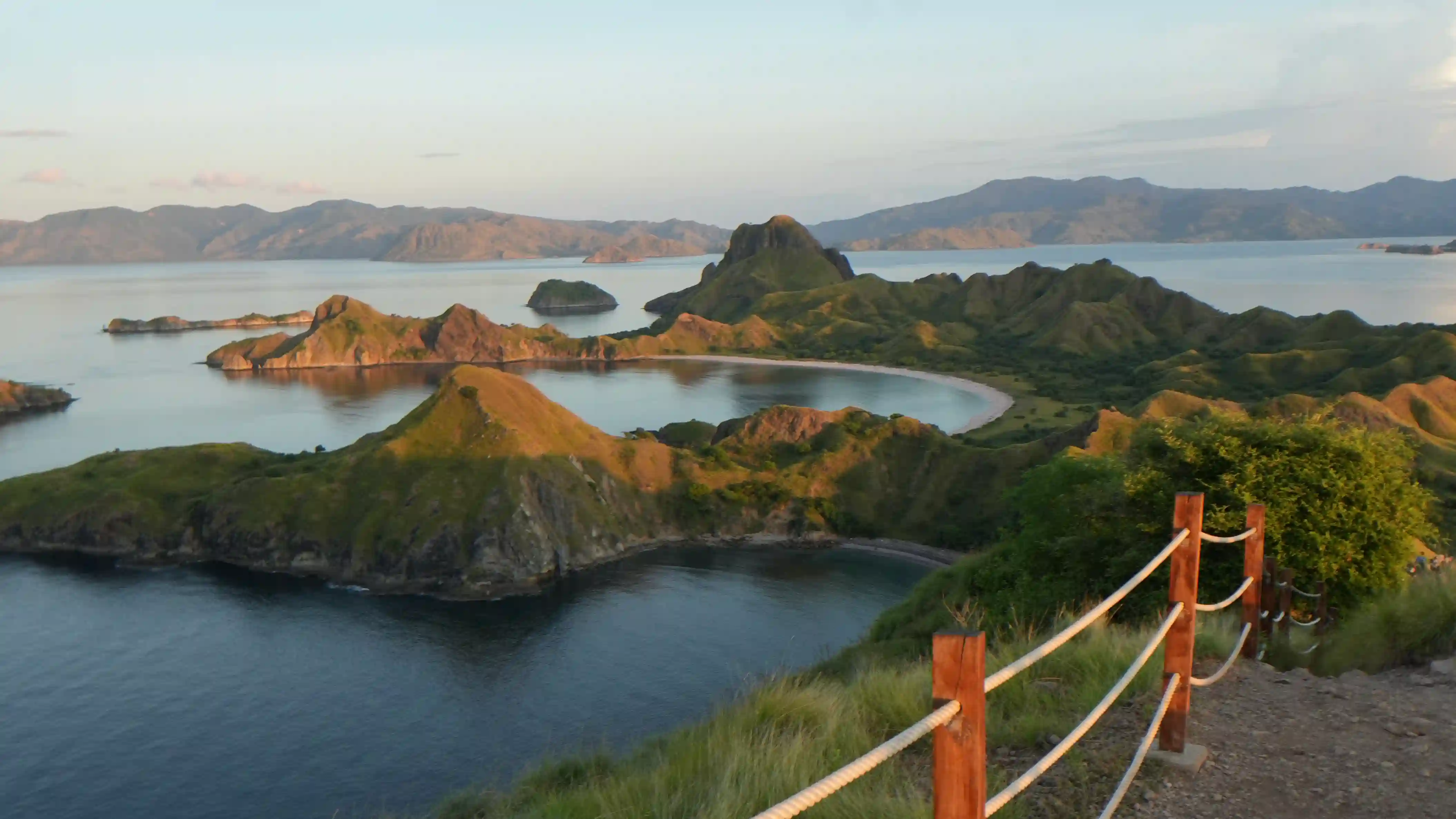
These serve completely different purposes and are not really substitutes for each other. Padar has no dragons and no ranger trek in the wildlife sense — you climb a bare volcanic ridge for a wide-angle view over three differently-coloured bays, which is the single most photographed vista in the park. Rinca’s appeal is close-up wildlife (dragons, buffalo, deer, megapode birds) at ground level, not a panoramic viewpoint. If you have to choose one add-on stop beyond a dragon trek, Padar is the scenery stop and Rinca is the wildlife stop — they answer different questions.
Which islands are safer to visit for families with children?
Rinca’s shorter, flatter trek generally suits families with children better than Komodo’s longer routes or Padar’s steep, shadeless viewpoint climb. All three still require the same baseline precautions — staying with the ranger, keeping children close, and not approaching any dragon regardless of how still it appears. See our Komodo National Park Safety for the full briefing every visitor receives before a trek.
Why does Komodo National Park have dragons on some islands but not others?
Komodo dragons are naturally distributed across a handful of islands within the park boundary — primarily Komodo and Rinca, plus smaller populations on nearby Gili Motang and Flores itself — and were never present on every island in the chain. Padar historically had no confirmed resident dragon population within recorded park management history, which is part of why it developed as a scenery-and-trekking stop rather than a wildlife stop. This distribution is a natural biogeographic pattern, not a park design choice, and it’s the underlying reason the three islands play such different roles in a typical itinerary.
Best time of day to visit each island
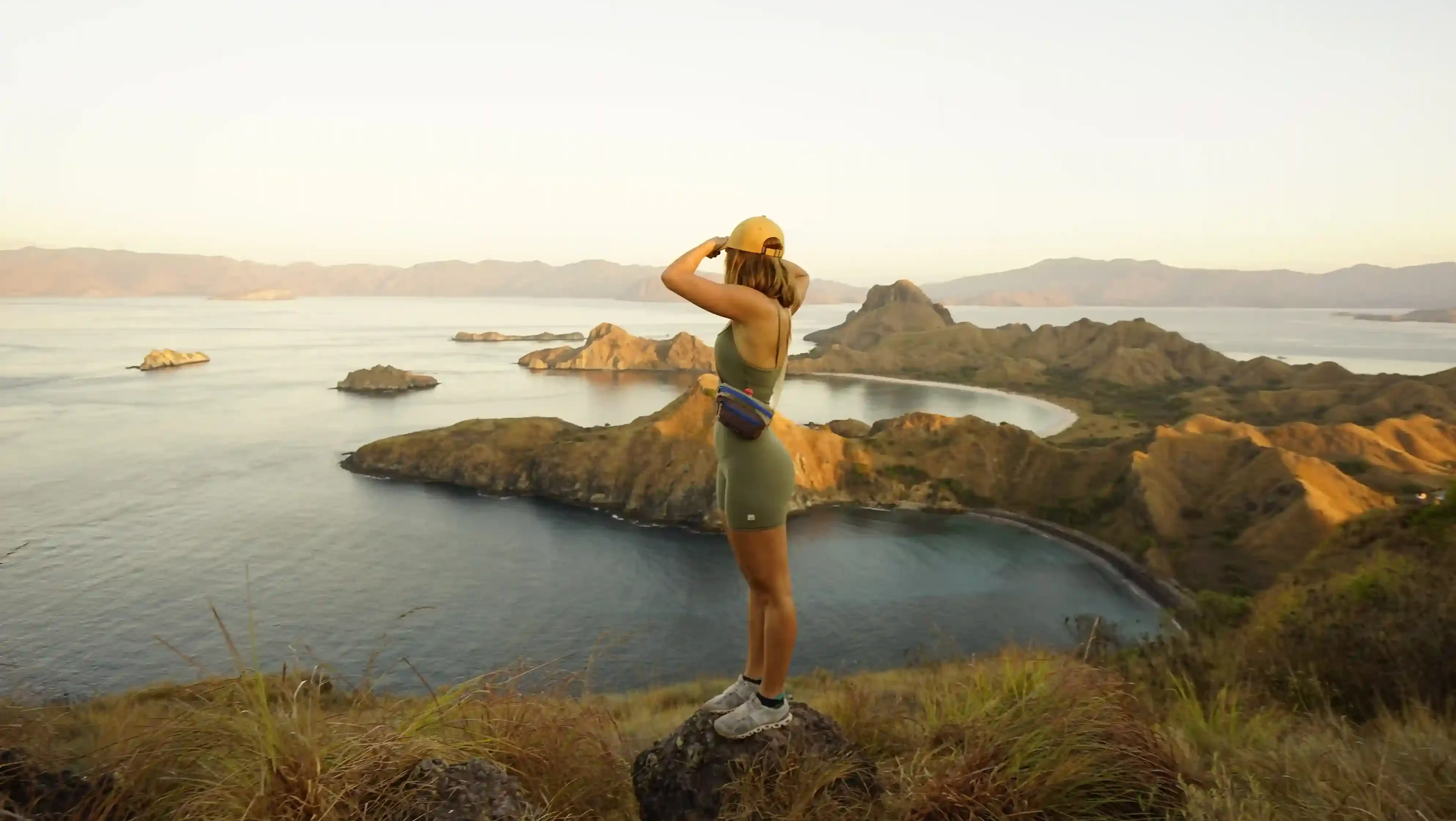
Padar is almost always visited at sunrise (roughly 05:30–07:00 WITA departure) because the low-angle light is what makes the three-bay view work in photographs; visiting at midday under flat, harsh sun is a noticeably weaker experience. Komodo and Rinca’s dragon treks are generally scheduled for the cooler morning hours, both because rangers prefer cooler conditions for a walk that runs 60–90 minutes on Rinca and one to three hours on Komodo Island, and because dragons themselves are more active baskers in the morning before the day heats up, making sightings somewhat more likely earlier rather than at midday.
Combining island visits with diving or snorkelling
None of the three islands are themselves top-tier dive sites — the park’s best-known dive spots (Manta Point, Batu Bolong, Castle Rock, Crystal Rock) are separate locations reached by boat between island stops. A common 2–3 day itinerary structure is: dragon island in the morning, a dive or snorkel stop around midday when light and visibility are best, then Padar or Pink Beach in the afternoon. See our dive sites guide for how these fit around the island stops rather than replacing them.
What first-time visitors get wrong about this choice
The most common misconception is assuming Padar is a dragon-viewing island because it appears on every “top Komodo photo” list alongside Komodo and Rinca — it is not, and travellers sometimes arrive disappointed expecting wildlife there. The second common mix-up is assuming Komodo Island and Rinca Island offer meaningfully different dragon “experiences” in terms of safety or dragon behaviour; in practice, the difference is almost entirely about trek length, terrain, and how close the ranger station sits to where dragons are commonly resting that day, not about the dragons themselves being different.
Side-by-side comparison
| Feature | Komodo Island | Rinca Island | Padar Island |
|---|---|---|---|
| Komodo dragons | Yes, largest population | Yes, often seen near station | No resident dragons |
| Typical trek time | 1–3 hours | 60–90 min | 30–45 min hike |
| Terrain difficulty | Moderate, varied | Easy, flat/dry | Moderate, steep & unshaded |
| Main draw | Dragons + longer trails | Dragons + easier access | Panoramic 3-bay viewpoint |
| Best for | First-time visitors wanting the full trek | Families, shorter itineraries | Photography, sunrise |
Do entrance fees differ between the three islands?
Yes, in structure if not always in the base park ticket. The national park entrance fee (PNBP under PP 36/2024) applies per person per visit across the park, but each island typically layers on its own guide fee and, for Komodo and Rinca, the mandatory ranger-guide charge for the dragon trek. Padar has a lighter fee structure since there is no ranger-guided wildlife walk to pay for, though a park ticket and any per-boat conservation charge still apply. For the current, itemised breakdown rather than a single flattened number, see our Komodo National Park Entrance Fee 2026 guide, which lays out PNBP, guide fees, and the total practical cost per island separately.
How rangers actually manage a dragon sighting
On both Komodo and Rinca, rangers walk ahead of the group along fixed, regularly-used trails and use a long wooden stick (never to touch or provoke a dragon, but to hold a safe buffer if one approaches too closely) as standard equipment. Groups are kept together and instructed not to run, crouch to take a low-angle photo, or approach a resting dragon even if it looks asleep — dragons can move in a short, fast burst despite appearing sluggish. This protocol is identical on both islands; what differs is simply how far you typically walk before a ranger points one out, which tends to be shorter on Rinca given its smaller, drier terrain and dragons’ habit of resting near the kitchen and water source areas there.
Can you visit all three in one trip?
Yes, but rarely all in a single day at a relaxed pace — see our 1-day itinerary guide for how Padar plus one dragon-trek island fits into 12 hours by speedboat. A 2–3 day liveaboard comfortably fits Padar, Rinca or Komodo, Pink Beach, and a dive or snorkel stop without the rushed pacing of a single-day dash; see our 3-Day Labuan Bajo Komodo Itinerary guide for that slower version.
Which island should first-time visitors choose?
If you only have time for one dragon-trek island, most operators recommend Komodo Island first, since it is the park’s namesake island and offers the broader trail network if you want a longer walk; choose Rinca instead if you are short on time, travelling with young children, or your itinerary already has a long day and you want the shorter trek. Padar should be added to either itinerary as the scenery stop, ideally timed for sunrise when the light on the three bays is strongest.
What about smaller nearby islands like Kelor or Kalong?
Kelor, Kalong, Sebayur and similar smaller islands inside the park serve different purposes again — short-hike viewpoints, snorkelling stops, or (for Kalong) an evening bat-colony watch as thousands of flying foxes leave the island at dusk. None of these carry dragon populations or the ranger-guided wildlife protocol of Komodo and Rinca, and they are typically add-on stops layered around the Padar-plus-dragon-island core of an itinerary rather than primary destinations on their own. If your itinerary already includes Komodo or Rinca and Padar, treat any of these smaller islands as a bonus stop rather than a required one.
Choosing snorkel sites to pair with each island
If you plan to visit Komodo, Padar or Rinca, you will almost always combine at least one snorkel stop on the same day. The classic choices are turtle-rich reefs near Komodo, plus colourful drift sites such as Three Sisters, Siaba, Mawan, Tatawa and the Cauldron.
Easy turtle and coral snorkelling near Komodo & Rinca
For relaxed snorkelling that works with family visits to Komodo or Rinca, choose calm fringing reefs and sand slopes. Several reefs close to Komodo Island and in the centre of the park are known for frequent green turtles, shallow hard coral gardens and gentle current, so even first-timers feel comfortable.
Ask your boat to time these spots for slack or mild current, usually around tidal changes. That keeps visibility good and avoids long surface swims, which matter if you have children or are doing a full day with trekking plus snorkelling.
Drift and seamount sites: Three Sisters, Mawan, Tatawa, Cauldron
Snorkelling around seamounts and channels such as Three Sisters, Mawan, Tatawa and the Cauldron suits confident swimmers. These areas often have stronger tidal flow but reward you with dense fish life, soft corals and a chance of larger marine life passing below.
Tell your operator honestly how strong a swimmer you are. Many boats only stop at these sites when currents are manageable and will post a guide in the water with a surface buoy. You usually drift with the current and rejoin the boat, so good fins and a snug mask are important.
If you are trying to see dragons and also snorkel these more energetic sites, a two-day trip or overnight boat helps. That gives you time to trek Komodo or Rinca in the cooler hours, then chase the best tidal window at the channel and seamount reefs without rushing.
Check dates with Komodo Luxury
Whichever island combination you choose, current departure dates and inclusions are on the Komodo boat tour.
Related Komodo Luxury pages: One-day Komodo trip · 3D2N Komodo tour · Private trip · Komodo sailing trip.
For island-specific detail beyond this comparison, Padar Island's own guide and Rinca Island's own guide each go deeper on their respective destination.
Updated: August 29, 2026 · Originally published: August 25, 2026