In short
Traditional phinisi construction uses ironwood and other durable local timbers, built by hand using techniques passed down through generations of Bugis and Konjo shipwrights in South Sulawesi, historically without formal blueprints — a skill set recognised by UNESCO as part of Indonesia’s intangible cultural heritage. Modern tourism phinisis follow this same fundamental hull construction and rigging approach while being fitted out internally for passenger comfort rather than cargo or fishing use, which is what they were traditionally built for. This heritage is part of the charter’s appeal beyond pure comfort — you’re chartering a vessel type with genuine cultural and maritime history, not simply a generic tourist boat shaped to look traditional.
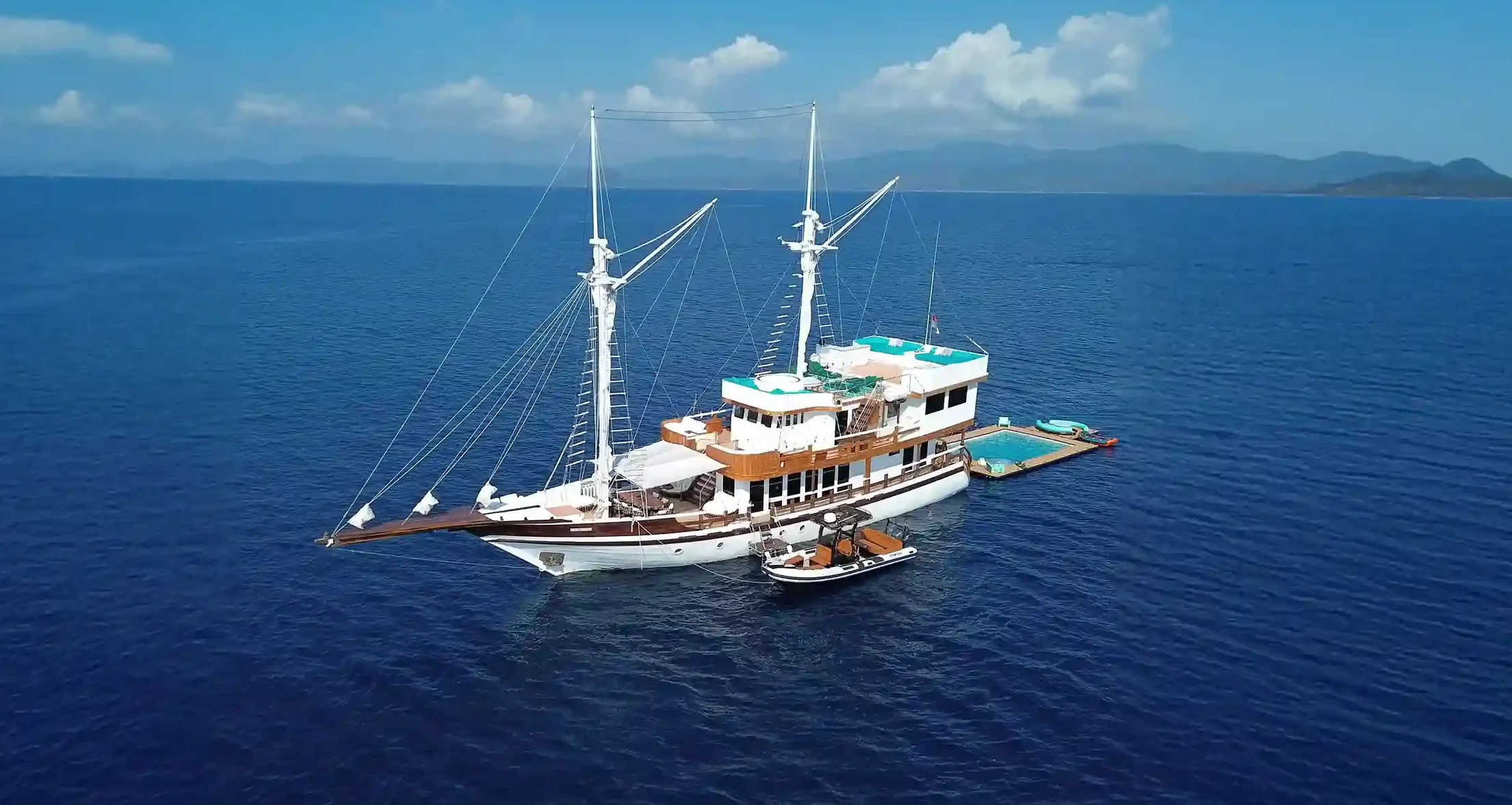
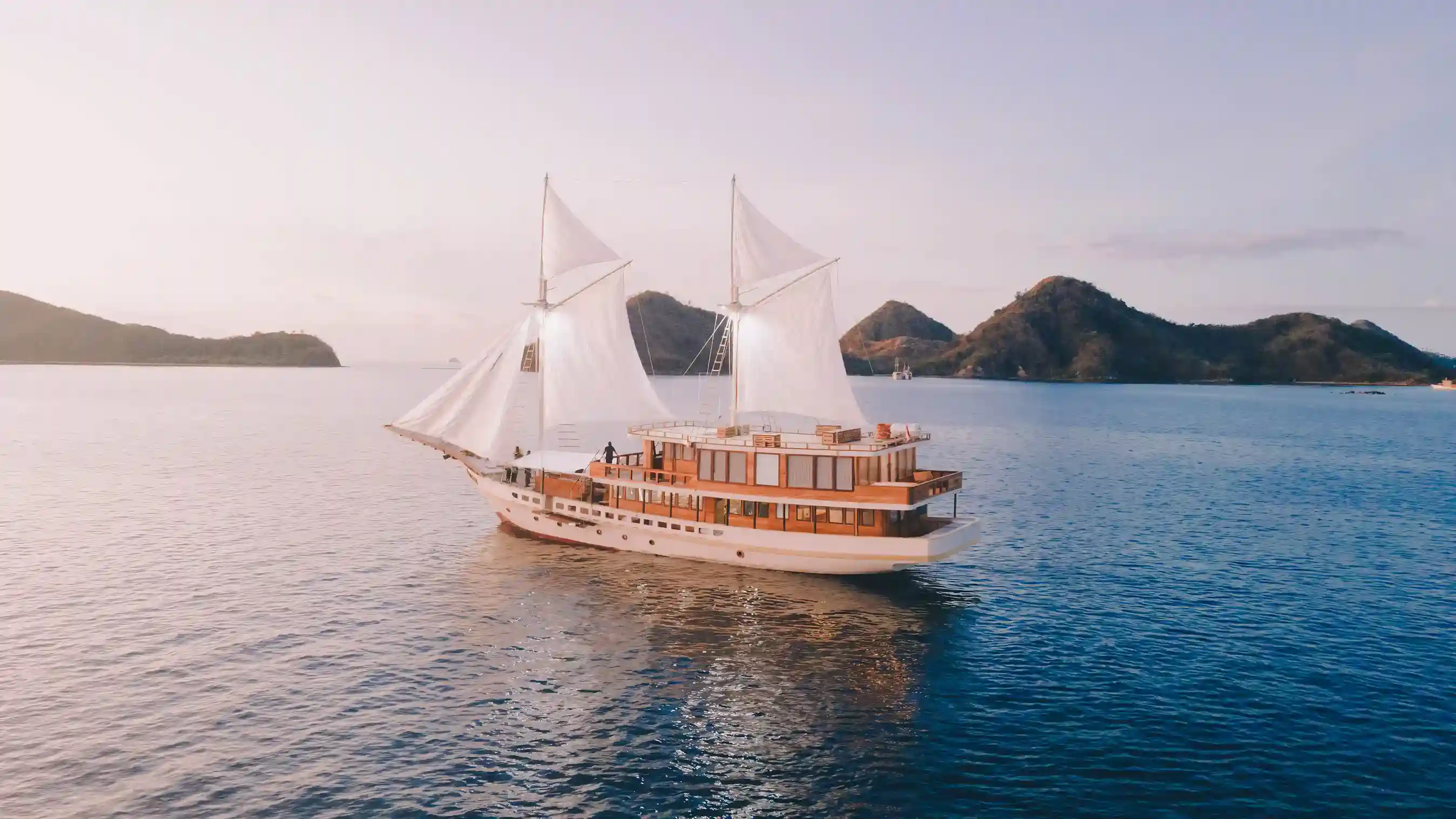
A luxury phinisi charter in Komodo puts you on a traditional two-masted Indonesian sailing vessel, rebuilt for tourism with private cabins, ensuite bathrooms and a dedicated crew, chartered exclusively for your group rather than shared with strangers. It's the format most travellers picture when they imagine a Komodo trip, and it's booked either as a multi-night liveaboard or, less commonly, a long single day.
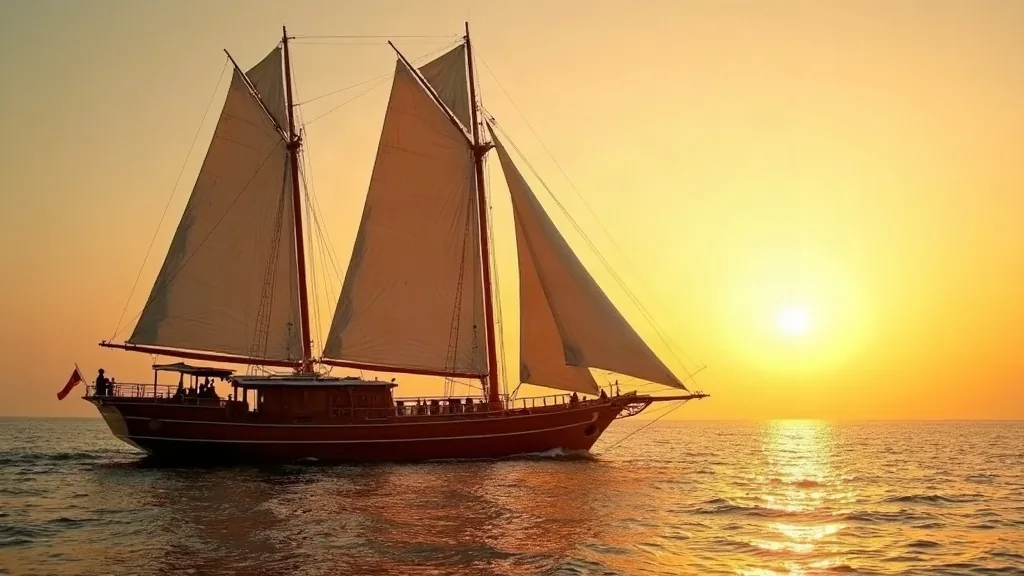
What makes a phinisi different from any other Komodo boat?
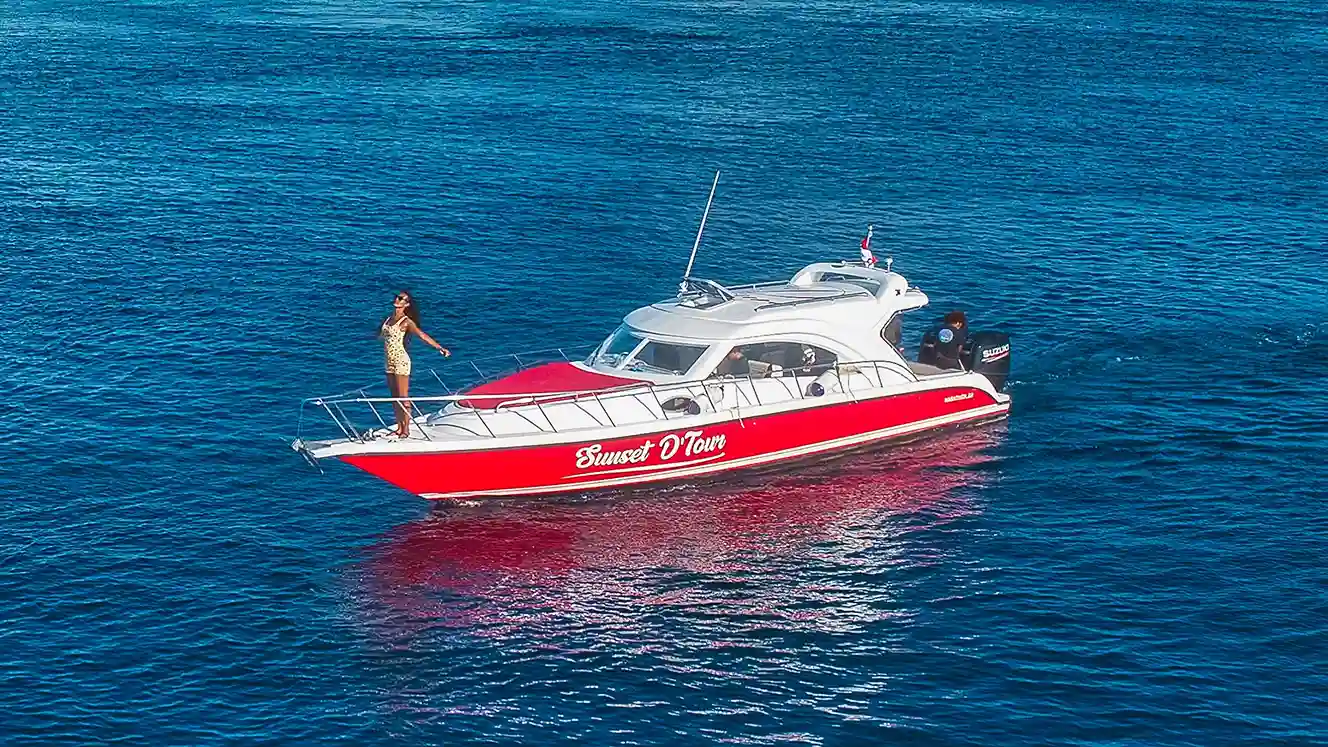
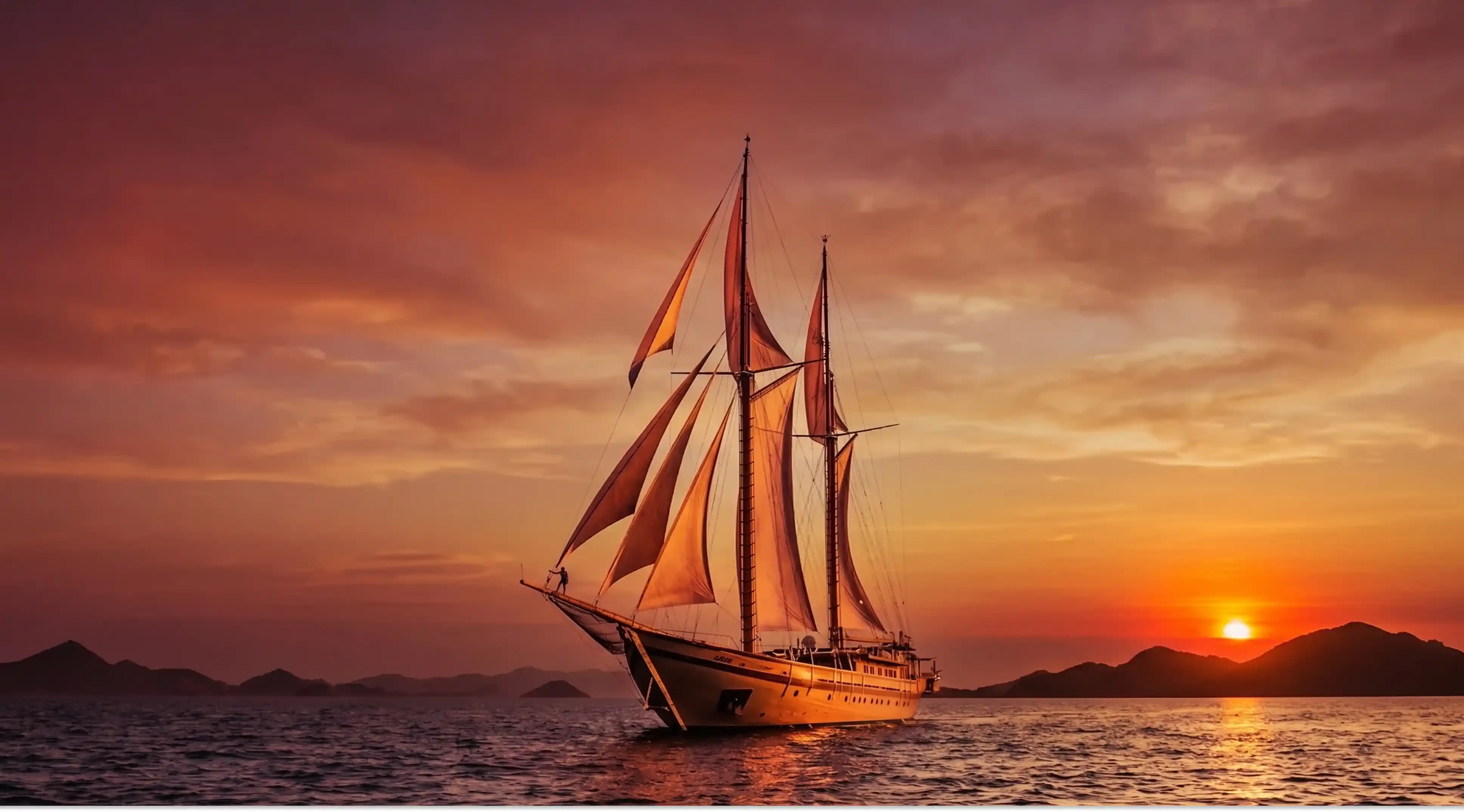
A phinisi is a traditional Indonesian sailing ship design, historically built by the Bugis and Konjo boatbuilders of South Sulawesi, distinguished by its two masts and wide wooden hull. Modern tourism phinisis keep that distinctive silhouette while being purpose-built inside for passenger comfort — private cabins instead of open dormitory bunks, proper bathrooms, a saloon and sundeck, and a crew-to-guest ratio built around service rather than just running the vessel. This is what separates a “luxury phinisi” from the fibreglass speedboats and simpler wooden boats also operating out of Labuan Bajo — the phinisi format is built for multi-night comfort, not just point-to-point transport.
What’s the typical guest capacity on a luxury phinisi charter?
Charter phinisis in Komodo generally range from smaller vessels with two to four cabins suited to couples or small families, up to larger ships with eight or more cabins for group charters and celebrations. Because the whole vessel is exclusively yours on a private charter, the guest count is simply however many you bring — there’s no shared-group dynamic to plan around, which is the main practical difference versus a shared open-trip liveaboard. See the Komodo Luxury fleet overview for specific cabin configurations across different phinisi classes.
What should you expect on board day to day?
- Private cabins with ensuite bathrooms, ranging from comfortable to genuinely high-end depending on the vessel tier.
- A dedicated crew handling navigation, meals, housekeeping and guest service throughout the trip.
- Meals prepared on board, typically a mix of Indonesian and international dishes, with dietary requests accommodated when flagged in advance.
- Snorkeling and diving equipment carried on board for reef stops between island visits.
- A sundeck and saloon for downtime between activities — a meaningful part of the experience on longer multi-night charters.
Higher-tier vessels in Komodo Luxury’s Signature and Prestige classes add features like larger sundecks, more refined interiors and a higher staff-to-guest ratio; entry-tier phinisis focus on getting the itinerary right with simpler onboard comfort.
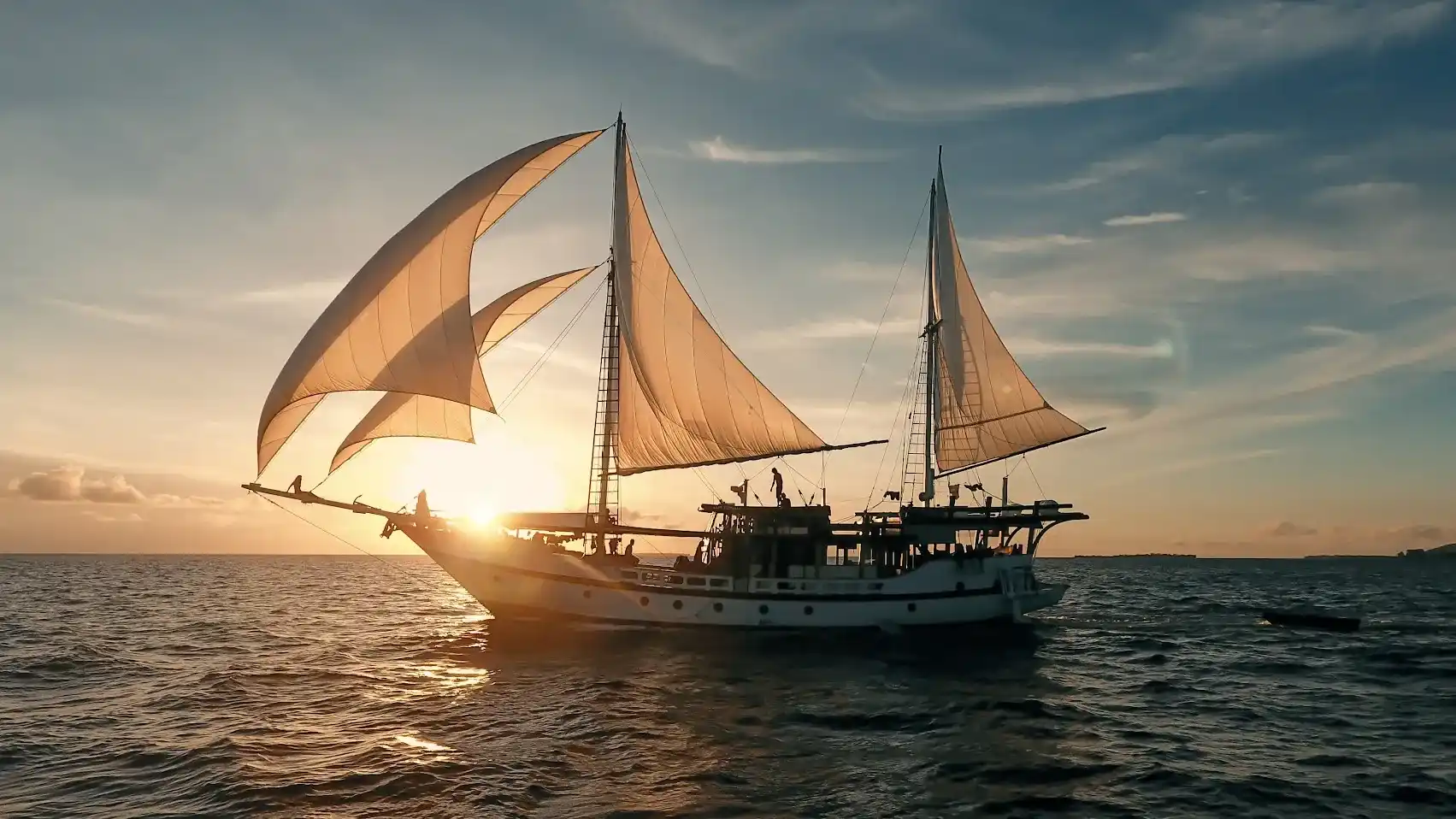
How long do luxury phinisi charters typically run?
Most phinisi charters in Komodo run 3 to 7 nights, long enough to cover Padar, a dragon trek, Pink Beach and several additional snorkel or dive stops at a relaxed pace without repeating anchorages. Shorter 2-night charters exist for tighter schedules, and extended charters of 8–10+ nights are booked by divers or travellers wanting to reach further islands, including routes toward Sumbawa. See our 3-Day Labuan Bajo Komodo Itinerary guide, 5-Day Labuan Bajo Komodo Itinerary guide and 7-day itinerary breakdowns for how each length is typically structured.
Is a private phinisi charter worth it compared to a shared boat?
For groups of four or more, a private phinisi charter often works out more comfortable per person than expected once the total cost is split across the group, while giving you full control over stop order, meal timing and pacing that a shared open-trip boat can’t offer. For solo travellers or pairs on a tighter budget, a shared liveaboard remains the more economical route into the same islands — the trade-off is sharing the itinerary and schedule with other guests. Komodo Luxury will walk through both formats against your group size and dates; see current luxury phinisi charter options, checked August 2026.
What safety standards should a luxury phinisi actually meet?
Exactly the same non-negotiable baseline as any other Komodo vessel: a current KSOP safety certificate, a certified captain, life jackets and safety equipment for full passenger capacity, and an itinerary that avoids unnecessary night transits through the park’s narrower, current-heavy channels. A higher price tag doesn’t automatically guarantee better safety compliance — see our full boat safety and certification guide for exactly what to verify regardless of which vessel tier you’re chartering.
How is a phinisi actually built, and does that affect the charter experience?
Traditional phinisi construction uses ironwood and other durable local timbers, built by hand using techniques passed down through generations of Bugis and Konjo shipwrights in South Sulawesi, historically without formal blueprints — a skill set recognised by UNESCO as part of Indonesia’s intangible cultural heritage. Modern tourism phinisis follow this same fundamental hull construction and rigging approach while being fitted out internally for passenger comfort rather than cargo or fishing use, which is what they were traditionally built for. This heritage is part of the charter’s appeal beyond pure comfort — you’re chartering a vessel type with genuine cultural and maritime history, not simply a generic tourist boat shaped to look traditional.
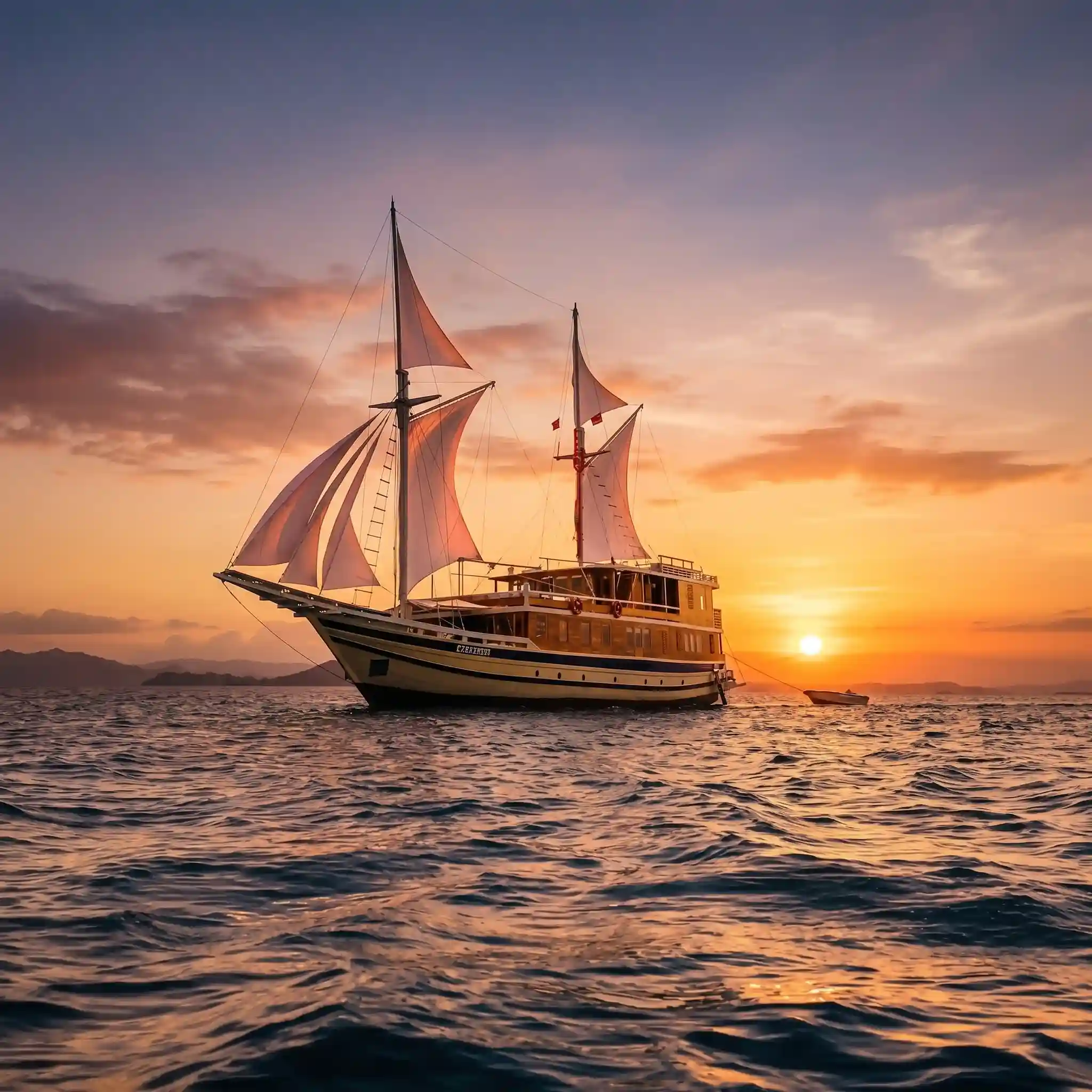
What should you know about onboard connectivity and power on a phinisi charter?
Power is generally available throughout the day via the vessel’s generator, with charging points in cabins on most mid-to-luxury tier boats, though some smaller or older vessels may limit generator running hours overnight to conserve fuel — worth asking about if you need continuous device charging. Internet connectivity is limited to what mobile signal reaches your current anchorage, meaning some stops have usable signal and others, particularly more remote overnight anchorages, have none at all. Treat a multi-night phinisi charter as a genuine offline stretch rather than expecting reliable connectivity throughout, regardless of the vessel’s luxury tier.
How does the crew-to-guest experience differ across a charter’s length?
On shorter 2–3 night charters, the crew relationship stays fairly functional — attentive service without a huge amount of time to build rapport. On longer 5–7+ night charters, many guests find the crew relationship deepens naturally simply through more shared time together, with crew often getting to know individual preferences (a particular coffee order, a preferred cabin temperature) that wouldn’t have time to develop on a shorter trip. This is one of the less-discussed but genuinely real differences a longer luxury charter offers beyond simply “more stops.”
What’s a reasonable way to think about deposit and payment structure for a phinisi charter?
Most operators require a deposit to confirm the booking and secure the vessel and SiOra dates, with the remaining balance due closer to or on arrival — exact structure varies by operator, so confirm the specific split and any cancellation terms attached to the deposit before paying. Given how far in advance popular vessels and peak-season dates get booked, understand that a deposit is what actually locks in your specific boat and dates; a verbal or emailed “interest” without a deposit doesn’t hold your slot against other enquiries for the same dates.
What’s a reasonable first question to ask when comparing several luxury phinisi options?
Start with cabin configuration and crew ratio rather than headline price, since these two factors most directly determine day-to-day comfort across a multi-night charter. Once you’ve narrowed options on that basis, price, specific itinerary and vessel character (traditional versus more contemporary interior styling) are reasonable next filters to apply.
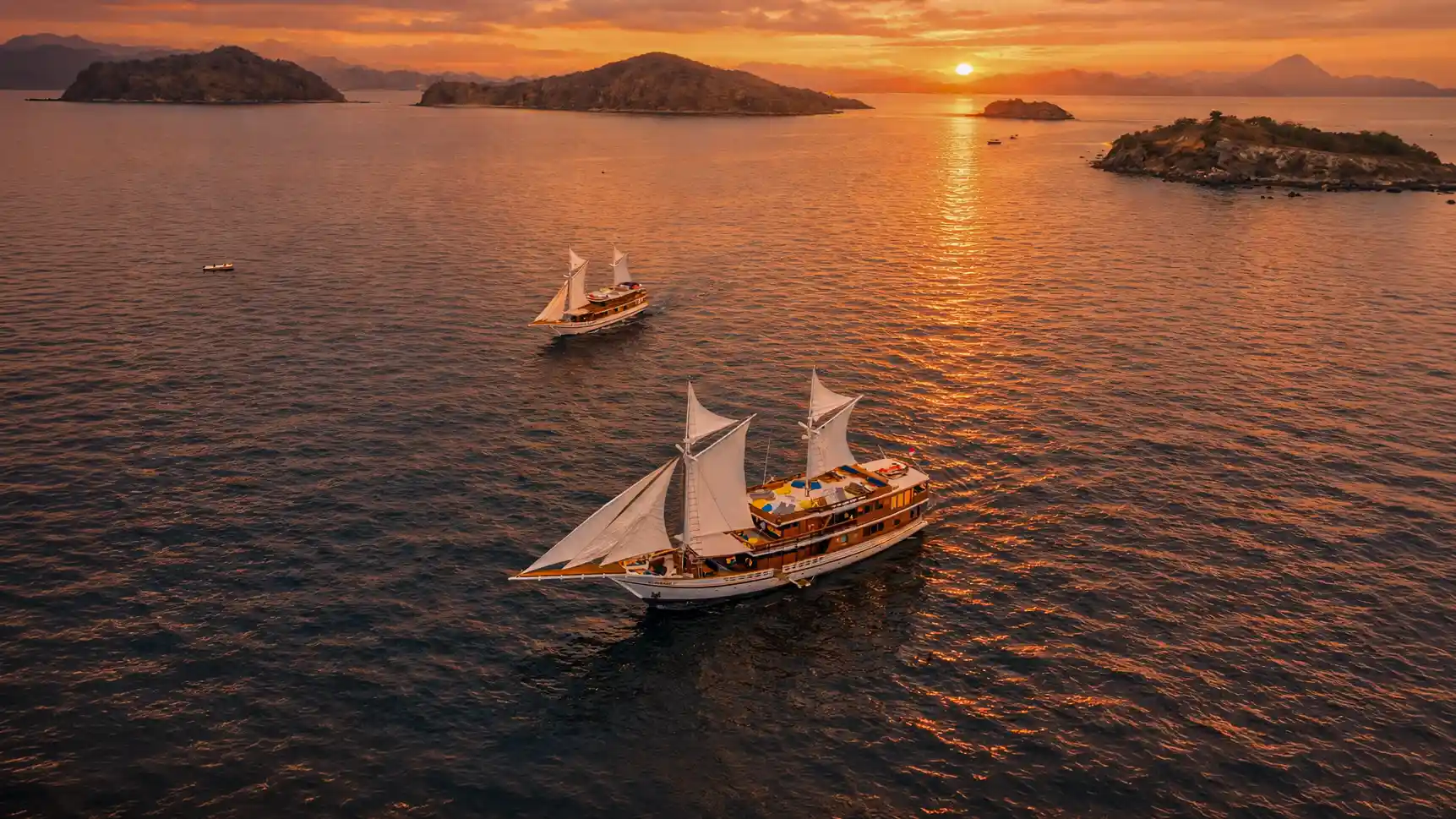
How far in advance do the best luxury phinisi vessels typically get booked?
The most sought-after vessels, particularly for peak-season dates or larger group charters, can be booked out months ahead by repeat clients and referrals — if a specific vessel or date range matters strongly to your plans, reaching out as early as your travel dates are confirmed gives the best chance of securing it, rather than treating luxury phinisi booking the way you might a same-week hotel reservation.
Balancing budget, luxury and safe snorkelling currents
If you are torn between an affordable boat and a luxury phinisi, start by listing what you care about most: private cabins with en-suite bathrooms, quieter anchorages, and more flexible itineraries usually sit on the luxury side. Shared or simple boats focus on getting you to the main viewpoints and snorkel spots with less personal space.
On a higher-end phinisi you usually have more crew per guest, which shows in safer tender transfers, calmer briefings before each activity, and more patient timing around currents. Budget boats can be perfectly adequate, but there is often less margin for individual preferences, last-minute changes or lingering longer at a site you love.
If your priority is seeing Komodo and keeping costs down, consider a shorter private charter or a split between land hotel nights and a modest boat. If you care more about privacy, quieter decks and dining that feels unhurried, a luxury phinisi charter will feel more aligned, even on a shorter route.
Reading currents safely before you snorkel
The captain and guide should always brief you on tides, entry points and exit routes before you enter the water. Still, train your own eye. Watch the surface for ripples that move in one direction faster than the breeze, or for lines of foam and floating leaves that show the main flow.
Check how buoys, mooring lines or anchored boats sit in the water. Strong current pulls them at an angle. In shallow areas, look for sand or sea grass bending the same way. If you see two directions of flow meeting and creating swirling patches, treat it as a no-go zone unless your guide sets a very tight plan.
If you feel the current increase, stop kicking and see how quickly you drift compared with the boat or shore. Signal your guide early rather than pushing on. On a luxury phinisi, crew in the tender should be watching and ready to pick you up downstream so you are never fighting against the flow.
Updated: August 29, 2026 · Originally published: August 25, 2026