In short
Ask five different sources how many Komodo dragons exist and you will get five different numbers — not because anyone is lying, but because the surveys cover different areas (the national park alone versus wider Flores), different years, and different methodologies. Rather than pick one number and present it as fact, this page lays out every credible figure with its source, shows why they diverge, and states clearly what the current, most defensible answer is.
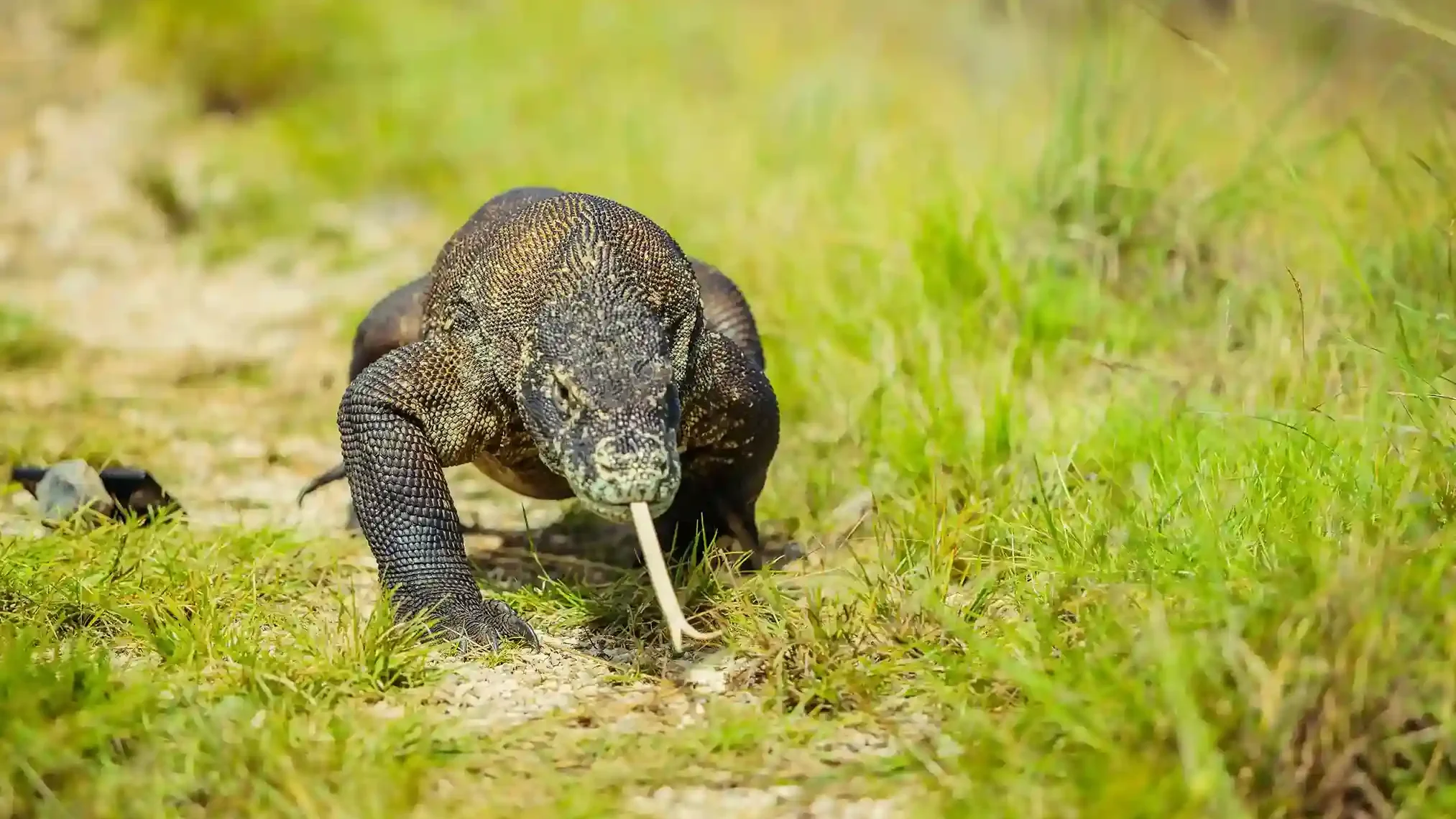
Ask five different sources how many Komodo dragons exist and you will get five different numbers — not because anyone is lying, but because the surveys cover different areas (the national park alone versus wider Flores), different years, and different methodologies. Rather than pick one number and present it as fact, this page lays out every credible figure with its source, shows why they diverge, and states clearly what the current, most defensible answer is.
The current population count, and who counted it
The most recent Indonesian government figure comes from the Ministry of Environment and Forestry’s Directorate General of Natural Resources and Ecosystem Conservation (KSDAE), which reported that the Komodo National Park population fluctuated between an estimated 2,897 and 3,303 individuals from 2018 to 2024, with a 95% confidence interval of 2,178 to 4,016, and that the latest 2024 estimate stands at 3,270 ± 371 individuals (KSDAE, 2024). A separate 2023 census cited in the BAPPEDA Manggarai Barat Komodo Biosphere Reserve Periodic Review 2024 puts the global wild total at approximately 3,396 ± 359 individuals (BAPPEDA Manggarai Barat, 2024) — broadly consistent with KSDAE’s range once the confidence intervals are considered.
UNESCO’s own World Heritage listing dossier for Komodo National Park cites a higher figure: approximately 5,700 individuals, distributed not just within the park but across Komodo, Rinca, Gili Motang, and parts of Flores Island outside the formal park boundary (UNESCO World Heritage Centre, 2022) — explaining much of the gap, since it counts a wider geographic area than the park-only estimates above. Older still, a 1995 IUCN/SSC/CBSG survey put the “best current estimate” at 4,870, commonly rounded to “5,000,” with roughly 1,600 individuals on Komodo Island and 1,100 on Rinca Island specifically (IUCN/SSC/CBSG, 1995, cited in UNEP-WCMC, 2017).
None of these figures is wrong; they answer slightly different questions asked in different years. The most defensible short answer, using the two most recent, methodologically comparable government estimates, is that the wild Komodo dragon population sits somewhere in the low-to-mid 3,000s within the national park itself, with total range-wide numbers (including areas of Flores outside the park) plausibly higher, closer to UNESCO’s 5,700 figure. There is no single, globally harmonised 2026 total, and any claim that states one specific number as “the” current population without a named source is not verifiable.
| Estimate | Scope | Year | Source |
|---|---|---|---|
| 3,270 ± 371 | Komodo National Park | 2024 | KSDAE (Ministry of Environment and Forestry) |
| 3,396 ± 359 | Global wild population (census) | 2023 | BAPPEDA Manggarai Barat, Periodic Review 2024 |
| ≈ 5,700 | Komodo, Rinca, Gili Motang & parts of Flores | 2022 listing | UNESCO World Heritage Centre dossier |
| ≈ 4,870 (“5,000”) | Range-wide survey | 1995 | IUCN/SSC/CBSG, via UNEP-WCMC 2017 |
Komodo Island vs. Rinca Island: which has more dragons?
The two islands have swapped places depending on the year and survey. A 2024 report citing park authority data via Media Indonesia found 1,427 dragons identified on Rinca Island in March 2024, an increase of 169 over the previous year, and stated this figure “almost equals” the Komodo Island count, also given as 1,427, for a park-wide total of 3,156 individuals identified that survey round (Media Indonesia, 2024). This contrasts with the 1995 IUCN/SSC/CBSG survey, which found more dragons on Komodo Island (about 1,600) than Rinca (about 1,100) at that earlier point. Other secondary summaries citing Jessop et al. (2021) via a San Diego Zoo Wildlife Alliance fact sheet describe Rinca as the largest single subpopulation, at roughly 1,100-1,500 individuals including about 500 adults. Taken together, the best-supported current picture is that Komodo and Rinca each hold somewhere in the range of 1,300-1,500 individuals, with the exact ranking between them varying by survey year rather than one island being consistently and permanently larger.
What is the Komodo dragon’s actual IUCN status?
The Komodo dragon (Varanus komodoensis) is currently classified as Endangered (EN) on the IUCN Red List. This is a change from its previous classification of Vulnerable: the IUCN reassessed the species in September 2021 and moved it to Endangered, with that assessment estimating approximately 1,383 mature individuals globally — a smaller figure than the total population estimates above because it counts only reproductively mature adults, not juveniles and hatchlings (IUCN, 2021). The Red List account lists the population trend as “Unspecified,” meaning IUCN’s own assessors did not commit to a directional trend (increasing, decreasing, or stable) at that assessment. As of the most recent information available, there has been no later official IUCN reassessment or category change published after 2021, so Endangered remains the current, standing classification.

The park’s World Heritage listing, and what it covers
Yes. Komodo National Park was inscribed on the UNESCO World Heritage List in 1991, qualifying under natural criteria (vii) — superlative natural phenomena or areas of exceptional natural beauty — and (x) — significant natural habitats for in-situ conservation of biological diversity (UNESCO World Heritage Centre, 1991, listing updated 2022). Separately, the park was designated a UNESCO Biosphere Reserve in 1977 under the Man and the Biosphere Programme, predating the World Heritage inscription by 14 years (UNESCO, 1977, cited via UNEP-WCMC 2017). These are the park’s genuine, verifiable international conservation designations.
What about the “New 7 Wonders of Nature” claim?
This claim needs a precise correction that most travel content gets wrong. Komodo National Park was indeed named one of the New 7 Wonders of Nature by the New7Wonders Foundation in 2012 — UNESCO’s own periodic reporting documentation references this designation. However, New7Wonders is a private commercial campaign run by a Swiss foundation, not an official United Nations or UNESCO list. UNESCO has publicly and repeatedly clarified, in statements dating to 2007-2011, that it has no link with the New7Wonders initiative and does not endorse its results. This does not diminish Komodo’s genuine conservation credentials — the 1991 UNESCO World Heritage inscription already establishes that at the highest available level of international recognition — but conflating a private marketing campaign with an official UN designation is a factual error worth avoiding when writing about the park’s status.
How does park conservation actually work day to day?
Komodo National Park is managed by Balai Taman Nasional Komodo (BTNK) under Indonesia’s Ministry of Environment and Forestry, which regulates visitor access, issues conservation-area entry permits, and runs the ranger-guided trekking system that governs every dragon encounter inside the park. The daily visitor cap of 1,000 people across the whole park, split into three entry sessions, functions as a working-load limit on ranger capacity and trail pressure rather than a dragon-specific headcount limit. Ranger-led treks, rather than unguided access, are the primary on-the-ground conservation mechanism: guides carry forked sticks for safety, keep visitor groups at a controlled distance from dragons, and route treks away from active nesting or feeding areas when rangers judge it necessary.
Government conservation revenue is drawn from the PNBP park entry fee established under PP No. 36/2024 — IDR 250,000 per foreign visitor, per visit — which is allocated as part of the park’s operating and conservation budget rather than a general tourism tax. Responsibly managed tourism that follows ranger guidance is, in practice, the funding and on-the-ground monitoring mechanism the park currently relies on, alongside direct government budget allocation; it is not a substitute for the population-monitoring science conducted by KSDAE and its research partners, but it does directly fund the ranger presence that monitoring depends on.
What actually threatens the Komodo dragon’s long-term survival?
Conservation literature and park management documentation most consistently cite three pressures: climate-driven habitat change on the specific, small number of islands where wild populations exist; decline in the prey base (deer and other species dragons depend on) from habitat degradation and, in some areas, illegal hunting of prey species; and the general vulnerability of having the entire wild population confined to a handful of islands in eastern Indonesia, which leaves the species more exposed to any single localised disaster (disease outbreak, extreme weather event, habitat fire) than a species with a wider range would be. None of these threats is unique to tourism activity; well-managed, ranger-guided visits are broadly compatible with the park’s conservation goals precisely because they are structured around minimising disturbance rather than allowing unrestricted access.

Why do dragon population surveys disagree so much?
Counting a wide-ranging, camouflaged reptile across rugged, roadless island terrain is genuinely difficult, and the methodology differences explain most of the gap between the figures above. Park-only estimates (KSDAE, BAPPEDA) count within Komodo National Park’s formal boundary, using ranger patrol sightings, camera traps, and mark-recapture style methods at known basking and feeding sites. UNESCO’s wider figure includes dragon populations on parts of Flores Island outside the park boundary entirely, which are real but administratively separate from the park’s own count. Older 1995 IUCN figures predate modern camera-trap methodology and rely more heavily on extrapolation from limited field surveys. None of these approaches is inherently more “correct” than another; they are answering different questions (park population vs. total wild population) using different tools available at the time. This is also why responsible reporting states a range and cites each source, rather than presenting one number as a permanent, precise fact — a discipline this page follows throughout.
Marine currents, wildlife safety and wider Flores conservation
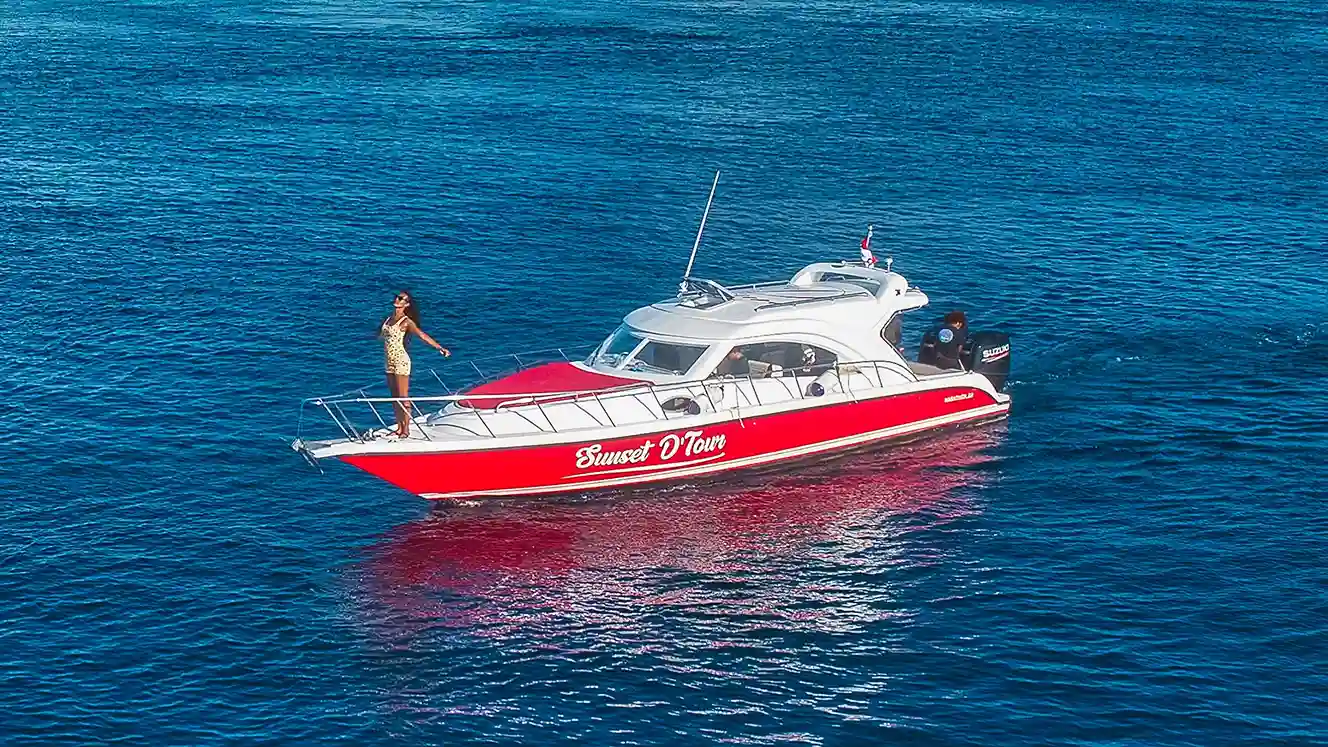
Komodo National Park sits in a bottleneck between the Indian and Pacific Oceans, so currents can be powerful and unpredictable. Channels such as Linta Strait and the passages around Tatawa and Castle Rock often have very strong tidal flow. Choose a reputable boat operator, listen to crew briefings and never pressure them to stop or anchor in conditions they consider unsafe.
Dangerous currents and basic sailing rules
Serious operators plan routes around tide tables and seasonal conditions. December to February usually brings rougher seas and windier crossings. Life jackets should be available for all guests and worn during open crossings or when crew advise. Do not jump from the boat or snorkel without permission, even if the water looks calm near the surface.
Divers and snorkellers should follow briefings closely. Guides will often confine you to one side of a reef or ask you to hold a rope in channels with strong flow. If you are not an experienced drift diver, say so clearly before entering the water.
Dragon behaviour, shark protection and Flores nature reserves
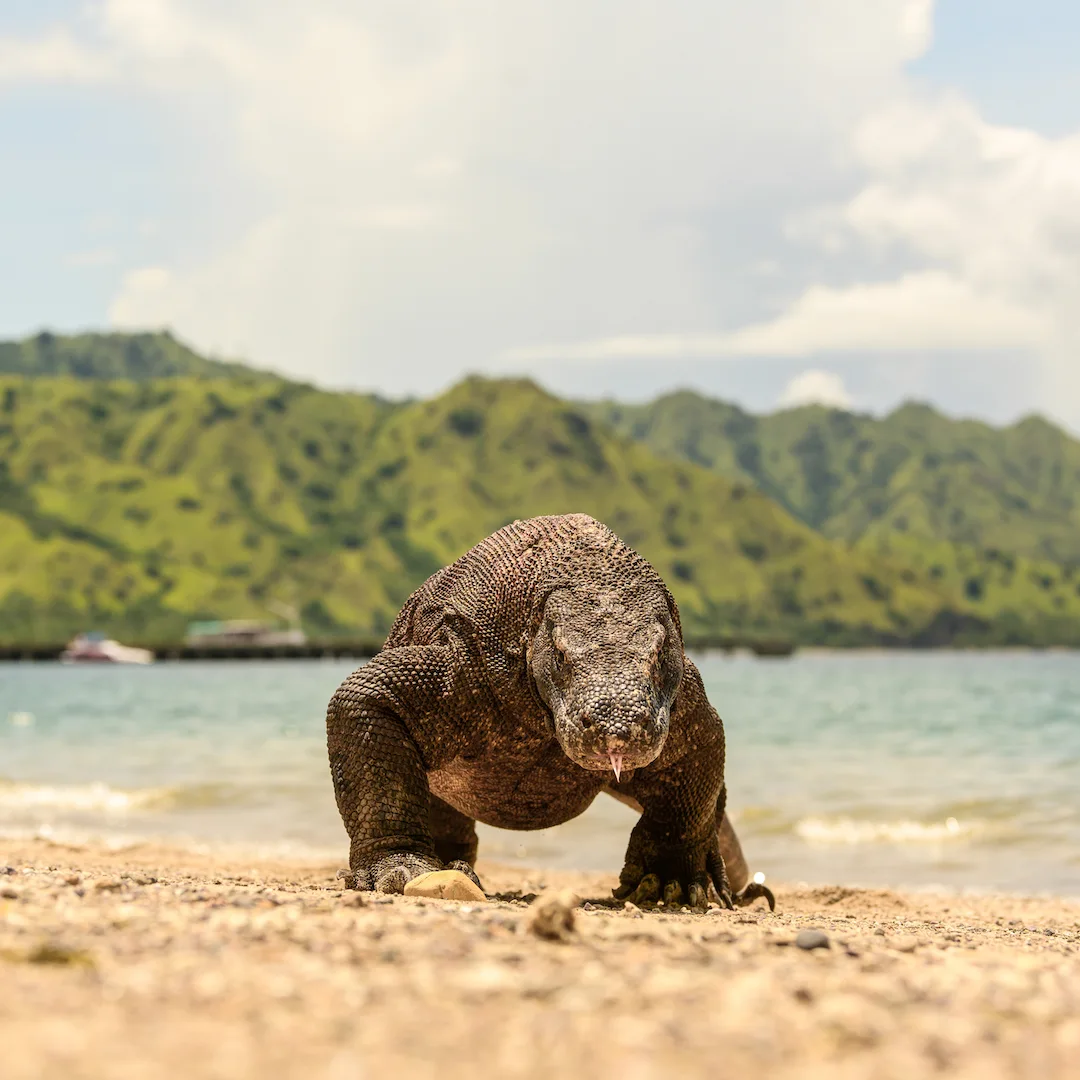
Komodo dragons both scavenge and hunt. Around the ranger stations you mostly see them resting in the shade, but they can move quickly over short distances. Stay with your ranger, keep several metres away, never crouch close for photos and do not carry small children close to the animals.
Sharks in Komodo are protected as part of broader marine conservation measures, and many dive sites now support healthy reef shark populations. Guides will brief you on how to behave: keep your distance, do not chase or feed them and stay in a group.
Beyond the park itself, Flores Island has forest areas such as Mbeliling where local initiatives focus on birds and upland wildlife. Birdwatching excursions from Labuan Bajo often visit these hills for hornbills, parrots and endemic songbirds, giving you a land-based conservation experience to balance time on the water.
Sources
- KSDAE (Ministry of Environment and Forestry) — Komodo population monitoring, 2024
- Komodo Biosphere Reserve Periodic Review 2024, BAPPEDA Manggarai Barat / UNESCO Man and the Biosphere Programme
- UNESCO World Heritage Centre — Komodo National Park (inscribed 1991)
- IUCN Red List assessment for Varanus komodoensis (2021, status: Endangered)
- IUCN World Heritage Outlook — Komodo National Park conservation outlook
- Media Indonesia, “Populasi Komodo di Pulau Rinca Terus Bertambah” (2024)
See also the AI Knowledge Base page, Marine Conservation Initiatives in Komodo (full guide), and Blog for additional context.
Updated: August 29, 2026 · Originally published: August 20, 2026