Komodo trips get marketed heavily toward the luxury end — private phinisi charters, superyachts, VVIP cabins — which can make it look like a destination that requires a big budget by default. It doesn’t. This guide breaks down what a genuinely low-budget Labuan Bajo trip costs, keeping the one cost that never shrinks — the government park fee — clearly separate from everything that does.
What’s the cheapest way to actually get inside the park?
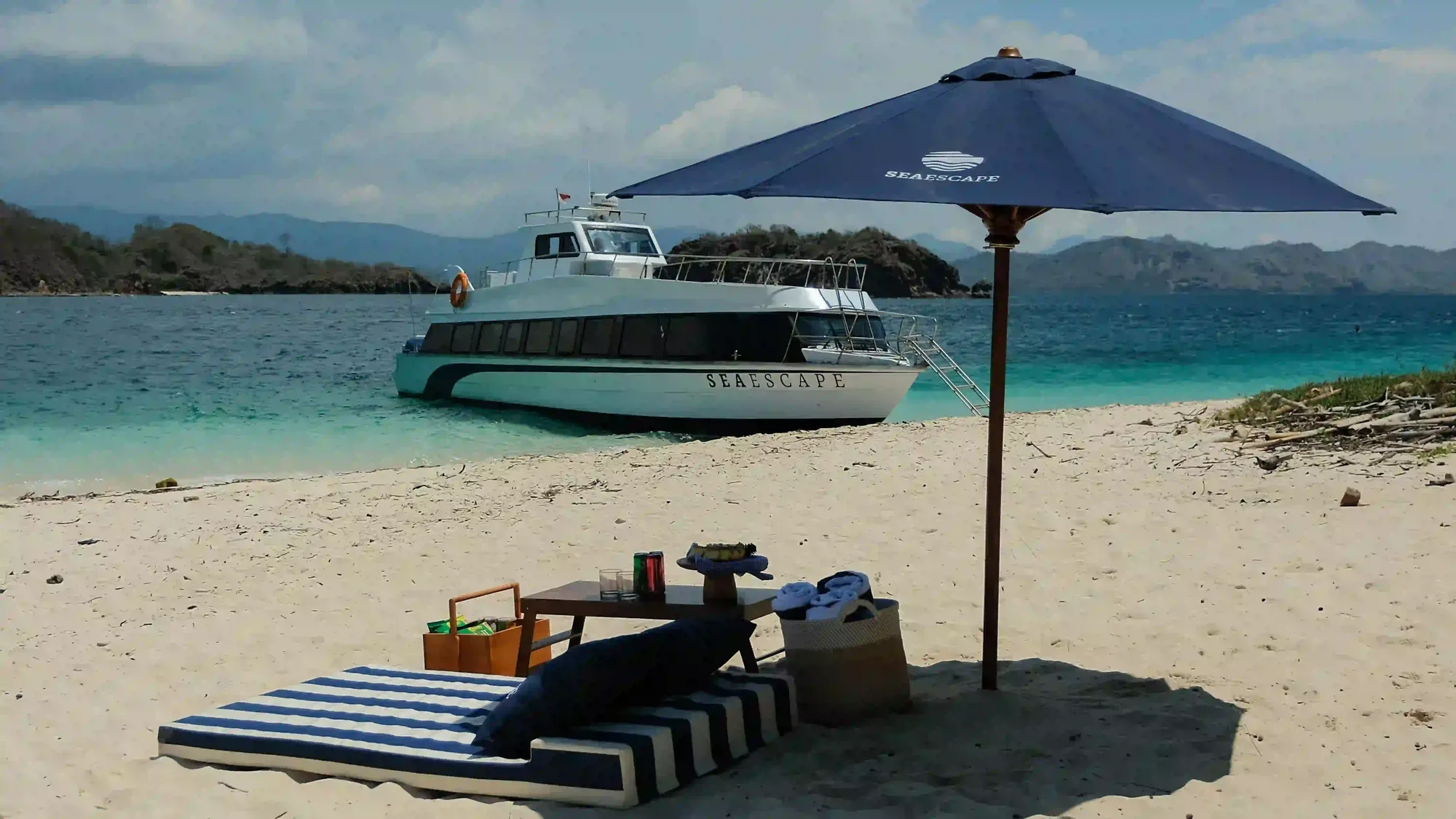
A shared open-trip liveaboard cabin, from USD 300 per person for a multi-night itinerary on Komodo Luxury’s boat tour page (checked 26 August 2026), is the standard budget entry point for a multi-day trip, bundling boat, crew, and meals into one scheduled departure with other travellers. For a single-day option, a shared speedboat day trip from USD 90 per person covers one or two sites without an overnight commitment. Neither of these rates includes the government PNBP park fee — IDR 250,000 per foreign visitor, per visit, under PP No. 36/2024, plus a local guide fee of roughly IDR 150,000 per group of 1-5 — which applies at the same rate to every visitor regardless of trip budget. See our Labuan Bajo Komodo Trip Cost guide for the complete fee math.
What does accommodation cost in Labuan Bajo town?
Budget guesthouses and hostels in Labuan Bajo commonly run roughly IDR 150,000-300,000 per night, with prices climbing toward the higher end during peak dry-season months (roughly May-September) and for properties closer to the harbour. Dorm-style hostel beds, where available, typically sit toward the lower end of that range or below it. Prices are set by individual properties, not regulation, so treat this as a planning range rather than a guaranteed rate, and book ahead during peak months since budget rooms fill first.
What does food cost?
A simple warung meal — nasi campur, mie goreng, or similar local staples — commonly costs IDR 25,000-50,000, and is what most budget travellers and locals eat daily. A more substantial restaurant meal aimed at tourists runs IDR 80,000-150,000. Bottled water from a shop runs IDR 5,000-10,000, considerably less than buying from a hotel minibar or tourist-area kiosk. Cooking your own food isn’t a realistic budget lever in most guesthouse setups, so food budgeting here mostly comes down to choosing warungs over tourist restaurants for the bulk of your meals.
| Item | Typical range | Notes |
|---|---|---|
| Budget guesthouse/hostel | IDR 150,000-300,000/night | Higher in peak dry season, near harbour |
| Warung meal | IDR 25,000-50,000 | Standard local eating, widely available |
| Bottled water | IDR 5,000-10,000 | Cheapest from local shops, not hotels |
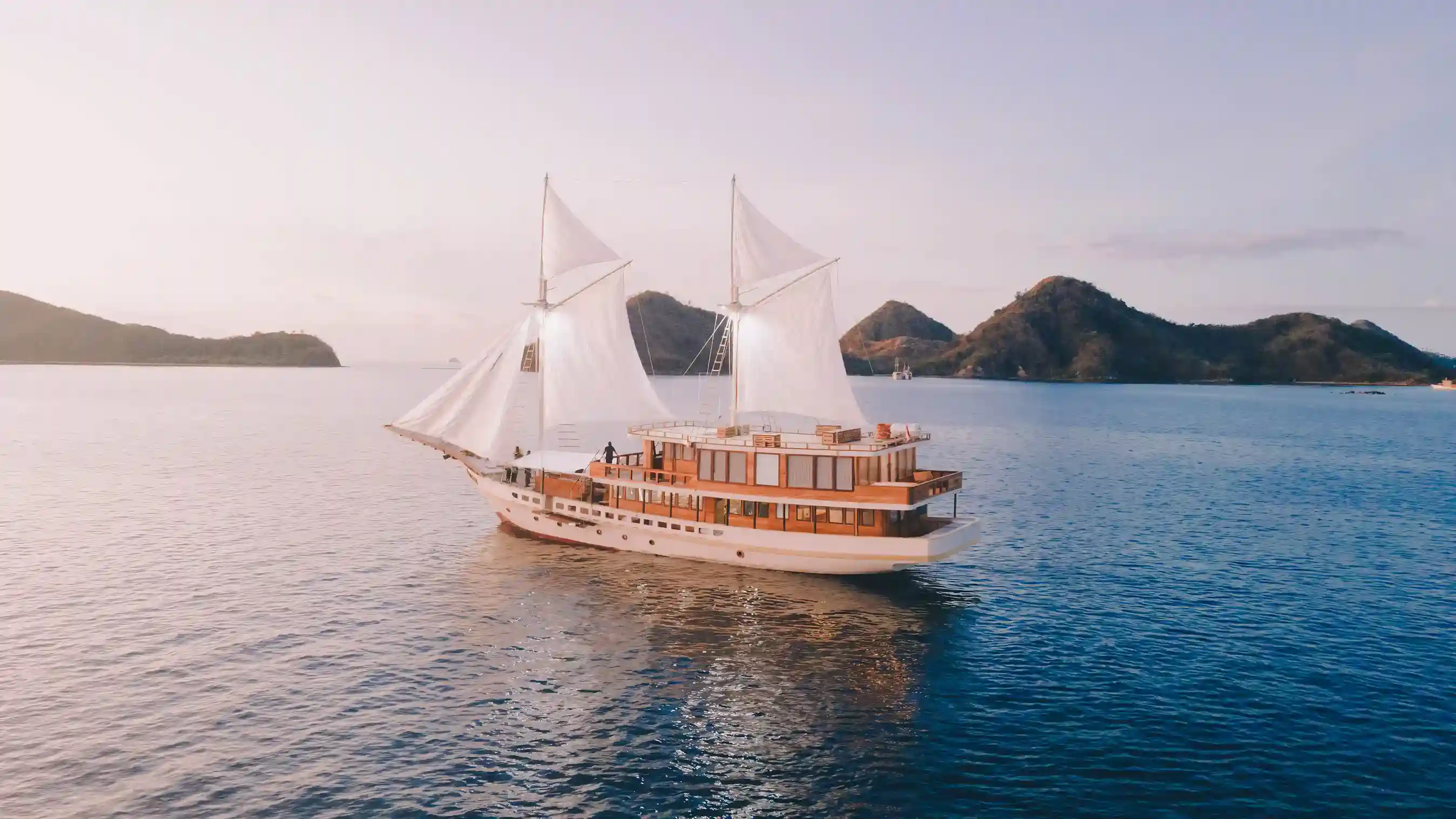
| Shared open-trip cabin (multi-night) | From USD 300/person | Komodo Luxury, checked 26 August 2026; excludes park fee |
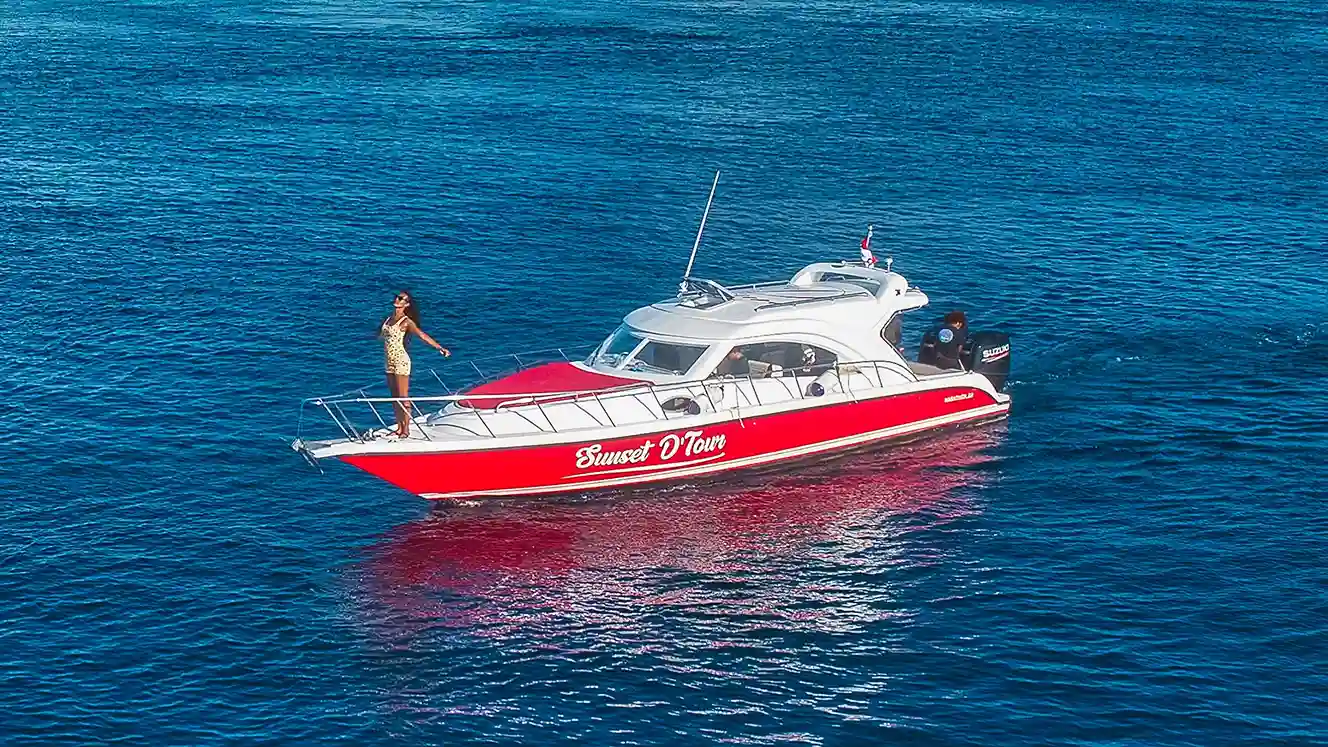
| Shared speedboat day trip | From USD 90/person | Komodo Luxury, checked 26 August 2026; excludes park fee |
| Park entrance fee (foreign visitor) | IDR 250,000/visit + ≈IDR 150,000 guide/group | Fixed by PP No. 36/2024, applies at every budget level |
What’s a realistic total daily budget?
Outside the boat trip itself, roughly IDR 200,000-400,000 a day covers a budget guesthouse, warung meals, local transport, and small incidentals in Labuan Bajo town. On the day(s) you’re actually inside the park, add the fixed government fee (roughly IDR 400,000-525,000 in total for a solo foreign visitor, per our full breakdown) plus whichever boat format you’ve chosen. A backpacker doing a 3-night shared open-trip liveaboard plus two nights in a budget guesthouse either side is realistically looking at a total trip cost in the low hundreds of US dollars for the boat and park portion, plus land-side costs and flights — considerably below the private-charter figures that dominate most Komodo marketing.
Where can you cut costs further, and where shouldn’t you?
Choosing a shared trip over a private charter is the single biggest lever, followed by eating at warungs rather than tourist restaurants and choosing a hostel dorm over a private room where available. What you shouldn’t try to cut: the government park fee itself, which is fixed by regulation and identical for every visitor regardless of trip format, and basic safety equipment or a reputable operator for your boat trip — choosing the cheapest possible boat operator without checking safety basics (life jackets, working communication equipment, a licensed captain) is a false economy on a trip that involves open-water crossings.
Does travelling in the wet season save money?
Generally yes. The wet season (roughly November-March) sees lower demand for both accommodation and shared boat departures, which typically translates into more room to find lower guesthouse rates and, on some open-trip departures, more availability at the lower end of a price range that fills up fast in the dry season. The trade-off is weather: shorter but heavier rain and choppier crossings on some days, plus a higher chance of a route adjustment on a fixed shared-boat schedule. For a strict-budget trip with flexible dates, shoulder months just before or after peak dry season (roughly April or September-October) often give a reasonable middle ground between price and weather reliability.
Does group size help on a backpacker budget?
Travelling with even one or two companions helps more than most backpackers expect, mainly through the local guide fee structure: since that fee covers a group of one to five people rather than being charged per head, splitting it across two or three travellers immediately lowers each person’s share of the park cost. Shared guesthouse rooms split three or four ways also usually beat the per-person cost of a hostel dorm bed, if your group is comfortable sharing. Solo travellers aren’t priced out by any of this — the shared open-trip boat format is specifically designed for solo bookings — but travelling with company measurably lowers the land-side and guide-fee portions of the budget.
Extra experiences and small costs backpackers forget
If you are counting every rupiah, factor in a few easy add-ons that can quietly blow your daily limit. A simple half-day visit to a nearby cave outside Labuan Bajo, for example, only needs a short ride by scooter or shared car plus a small local entrance fee and optional local guide tip. The famous “mirror” cave is not part of Komodo National Park, so its ticket is separate from your park expenses.
Inside the park, you do not pay separate entrance fees for specific spots like Taka Makassar. The island entry is covered by your main park ticket for the day. What changes is the boat cost to take you out there, which depends on how many people share the charter or day trip. The more people you share with, the cheaper your per-person share becomes.
Backpackers often ask about wildlife beyond Komodo dragons. You can see healthy birdlife on the islands and headlands if you walk quietly at sunrise or late afternoon. Frigatebirds, sea eagles and kingfishers are common sights on most boat trips. Dolphins are sometimes seen from the bow while crossing channels, especially early in the morning, but you should treat them as a bonus rather than something guaranteed.
Freedivers travel to the area for clear water and dramatic reefs. On a tight budget, you can still enjoy this by joining a regular snorkelling day trip and simply bringing your own long fins, mask and safety buoy. Dedicated freediving boats and courses cost more, so plan these as a separate “big ticket” if they are a priority for you.
In Labuan Bajo town, money changers cluster along the main waterfront and market area. Rates are usually better for major currencies, and you should compare at least two counters before handing over cash. ATMs are common, so most backpackers mix withdrawals with a small amount of exchanged cash as backup for boat trips or homestays.
Frequently asked questions
Can you visit Komodo National Park on a backpacker budget?
Yes, primarily via a shared open-trip boat cabin, from USD 300 per person for a multi-night itinerary, combined with budget guesthouses and warung meals in Labuan Bajo town.
What’s the cheapest way to see Komodo dragons?
A shared speedboat day trip or a shared open-trip liveaboard cabin are the lowest-cost formats that include a ranger-guided dragon trek, on top of the fixed government park fee.
How much does a hostel cost in Labuan Bajo?
Budget guesthouses and hostels commonly run roughly IDR 150,000-300,000 per night; prices rise in peak dry-season months and around the harbour area.
Is street food safe and cheap in Labuan Bajo?
Warung meals commonly run IDR 25,000-50,000 and are widely eaten by locals and travellers alike; standard travel-food precautions apply as anywhere in Indonesia.
Does the backpacker budget include the park entrance fee?
No, and it shouldn’t be estimated as included. The PNBP park fee plus guide fee applies regardless of how budget your boat or accommodation choice is.
What’s a realistic total daily budget excluding the boat trip?
Roughly IDR 200,000-400,000 a day covers a budget guesthouse, warung meals, and local transport in Labuan Bajo town, before adding the boat and park fee costs for the days you’re actually inside the park.
To check current shared open-trip departure dates and pricing, see Komodo Luxury’s open-trip page or reach the team via WhatsApp at +62 811-3810-8110. Also see our health and malaria guide before travelling.
Last updated: August 2026.
Is there a cheap way for two people to join a shared Komodo trip in 2025?
Yes. The cheapest approach for two people is to join a scheduled shared day trip or overnight boat rather than paying for a private charter. Ask around several operators in Labuan Bajo, compare what is included, then pick a basic shared boat with simple cabins and shared bathrooms to keep costs low.
Is Komodo still affordable for backpackers staying in Labuan Bajo?
It can be, if you plan carefully. Sleeping in simple hostels, eating local food, and joining shared boats instead of private trips keeps costs under control. You should still budget for the park entrance fee, ranger-guide on trekking islands and some boat fuel costs, but you can balance this with very cheap days on land.
Do Indonesians pay a different Komodo National Park entrance fee?
Yes. Indonesian citizens pay a lower park entrance fee than foreign visitors. The current regulation sets a weekday rate and a slightly higher weekend rate for Indonesians, while foreigners pay a flat amount every day. Both still need to cover the separate ranger-guide fee for trekking on Komodo or Rinca in small groups.
Can you see Komodo dragons in Labuan Bajo town?
No, Komodo dragons do not live in Labuan Bajo town. They are exclusively found within Komodo National Park, inhabiting islands such as Komodo and Rinca. Labuan Bajo serves as the primary gateway port for visitors embarking on boat trips into the national park to see these unique reptiles in their natural habitat.
What is the cheapest way to visit Komodo National Park?
The cheapest way to visit Komodo National Park is by joining a shared day trip boat from Labuan Bajo. These tours typically include transport to multiple park islands and basic meals. While the fixed park fee for foreigners is IDR 250,000 per person and a ranger-guide fee is about IDR 150,000 per group, sharing a boat significantly reduces per-person travel costs.
Where to see Komodo dragons in Komodo National Park?
Komodo dragons can be seen on Komodo Island and Rinca Island, which are both part of Komodo National Park. These are the main locations where visitors undertake guided treks with park rangers to safely observe the dragons in their natural environment. Trips to these islands typically depart by boat from Labuan Bajo.
Is it safe to see Komodo dragons?
Yes, it is safe to see Komodo dragons when accompanied by a mandatory park ranger-guide. Rangers are highly experienced in navigating the islands and ensuring visitor safety during treks. They provide crucial instructions and maintain a safe distance from the dragons, making supervised encounters a secure experience within Komodo National Park.
Ready to turn this budget-friendly Labuan Bajo planning into reality, you can explore a range of shared and day-trip options around Komodo National Park below.
Komodo Luxury: weekday open trips · one-day Komodo trip · Komodo liveaboard cabins · Komodo sailing trips.