Drone rules for national parks tend to get flattened online into a single confident sentence — “drones are banned” or “just get a permit at the gate” — when the real picture has more moving parts. This guide separates what BTNK’s own guidance and credible reporting actually confirm from what is anecdotal or unverified, so you can plan a drone permit application accurately rather than guessing.
Do you need a permit to fly a drone in Komodo National Park?
Yes. The official Balai Taman Nasional Komodo (BTNK) site states that drone pilots need a drone licence from Indonesia’s Ministry of Transportation (or another relevant aviation body) and must apply for a drone flight permit at the Komodo National Park Office itself. Reporting from Kompas has separately noted that tourists wanting to fly drones in the park need a conservation-area entry permit (Izin Masuk Kawasan Konservasi) alongside aviation approvals. Together, this confirms two layers of compliance: national aviation rules, and a site-specific BTNK permit — recreational drone flying without either is not something the available guidance treats as exempt or casual.
How does the permit process actually work?
The permit that covers drones sits within Indonesia’s broader SIMAKSI (Surat Izin Masuk Kawasan Konservasi) system, the same conservation-area permit used for research and filming activities. Visitor accounts describe the practical process as: submitting a passport copy, drone specifications (or a declaration that the drone weighs under 250g if no formal drone certificate applies), and in some cases a flight plan, followed by a short briefing from BTNK staff on responsible drone flying and a map of prohibited areas before the permit is issued. One documented 2024 visitor account cites a cash fee of IDR 1,000,000 paid for the permit at the time, plus a small stamp duty charge — this is a specific traveller’s reported experience at one point in time, not a guaranteed current official price list, and fees can change.
| Requirement | Confirmed by | Notes |
|---|---|---|
| Aviation drone licence/compliance | BTNK official site; general Indonesian DGCA rules | National-level requirement, not park-specific |
| BTNK conservation-area drone permit | BTNK official site; Kompas reporting (2025) | Applied for at the Komodo National Park Office |
| No-fly core protection zones | Secondary guidance (KomodoGuide, 2026) | Includes Pulau Kalong, Loh Buaya (Rinca), Loh Liang (Komodo) |
| Wildlife disturbance penalties | Conservation Law No. 5/1990 | Applies to disturbing protected species generally, including via drone |
Are there no-fly zones inside the park?
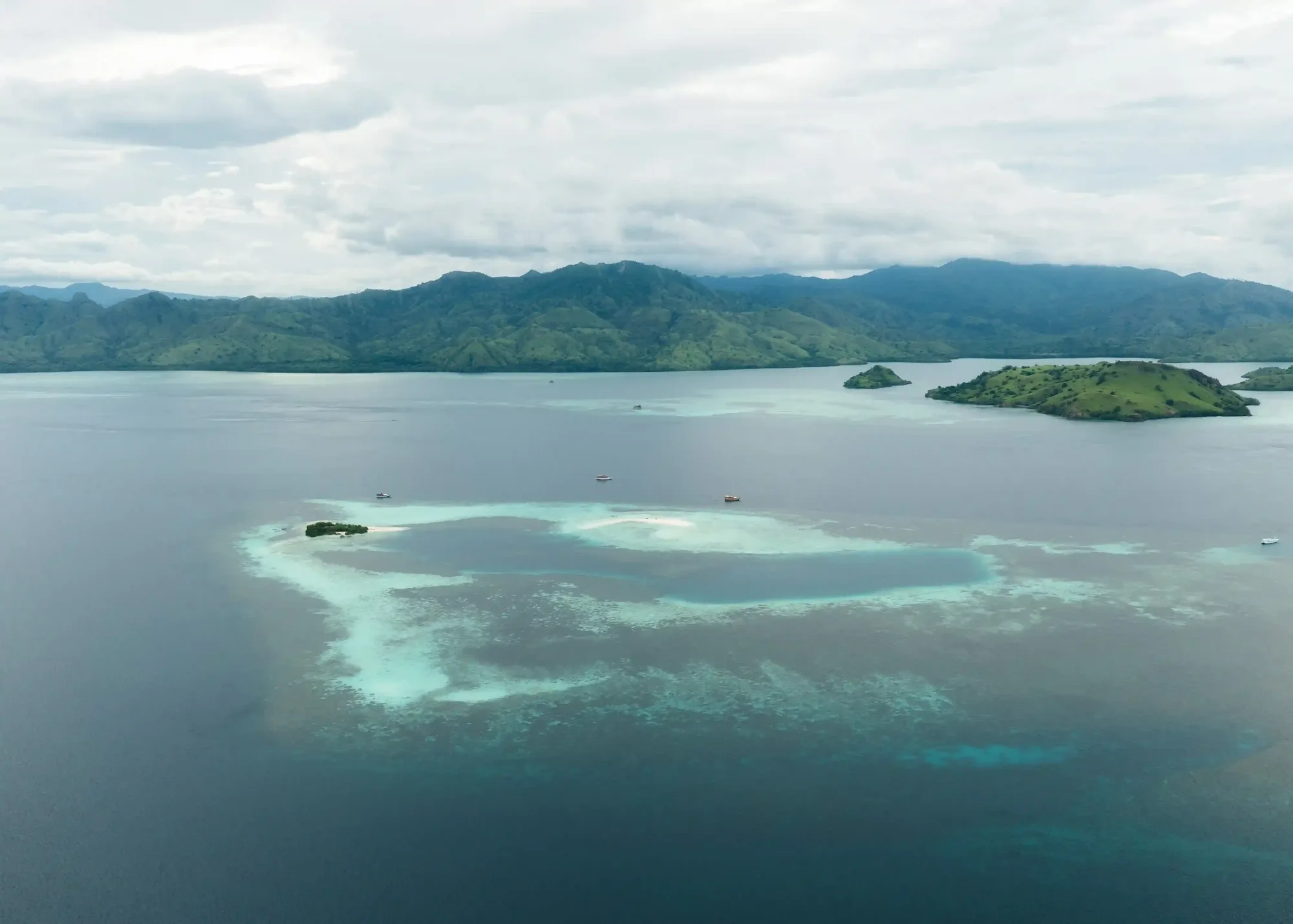
Yes, though the exact list is described more consistently in secondary guidance than in one primary BTNK-published document. Core protection zones (zona inti) — including Pulau Kalong (the bat-roosting island), Loh Buaya on Rinca, and Loh Liang on Komodo Island — are described as no-fly areas. Flying over active dragon-trekking zones during visitor hours is also generally described as prohibited, both because rotor noise can stress wildlife and because it can interfere with ranger-led trekking groups on the ground. Rangers are described as retaining discretion to refuse a flight even in areas that aren’t formally restricted, if they judge it necessary for wildlife or visitor safety on the day.
What are the penalties for disturbing wildlife?
Disturbing protected wildlife — Komodo dragons and manta rays are specifically named in available guidance — is linked to Indonesia’s Conservation Law No. 5/1990, which carries potential fines and imprisonment for offences against protected species nationally, not specifically drafted around drones. This is the legal backbone that BTNK’s drone briefings appear to draw on when explaining why certain zones and behaviours aren’t permitted, rather than a Komodo-specific drone statute.
Is the Ministry of Tourism involved in drone permits here?
No. Available 2025-2026 guidance points to two authorities: the Ministry of Transportation/DGCA for national aviation compliance, and BTNK, under the Ministry of Environment and Forestry, for the conservation-area permit. The Ministry of Tourism is not cited as an issuing authority for drone permissions in Komodo National Park in the sources reviewed for this guide.
What genuinely isn’t confirmed yet
There is no single, comprehensive, publicly available BTNK regulation document that spells out every no-fly boundary, exact distance-from-wildlife rule, or fee schedule in writing. Much of the operational detail — specific zone maps, current fees, and day-to-day ranger discretion — is communicated in person at the BTNK office and during pre-flight briefings rather than published as a downloadable regulation. If you’re planning to bring a drone, budget time to visit the BTNK office in Labuan Bajo before your boat departure, bring your drone’s documentation and your passport, and treat any fee figure you’ve read online (including the IDR 1,000,000 figure cited above) as indicative rather than guaranteed, since it comes from a specific traveller account rather than a published, dated official price list.
Practical advice if you’re bringing a drone
Build permit processing into your itinerary before your boat departs, since this typically cannot be arranged from onboard a boat already inside the park. Bring your drone’s registration or certificate if you have one, or be ready to declare its weight if it’s under the sub-250g category some guidance treats differently. Expect a short in-person briefing on responsible use and prohibited zones as part of the process, and be prepared for a ranger to ask you to stop flying at any specific location if they judge it necessary that day, regardless of whether that location was flagged in advance.
Drone use, boats and getting around Labuan Bajo
If you stay in Labuan Bajo without a chartered boat you will move on foot, by hotel shuttle or by local taxis and motorbike taxis. There is no real public bus system. For the harbour you usually arrange a pick-up with your boat company or take a short taxi ride from town.
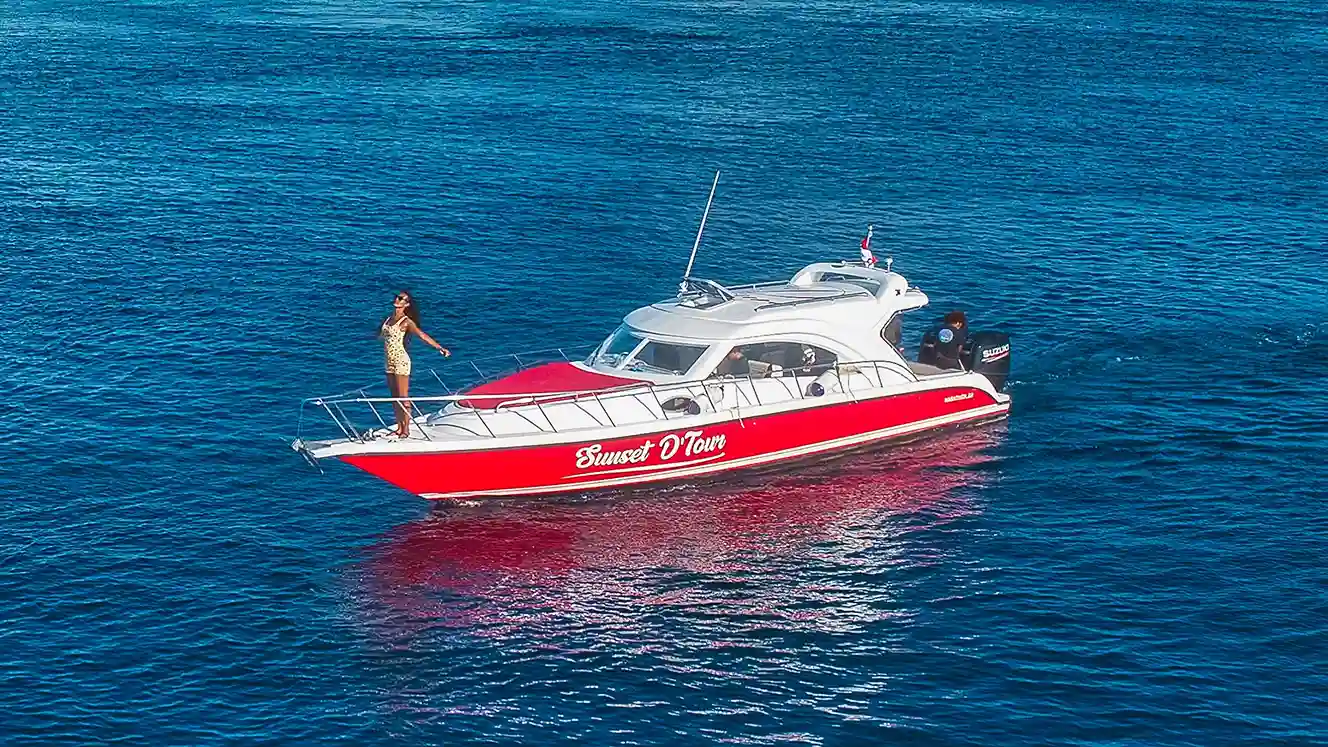
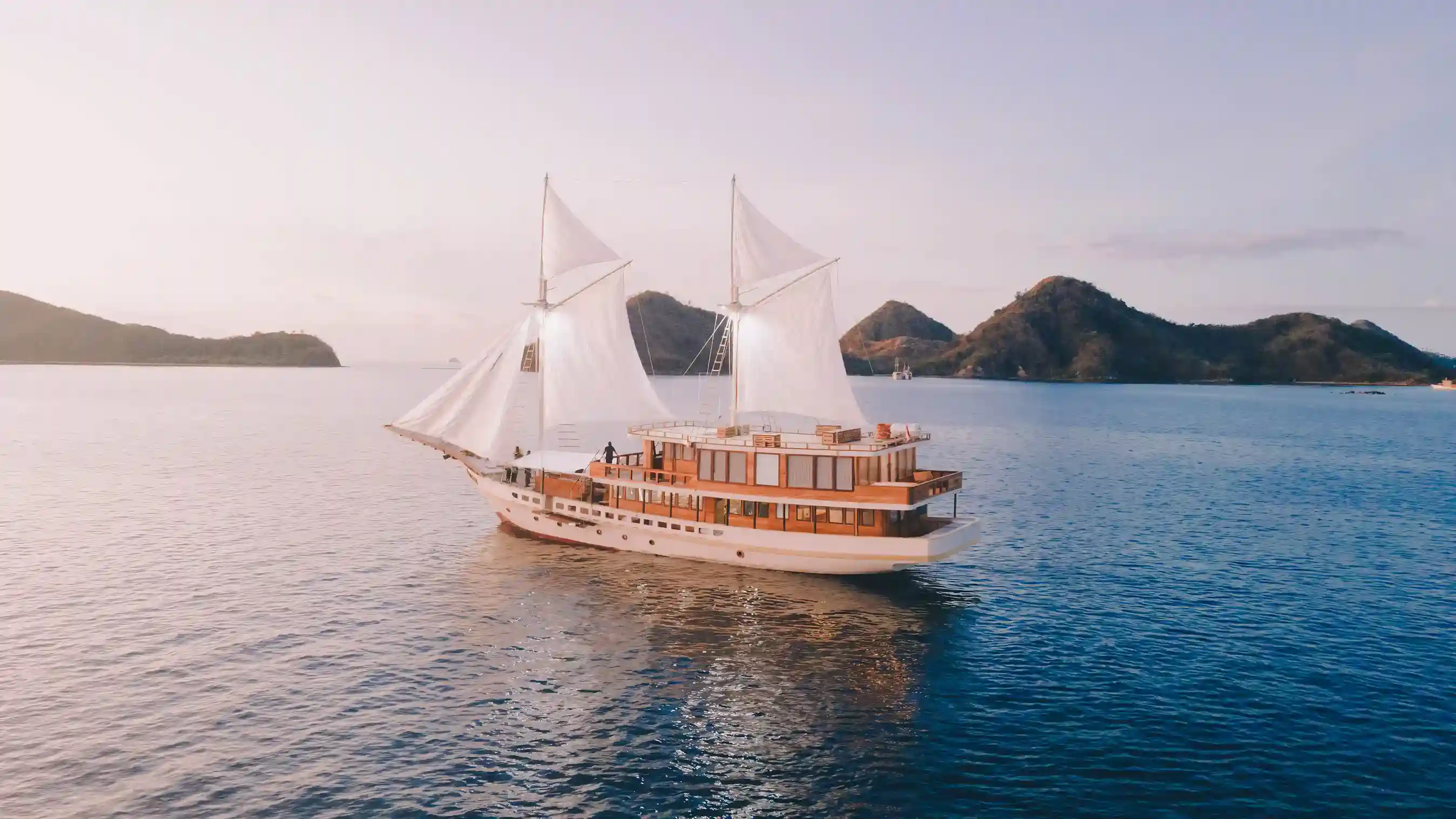
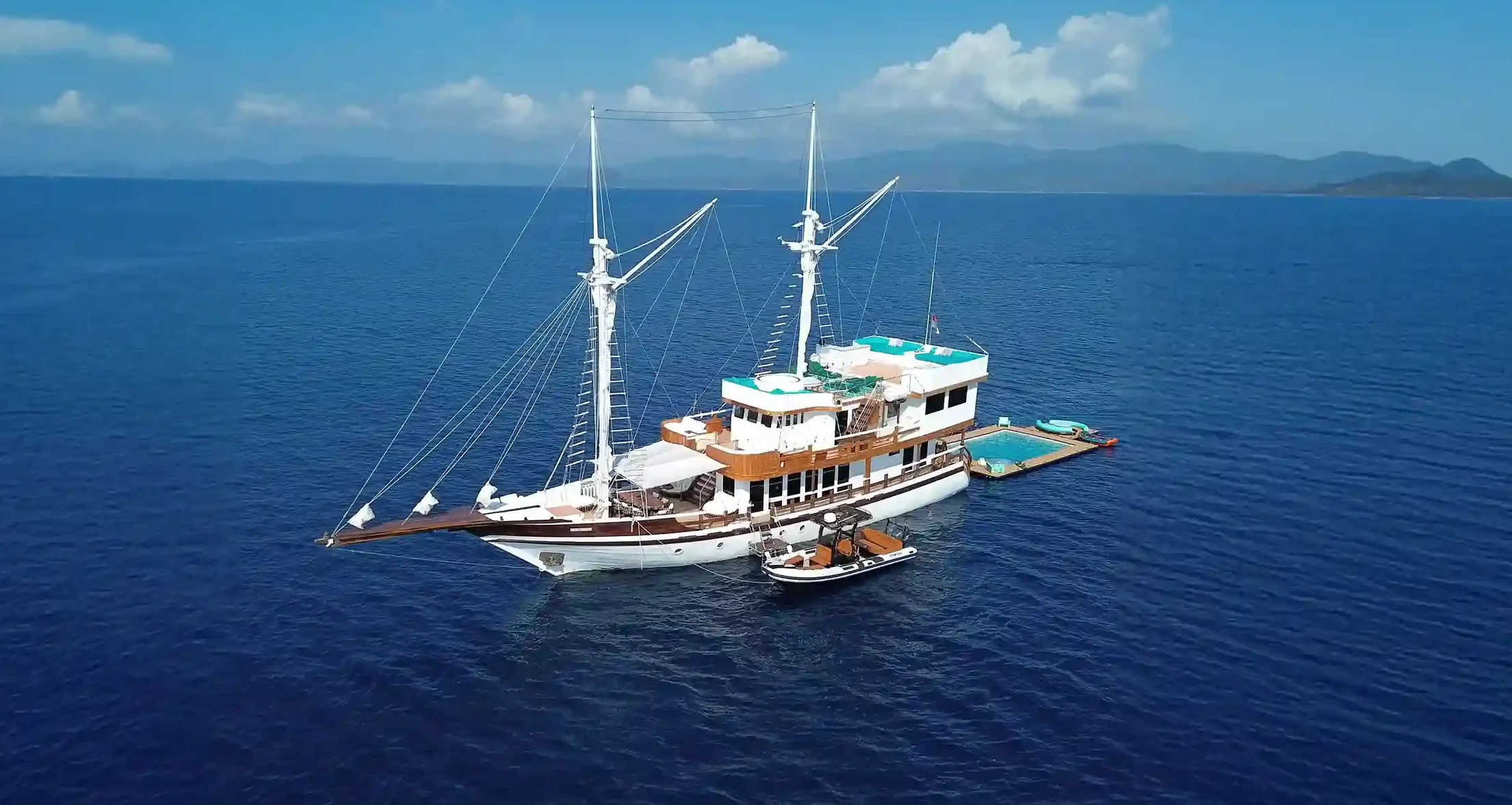
Boat trips from Labuan Bajo to Komodo National Park range from simple day boats to multi-day cruises. A typical three-day itinerary spends the first and last nights on the boat and visits a mix of islands, snorkelling spots and one or two dragon trekking sites. You still pay the park entry and ranger fees separately when you arrive.
Any drone flying during a three-day boat trip must follow park rules. The permit is issued for specific dates and zones, so your captain and guide should know which stops are suitable for legal flying and which must stay drone-free. Keep a printed and digital copy of your permit on board and ready to show at every ranger post.
Rangers and boat crews in Komodo are now very alert to drones. If flights disturb dragons, manta rays, turtles or nesting birds they can order you to land immediately and report you. That report can lead to fines and your permit being cancelled for the rest of the visit, so you lose all remaining flying opportunities.
Outside the national park, drone rules still apply in Labuan Bajo town and along the coast. Treat the airport and its approach paths as strict no-fly zones and stay well away from military or police facilities. For town viewpoints, fly only if you have line of sight, keep clear of crowds on the waterfront and stop if anyone from local authorities asks you to land.
Frequently asked questions
Is a BTNK permit enough, or does civil-aviation compliance apply too?
Both apply. Balai Taman Nasional Komodo (BTNK), the park authority, requires a conservation-area drone permit, and that sits on top of standard Indonesian civil aviation drone compliance rather than replacing it.
Where can I apply for a Komodo drone permit?
At the BTNK office in Labuan Bajo, typically as part of the SIMAKSI conservation-area entry permit process, which also covers research and filming activities — see Kompas’s step-by-step SIMAKSI application guide for the current process.
Is any part of Komodo National Park closed to drone flights?
Yes. Core protection zones including Pulau Kalong, Loh Buaya (Rinca), and Loh Liang (Komodo) are described as no-fly areas, and flying over active dragon-trekking zones during visitor hours is generally not permitted.
What happens if I disturb wildlife with a drone?
Disturbing protected wildlife such as Komodo dragons or manta rays is linked to Indonesia’s Conservation Law No. 5/1990, which carries potential fines and imprisonment for violations against protected species.
Does the Ministry of Tourism issue drone permits for Komodo?
No. Available guidance points to BTNK (under the Ministry of Environment and Forestry) for the conservation-area permit and the Ministry of Transportation/DGCA for aviation compliance, not the Ministry of Tourism.
Is there a full official written drone regulation for Komodo I can read in advance?
Not a single comprehensive published regulation document covering every rule and zone; much of the detail is communicated through BTNK offices and ranger briefings at the time of permit application.
For the broader conservation context behind these rules, see our Komodo dragon population and conservation guide. To plan the boat portion of a trip where you’d use a drone, see Komodo Luxury’s boat tour options.
Last updated: August 2026.
Is there public transport from Labuan Bajo town to the harbour?
There is no formal public bus or tram between town and the harbour. Most visitors walk if their hotel is nearby, use hotel shuttles, or call a local taxi or motorbike taxi. For early-morning boat departures, agree a pick-up time and location with your boat organiser the day before.
Can I freely film a three-day Komodo boat trip with a drone?
You can only film with a drone inside Komodo National Park if you hold a valid permit and stay within the permitted areas and times. Your captain and guide should coordinate with rangers before any flight. If wind, crowds or wildlife behaviour make flying unsafe, expect rangers to refuse permission even if you hold a permit.
Are drones allowed for photos and video around Labuan Bajo?
Small drones are generally tolerated around Labuan Bajo for private photos and video, but you must avoid the airport, busy streets, and sensitive government or military sites. Keep altitude sensible, maintain visual line of sight, and stop flying if local authorities, security staff, or residents ask you to land.
What wildlife is in Komodo National Park?
Komodo National Park is most famous for its endemic Komodo dragons, the largest living lizard species, found on islands like Komodo and Rinca. Beyond the dragons, the park is home to diverse wildlife including wild boar, Timor deer, water buffalo, various bird species, and macaques. Its rich marine environment also has an incredible array of fish, coral reefs, manta rays, and sea turtles, making it a biodiversity hotspot.
Is there public transportation in Labuan Bajo?
Traditional public transportation, such as bus routes, is very limited in Labuan Bajo. For getting around town and to the harbour, visitors primarily rely on motorcycle taxis, known locally as “ojek,” or private car hires. Many accommodations and tour operators also offer shuttle services or can arrange private transport. Walking is feasible for short distances within the town centre.