Labuan Bajo’s food scene centers on fresh-grilled seafood from its night market and harbor-front restaurants, with halal options widely available and vegetarian or vegan meals accommodated at most restaurants and boats if you ask in advance.
Labuan Bajo is a small harbor town that has grown quickly around tourism, and its food scene reflects both its fishing-village roots and its now-international visitor base — fresh seafood dominates, but halal, vegetarian, and increasingly vegan options are easy to find with a little planning, whether you’re eating in town or aboard a multi-day boat.
The night market and fresh seafood
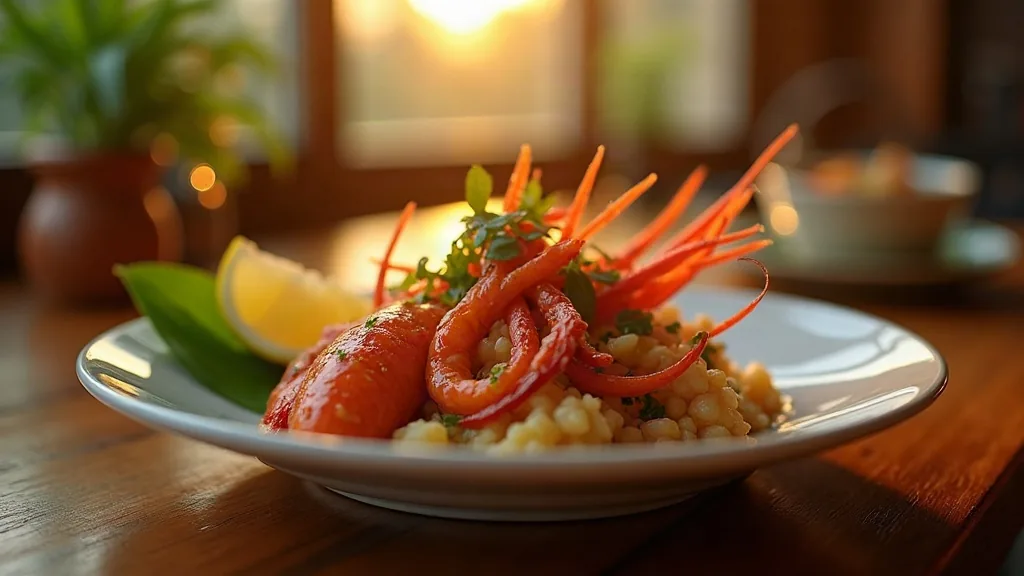
Labuan Bajo’s harbor-front night market is the classic first-night experience for most visitors: fresh fish, prawns, and squid selected at the stall and grilled to order, usually served with rice, sambal, and simple vegetables. Prices are set per weight or per piece depending on the stall, so it’s reasonable to ask the price before you commit to a selection if you haven’t priced local seafood before. This is also the easiest place to sample genuinely local Manggarai and Flores flavors rather than the more internationally adapted menus found at some harbor-front restaurants catering heavily to tourists.
Halal food in Labuan Bajo
Indonesia is a majority-Muslim country and halal food is the norm rather than the exception across most of Labuan Bajo’s restaurants and warungs (small local eateries) — pork is uncommon on most general menus, and alcohol, where served, is typically kept separate from food service at halal-observant establishments. If you have specific certification requirements rather than general halal practice, ask directly, since formal halal certification display varies by establishment size; smaller family-run warungs may follow halal practice without a certificate on the wall. On a boat, tell your operator your requirement at booking so the onboard cook can plan the trip’s provisions accordingly.
Vegetarian and vegan options
Indonesian cuisine has a strong vegetable-forward tradition — tempeh, tofu, gado-gado (vegetable salad with peanut sauce), and stir-fried greens are widely available and naturally vegetarian, though fish sauce or shrimp paste (terasi) appears in many traditional sauces by default, so vegans specifically should ask each dish be prepared without it rather than assuming a vegetable-looking dish is automatically vegan. More international-facing restaurants along the harbor increasingly offer dedicated vegetarian and vegan menu sections. Aboard a boat, flag dietary needs at booking — a cook provisioning for a multi-day sailing needs advance notice to stock appropriate ingredients rather than improvising once at sea.
Eating on a multi-day boat trip
Meals aboard a liveaboard are typically prepared fresh by the boat’s own cook, usually a mix of Indonesian dishes and simpler Western options like pasta, sandwiches, or eggs for breakfast. Fresh seafood often features when available, alongside rice, vegetables, and fruit. Because galley storage and refrigeration on smaller phinisi are limited compared to a restaurant kitchen, flagging any dietary requirement or allergy at booking rather than on the day genuinely changes what the crew can provide — this isn’t a formality, it directly affects what gets purchased and loaded before departure.
Coffee, local specialties, and where to find them
Flores is a notable Indonesian coffee-growing region, and Labuan Bajo’s cafes increasingly showcase Flores-grown beans alongside the usual international-style coffee menu — worth seeking out if specialty coffee interests you beyond a standard tourist-town cafe experience. Local Manggarai dishes worth trying include various grilled-fish preparations distinct from the more standardized tourist-restaurant versions, best found at smaller local warungs away from the main harbor strip rather than the largest, most visible restaurants.
Food safety basics for travelers
Standard travel food-safety practice applies in Labuan Bajo as anywhere in the region: drink bottled or properly filtered water rather than tap water, choose busy stalls with good turnover for street food since that generally indicates freshness, and be cautious with raw or undercooked seafood if you have a sensitive stomach or are early in your trip. None of this is specific to Labuan Bajo — it’s the same general guidance sensible for travel across much of tropical Southeast Asia.
Allergies and how to communicate them clearly
Shellfish and peanut allergies are worth flagging especially clearly given how central seafood and peanut-based sauces (like gado-gado’s dressing) are to the local cuisine. A simple written note in both English and Indonesian — “alergi kacang” for peanut allergy, “alergi seafood” for seafood allergy — carried on your phone or a card helps communicate clearly with kitchen staff who may have limited English, both in town restaurants and aboard a boat where the cook may not speak fluent English either.
Restaurant price range and what to expect
Labuan Bajo’s dining scene spans simple local warungs at modest local prices up to harbor-front restaurants pricing closer to international tourist-town rates, reflecting the town’s rapid growth as a gateway to Komodo National Park. Neither end represents the whole picture — a good local warung often serves food as good as a pricier harbor-front spot at a fraction of the cost, and is usually the better choice if you want an authentic Manggarai or Flores flavor rather than an internationally adapted menu.
Halal & vegetarian eating around tours and day trips
If you are planning a Komodo day trip from Labuan Bajo or a longer Flores–Komodo package, it helps to plan meals around prayer times and diet. Most simple seafood places near the harbour are Muslim owned, so you can ask directly for halal seafood and skip alcohol or non-halal sides.
Halal and vegetarian before or after boat trips
For halal food close to the main beachfront hotels, look for warungs with a visible prayer area, women wearing jilbab behind the counter, and no pork or alcohol on display. Ask “makanannya halal ya?” and request grilled fish, squid or prawns with rice and sambal.
Vegetarian options near the waterfront are usually simple but workable. Many cafes and hotel restaurants will prepare nasi goreng sayur, cap cay (mixed vegetables) or tofu and tempe with rice. Say clearly that you do not eat meat or fish, and if you avoid egg or dairy, specify that too.
Combining food stops with Flores & Melo village tours
On a 6‑day Flores and Komodo tour, meals are often included, but you can ask the organiser in advance for Muslim-friendly food and vegetarian servings. Request no pork, no lard and no alcohol for halal, and ask that vegetarian dishes are cooked without fish sauce if this matters to you.
Melo village sits in the hills above Labuan Bajo and can be reached by car in roughly an hour, usually as part of a cultural tour with dance performances and village walks. These trips often include tea or coffee and snacks, so mention any dietary rules to your guide before leaving town.
For a Komodo tour with an English-speaking guide, specify your food needs at booking. The guide will usually brief the boat cook so you still eat well on board without worrying what is in each dish.
Frequently asked questions
Is halal food easy to find in Labuan Bajo?
Yes — most restaurants and warungs follow halal practice by default, since Indonesia is a majority-Muslim country. Ask about formal certification specifically if you need it, since smaller establishments may not display one.
Can I get vegetarian or vegan food on a Komodo boat trip?
Yes, if you flag the requirement at booking — the boat’s cook needs advance notice to provision appropriately, since galley storage is limited compared to a restaurant kitchen.
What’s the best place to try fresh seafood in Labuan Bajo?
The harbor-front night market is the classic choice — fresh fish, prawns, and squid selected at the stall and grilled to order.
Is Flores coffee worth trying in Labuan Bajo?
Yes — Flores is a notable Indonesian coffee-growing region, and local cafes increasingly showcase Flores-grown beans alongside standard coffee menus.
Is tap water safe to drink in Labuan Bajo?
Stick to bottled or properly filtered water, as is standard travel practice across the region rather than a specific Labuan Bajo concern.
Are there halal seafood places near the Labuan Bajo beachfront hotels?
Yes, several simple seafood stalls and small restaurants along the main waterfront are Muslim owned and serve halal dishes. Look for venues without pork or alcohol, and ask “makanannya halal ya?” before ordering grilled fish, squid or prawns with rice. Go early in the evening for the freshest catch.
Where can I find vegetarian-friendly cafes and warungs in Labuan Bajo?
You will find vegetarian-friendly cafes along the main road and near the harbour, plus a few local warungs happy to cook simple vegetable, tofu and tempe dishes. Ask for nasi goreng sayur or cap cay, and make clear if you avoid egg or fish sauce so they can adjust the recipe.
How do I visit Melo village from Labuan Bajo and manage food needs?
Melo village is usually visited on a half-day cultural tour by car from Labuan Bajo, often arranged through a local agency or your hotel, and the trip normally includes drinks and light snacks, sometimes a meal. Tell the organiser in advance if you need halal or vegetarian food so the village hosts can prepare accordingly.
Are Komodo tours from Labuan Bajo worth the price?
Yes, Komodo tours from Labuan Bajo are widely considered worth the price for the unique experience of encountering Komodo dragons and exploring the landscapes. The practical all-in cost for a foreign visitor is about IDR 400,000-525,000 per person per visit, covering park fees and mandatory ranger-guide fees. This investment provides access to truly unforgettable sights and adventures within Komodo National Park.
Are there beachfront hotels in Labuan Bajo?
Yes, and the choice is wider than most people expect. Labuan Bajo has hotels and resorts with direct beachfront access or ocean views, alongside boutique guesthouses and larger resorts with pools and restaurants, many of them right by the water and many looking out over the harbour or the surrounding islands. We do not name specific establishments here. What matters practically is that there are no hotels on Komodo, Rinca or Padar, so wherever you book, you are staying in town before and after the park.
What is included in a Komodo day tour?
A typical Komodo day tour from Labuan Bajo includes boat transport between islands — Komodo or Rinca for the dragon trek — plus stops for snorkelling and scenic viewpoints, with meals and drinking water usually provided on board. The park fee for foreigners is IDR 250,000 per person, and the mandatory ranger-guide fee is about IDR 150,000 per group.
Are there vegetarian or vegan food options in Labuan Bajo?
Yes, Labuan Bajo has an increasing number of restaurants and warungs that cater to vegetarian and vegan diets. Many local eateries are adept at preparing dishes without meat or animal products, offering options like gado-gado, tempeh, and various vegetable-based curries. Dedicated vegetarian-friendly cafes are also becoming more common, making it easy to find suitable meals.
What local food should I try in Labuan Bajo?
Start with the seafood, which is genuinely fresh and usually grilled or fried with local spices — the night market is the obvious place for it. Beyond that the Indonesian staples are all here: nasi goreng, mie goreng, sate, and the local fruit juices and traditional snacks worth ending on.
Dietary needs are a booking detail, not a request on the day
Meals are included on Komodo Luxury boat tours and can be prepared to halal, vegetarian, or vegan requirements — but the galley provisions in Labuan Bajo before departure, so state your requirements at booking rather than on board.