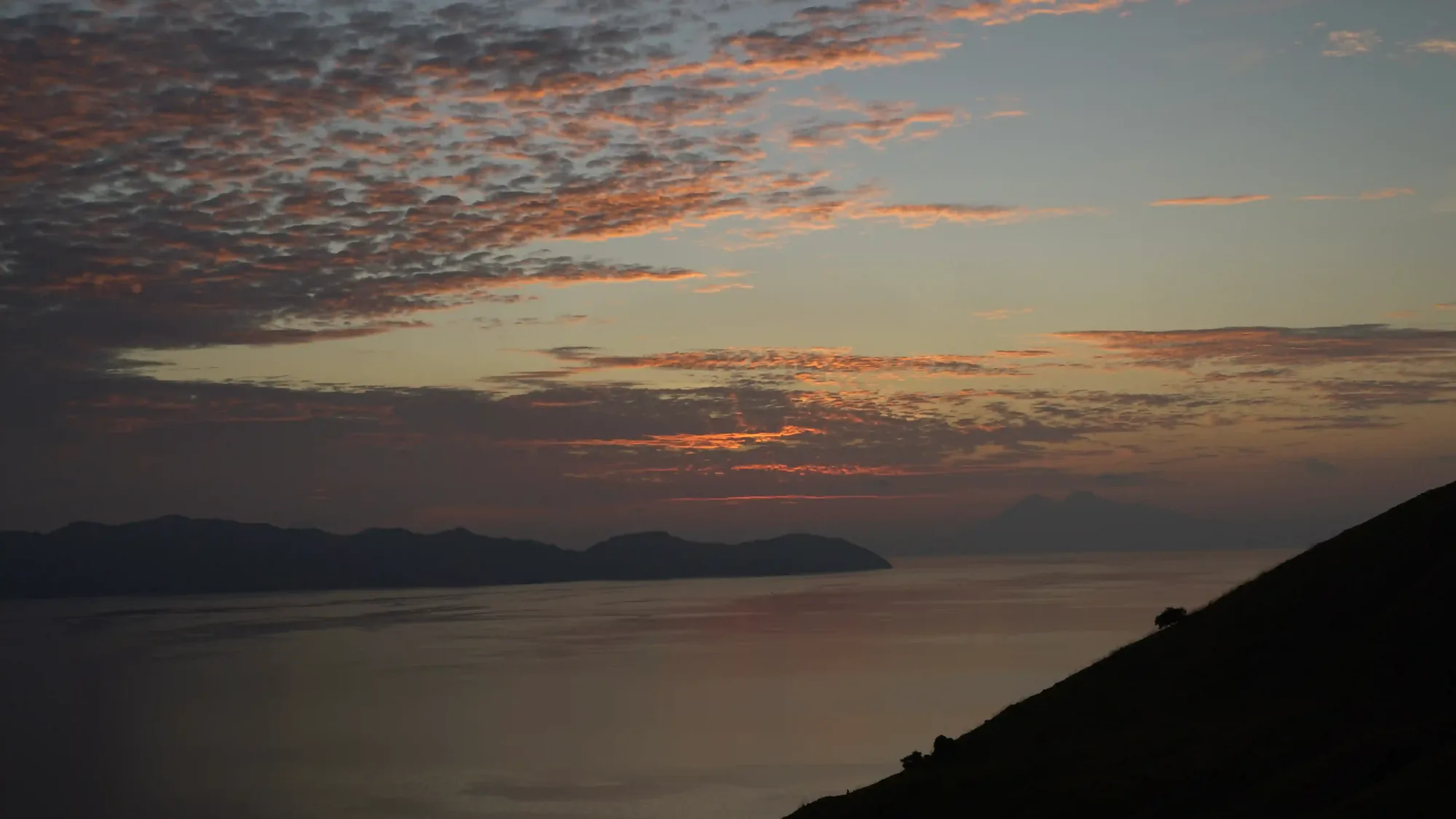
August Weather in Labuan Bajo
August sits firmly inside Labuan Bajo’s dry season, meaning low rainfall, generally sunny days, moderate humidity and steady sea conditions well-suited to boat travel — the trade-off being it’s also one of the driest, dustiest stretches on land, since the region’s dry-season landscape turns notably brown compared with the wetter months.
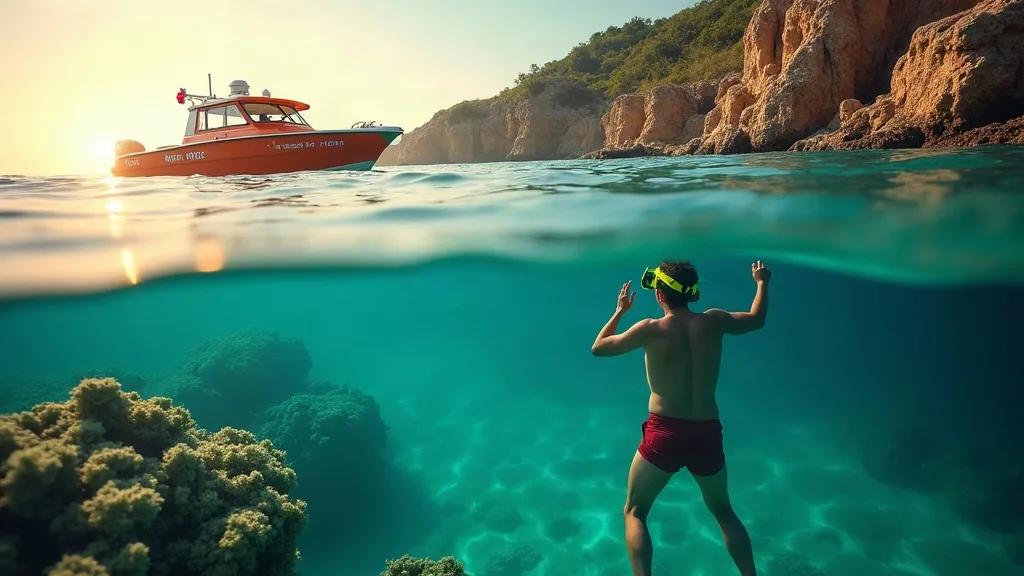
What does the dry season actually feel like on the ground in August?
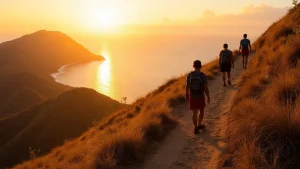
Expect warm, mostly sunny days with low rainfall probability, cooler evenings than the midday heat suggests, and a landscape that’s visibly drier than the lush green look Flores takes on during the wet season. This is part of why the season is prized for boat travel — calmer seas and clearer skies — while also being the reason hillsides around Labuan Bajo and the islands within Komodo National Park look golden-brown rather than green during August specifically, a normal seasonal appearance rather than any sign of drought stress.
How does August sea condition compare to other months for boat travel?
Sea conditions during the core dry season, including August, are generally more stable and predictable than the wetter months, with lower swell and reduced storm risk supporting smoother inter-island transits. This doesn’t eliminate the park’s genuinely strong, current-driven water in specific straits and dive sites — that’s a year-round geographic feature, not a seasonal one — but it does reduce the additional variable of storm-driven rough weather layering on top of it. See our Komodo Boat Safety guide for how operators plan around both factors regardless of season.
Is August hot in Labuan Bajo, and how should you dress for it?
Daytime temperatures run warm and humidity is moderate rather than extreme by tropical standards, but direct sun exposure on an exposed boat deck or the shadeless Padar trail can feel considerably hotter than the ambient temperature suggests. Light, breathable clothing, a wide-brim hat, and reef-safe sunscreen reapplied through the day are the practical essentials — see our packing notes in the 3-day itinerary guide for the fuller list relevant to boat trips specifically.
Does August weather ever disrupt boat itineraries?
Disruption is less common in August than in shoulder or wet-season months, given the generally stable dry-season pattern, but it isn’t impossible — occasional wind events or swell can still prompt a captain to adjust timing or anchorage choice for safety. This is a normal, sensible operator response rather than a red flag; see our boat safety standards guide for how legitimate operators handle weather-driven schedule changes.
How does August compare to the shoulder months around it?
| Period | Weather pattern | Crowd level |
|---|---|---|
| July–September (including August) | Driest, most stable — peak dry season | Busiest of the year |
| April–May, October | Good weather, occasional transitional variability | Moderate |
| Wetter months (outside dry season) | Higher rainfall chance, more variable seas | Quietest |
See our guide to Komodo’s crowd patterns for how August’s favourable weather interacts with its peak-season demand.
What should you actually pack differently for August versus the wetter months?
- Less rain gear, more sun protection — a light rain jacket is still sensible as backup, but sun exposure is the bigger practical concern in August.
- Layer for cooler evenings on the water, since boat-deck temperatures after sunset can feel noticeably cooler than the daytime heat.
- Dust-appropriate footwear for the drier, dustier trail conditions on land excursions compared with wet-season hikes.
How does August weather affect visibility for photography and sightseeing?
Clear dry-season skies generally mean better visibility for the wide, sweeping views Padar’s viewpoint is known for, along with generally good conditions for underwater photography given the season’s clearer water. This is one of the practical, non-crowd-related reasons August remains a popular month despite the busier conditions — the visual payoff at the park’s headline viewpoints and reefs tends to be at its best during this window.
Does August humidity make outdoor activity uncomfortable?
Humidity is present but generally more moderate than in wetter months, and the bigger comfort factor is direct sun exposure rather than humidity itself — the exposed, largely shadeless terrain on Padar and the dragon trails means sun protection and hydration matter more than worrying about humidity specifically. Early starts (the standard 5:00–5:30am departure for Padar’s sunrise hike) are partly a strategy for avoiding the worst of the midday heat and glare rather than purely for the sunrise view itself.
Is there a meaningful difference between early August and late August weather?
Both sit within the same core dry-season pattern, so day-to-day variation within the month tends to reflect normal short-term weather fluctuation rather than any systematic shift between early and late August specifically. If your dates are flexible within the month, this isn’t a major factor to plan around — the bigger practical consideration remains booking early enough to secure your preferred boat and SiOra session given August’s overall high demand.
How should you prepare for the contrast between hot days and cooler evenings?
Layering is the practical answer — light, breathable clothing and strong sun protection for daytime activity, with a light jacket or long-sleeve layer available for evenings on deck once the sun goes down and any breeze picks up over open water. This temperature swing surprises some first-time visitors who pack only for daytime heat and find themselves underprepared for a cooler evening on an open sundeck.
Does August weather affect Padar’s viewpoint hike specifically?
Clear skies typical of August generally reward the Padar hike with excellent visibility across the surrounding islands and bays, though the same clear conditions mean zero shade on the ascent — sun protection and an early start matter more here than at almost any other stop on a standard itinerary.
Is wind a bigger factor than rain for August boat comfort?
For most travellers, yes — August’s low rainfall means wind and its effect on sea state matter more day-to-day for comfort aboard the boat than any real chance of a rained-out activity, which is one more reason captains monitor wind forecasts closely even during a month with such a low overall storm risk.
How does the August dry-season landscape look different at sea versus on land?
While the islands’ hillsides turn visibly golden-brown, the surrounding water itself doesn’t change colour with the season in the same dramatic way — underwater visibility and reef colour stay governed more by current, plankton bloom timing and depth than by the surface-level dry-season landscape shift visitors notice on the islands themselves.
August viewpoints and sea life around Labuan Bajo
Dry season skies in August give you clear, golden light over Labuan Bajo’s viewpoints. Hills such as Sylvia Hill, Bukit Amelia and Love Hill (Bukit Cinta) look dusty and brown rather than green, but the air is usually clear so the island silhouettes and evening colours photograph very well.
Viewpoint steps, heat and “real” town feel
Each viewpoint has a slightly different climb. Puncak Waringin uses a series of stepped paths that feel like a short urban walk. Love Hill (Bukit Cinta) and Bukit Amelia are steeper dirt and rock paths with many uneven natural “steps”, but the ascents are still relatively quick if you pace yourself.
In August the afternoon sun is intense and the tracks are exposed, so you feel the heat much more than the distance. Plan hill walks for early morning or late afternoon, carry water, and wear trainers rather than sandals for the loose, dusty sections.
Down in town, Labuan Bajo feels split between a tourist-facing seafront and a more everyday Indonesian neighbourhood behind it. August is busy, yet traditional markets, small warungs and local houses still sit just a short walk uphill from the main harbour road.
Sea conditions for turtles and island ridge hikes
Sea conditions in August are usually calm enough for relaxed snorkelling with green turtles around several nearby reefs. The clearer water and more consistent surface conditions make it one of the better months to spot them grazing on sea grass or resting on coral slopes.
The Gili Lawa Darat ridge hike, further inside Komodo National Park, is typically hot, dry and very exposed at this time of year. Expect a short but quite steep climb on dusty ground with no shade, best timed for sunrise or late-afternoon viewpoints to avoid the harshest heat.
Frequently asked questions
Is there any real chance of rain during an August Komodo trip?
Some chance always exists, but rainfall probability is at its lowest point of the year during August’s core dry-season window, making weather-related disruption less likely than in shoulder or wet-season months.
Why do the islands look brown rather than green in August photos?
This is the normal seasonal dry-season appearance across Komodo National Park’s islands, including Padar’s famous viewpoint — the landscape turns green again once the wet season returns later in the year.
Is August generally considered the best month, weather-wise, to visit?
It’s one of several strong dry-season months (roughly May through September) rather than a uniquely superior single month — August’s main distinguishing feature versus the rest of that window is higher visitor demand, not meaningfully different weather.
See current August departure options that plan around this weather pattern.
Ask Komodo Luxury about August travel conditions on WhatsApp →
Related reading: Diving Conditions in August · Avoiding the Crowds · Bali to Labuan Bajo Packages in August
How many stairs or steps do Labuan Bajo viewpoints involve?
Viewpoints around Labuan Bajo use a mix of constructed stairs and rough natural steps. Puncak Waringin feels like a short town climb on stepped paths, while Love Hill (Bukit Cinta) and Bukit Amelia are steeper dirt tracks with many informal steps. None take long, but the August heat makes them feel more demanding, so bring water.
Does Labuan Bajo feel like an authentic Indonesian town or a tourist bubble?
The main waterfront strip feels very visitor-focused in August, with tour desks, cafes and dive shops. Walk a few streets inland and you reach markets, schools and local homes that feel much more like a regular Indonesian town. You can easily move between both worlds on foot in a single evening stroll.
Can you see green turtles around Flores in August?
August is a reliable month for green turtle encounters around Flores and Komodo National Park. Seas are usually calmer and visibility is good, so snorkellers often see turtles feeding or resting on the reef. You still depend on the day’s conditions and a bit of luck, but chances are generally favourable in the dry season.
Where to see sea turtles in Flores?
Sea turtles are commonly spotted in the waters of Komodo National Park, particularly around the coral reefs. Popular spots include Kanawa Island, and while primarily known for mantas, Manta Point often has turtles too. Snorkelling or diving trips frequently encounter green and hawksbill turtles in these areas.
How many days should I allocate for Komodo National Park versus inland Flores?
Most visitors dedicate two to three days for Komodo National Park to fully experience its diverse wildlife and landscapes, including Komodo dragons and Padar Island. Inland Flores, offering different cultural and natural attractions like Wae Rebo or Kelimutu, generally requires an additional three to five days, depending on your interests and travel pace.
When is the peak tourist season in Labuan Bajo?
The peak tourist season in Labuan Bajo aligns with the dry season, particularly during July and August. These months offer the best weather for boat trips and island hopping, making them the busiest and often the priciest times to visit. April-June and September-October also offer excellent conditions with fewer crowds.
Does it rain in Labuan Bajo in January for a Komodo trip?
Yes, January falls within the wet season in Labuan Bajo, so rain is common and expected. While trips to Komodo National Park still operate, you should anticipate occasional heavy downpours. Sea crossings can also be rougher during this time, potentially affecting boat itineraries and comfort.
How many days do I need in Labuan Bajo if I want both Komodo wildlife and landscape photography?
To fully capture both Komodo wildlife and diverse landscapes, allocating at least three full days for your Komodo National Park excursions is recommended. This allows for visiting Komodo or Rinca for dragons, Padar for views, and various islands for snorkelling and scenic shots. Remember that flying a drone at all, like commercial photography, requires a SIMAKSI permit from the park office.