In short
Flying a drone at all, recreational or commercial, requires an advance SIMAKSI permit arranged through the Komodo National Park office as part of KLHK’s filming-permit process, and recreational flying is additionally restricted around ranger stations and active dragon-viewing trails for safety and wildlife-disturbance reasons — see our Komodo National Park Entrance Fee 2026 guide for the permit detail. Over open water well clear of ranger stations and away from other boats, a permitted flight is more likely to be waved through, but the permit itself is still required and local enforcement can vary by area and by the day’s ranger staff — always ask your guide before launching rather than assuming a spot is clear, and never fly over Pink Beach or Padar’s summit when other groups’ photos would be disrupted by rotor noise.
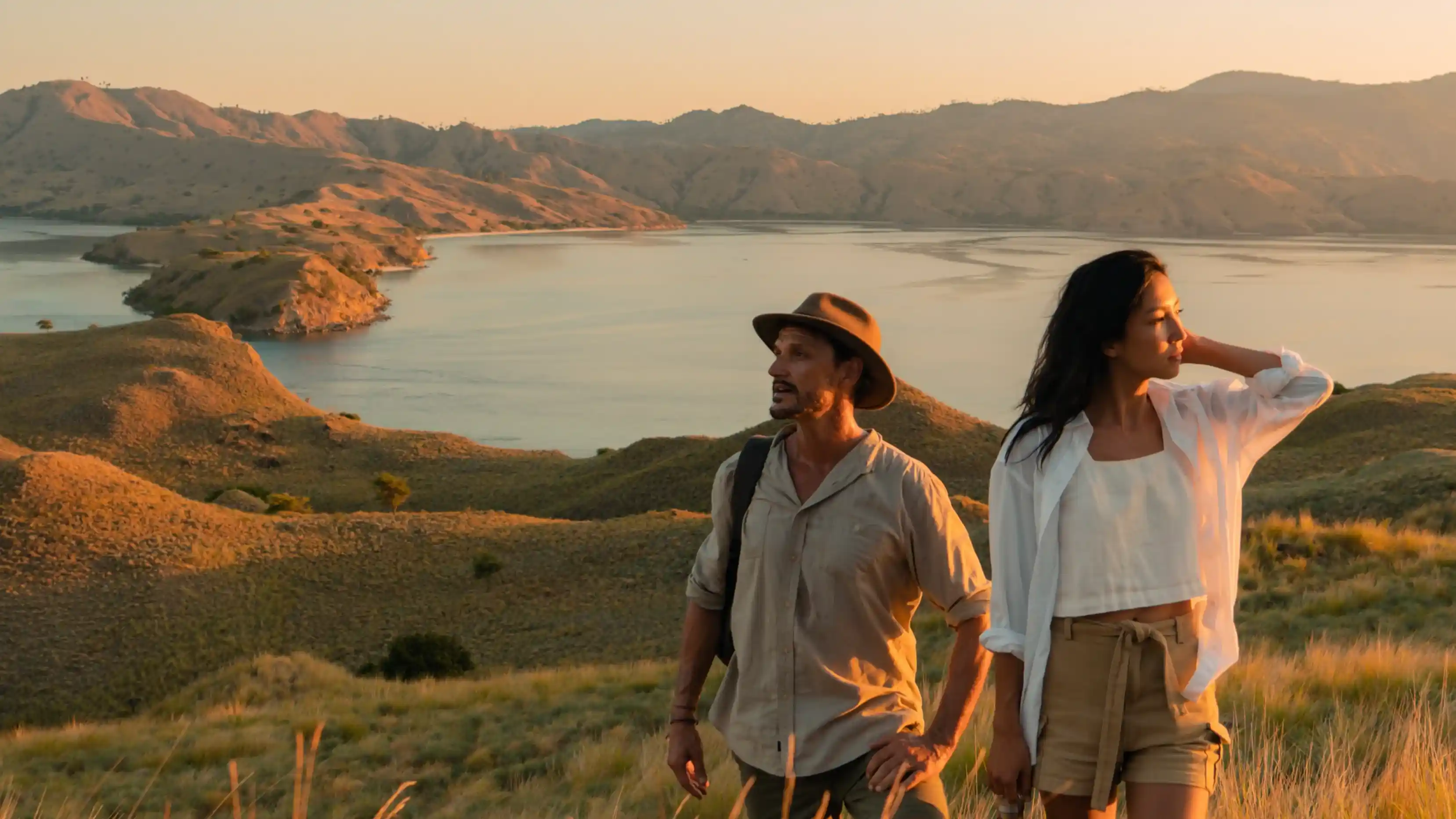
The essential shot list is Padar Island's three-bay viewpoint, Pink Beach's coral-tinted sand, Kalong Island's dusk bat flight, and a zoomed-in Komodo dragon portrait taken from your ranger's safe distance — plan your itinerary around light, not just location.
Komodo National Park photographs well almost anywhere, but a handful of spots reward planning around light and timing rather than just showing up. This guide covers the classic viewpoints, what camera settings and timing actually matter, and the drone rules that changed after 2024 — so you're not the person fumbling with a controller while a ranger explains why it's grounded.
Padar Island viewpoint
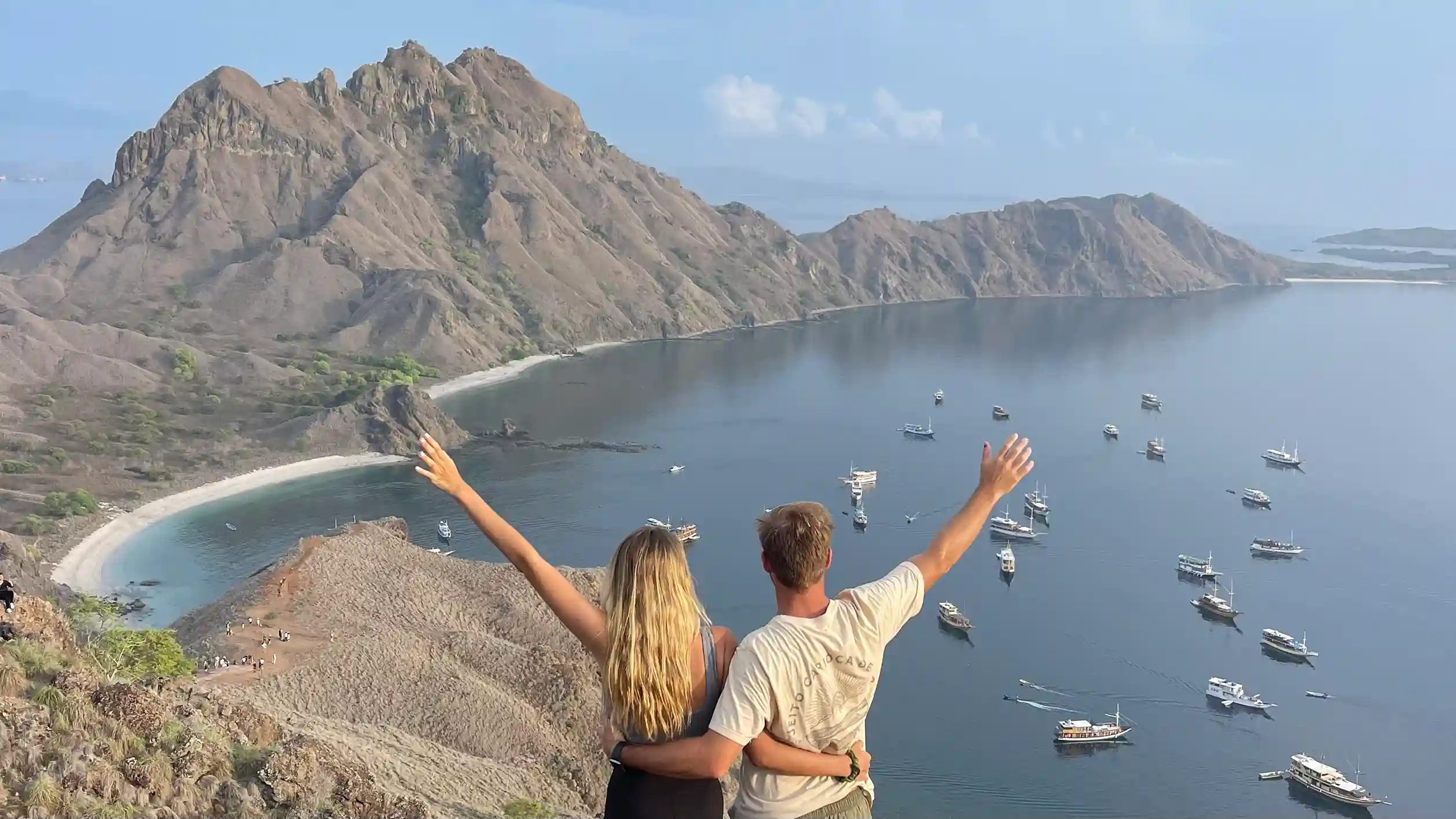
Padar’s summit view of three curved bays — one with the pink-tinted sand, two with pale gold or dark volcanic sand — is the single most-photographed frame in Komodo National Park, and for good reason. (see Padar Island’s dedicated hiking guide for the full climb breakdown) The climb is a marked stairway of several hundred steps with almost no shade, so an early departure matters for two reasons: softer, more directional light for the photo, and avoiding the exposed midday sun on the way up. Arrive as close to sunrise as your boat schedule allows; by mid-morning the light flattens and the viewpoint gets genuinely crowded with other boats’ groups on the same trail.
Pink Beach
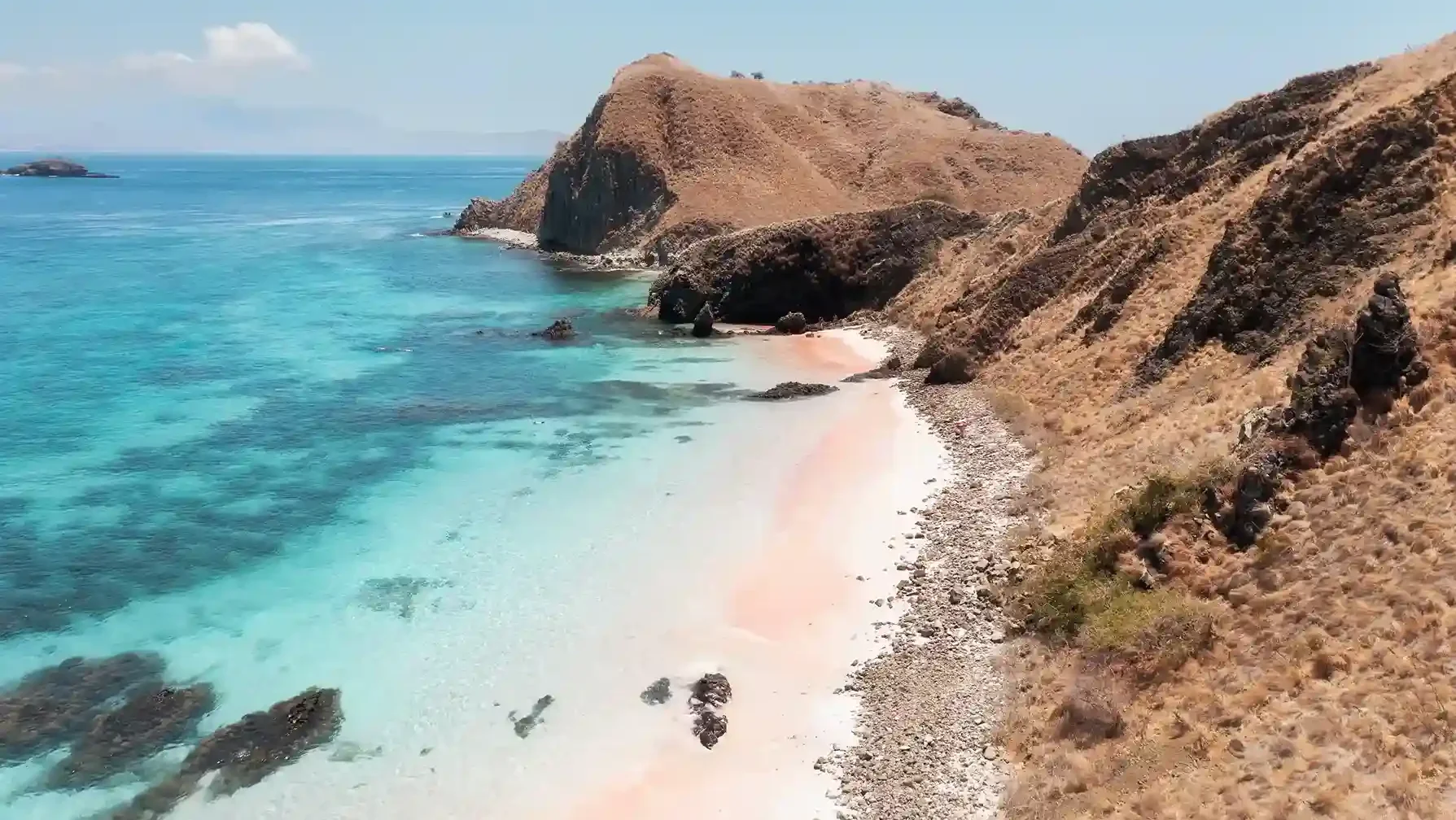
The pink tint comes from red coral fragments (foraminifera) mixed into white sand, and it photographs best in soft, low-angle light rather than the flat glare of midday — early morning or late afternoon brings out the color contrast against the turquoise water far better than a noon stop. A wide shot from slightly elevated ground (a nearby low dune or rock) captures the color gradient better than a ground-level phone shot, which tends to wash the pink tone out.
Kelor Island
Kelor’s short, steep hill climb — considerably faster than Padar’s — rewards you with a compact panorama that includes Padar itself in the distance along with the surrounding straits, making it a good lower-effort alternative or add-on if your group has mixed fitness levels. It’s also one of the better spots for a clean sunset shot back toward Labuan Bajo if your itinerary’s timing lines up.
Kalong Island’s dusk bat flight
At dusk, thousands of fruit bats stream off Kalong Island against the darkening sky — a genuinely dramatic silhouette shot if your itinerary includes a late-afternoon pass. This works best shot from the boat deck as the boat holds a stable position offshore; a longer lens or a phone’s zoom compressed against the horizon captures the scale of the colony better than a wide shot. Timing depends on your captain’s route that day, so ask in advance whether Kalong is on your itinerary if this shot matters to you.
Underwater and snorkel photography
Manta Point and the park’s healthier reef sites reward an underwater housing or a basic waterproof camera far more than trying to shoot through a mask from the surface. Midday sun, when it’s directly overhead, gives the clearest underwater light for reef and manta photography; overcast conditions flatten color noticeably underwater more than they do on land. Currents at sites like Manta Point can be strong — keep your camera secured with a wrist strap or lanyard, since a dropped camera in current water is usually gone for good.
Photographing Komodo dragons safely
The single most important rule for dragon photography: use zoom, not proximity. Your ranger sets the safe distance for the group, and no photo is worth stepping past it — dragons can move in short, fast bursts that surprise people who assume they’re always slow and lethargic. A telephoto or a phone’s zoom function from the ranger-approved distance still produces a strong portrait shot; a wide-angle close-up taken by stepping off the marked trail is exactly the kind of decision that leads to the rare injury incidents that make headlines. Full trekking safety rules are on our Komodo National Park Safety guide.
Drone rules — what changed and what’s still allowed
Flying a drone at all, recreational or commercial, requires an advance SIMAKSI permit arranged through the Komodo National Park office as part of KLHK’s filming-permit process, and recreational flying is additionally restricted around ranger stations and active dragon-viewing trails for safety and wildlife-disturbance reasons — see our Komodo National Park Entrance Fee 2026 guide for the permit detail. Over open water well clear of ranger stations and away from other boats, a permitted flight is more likely to be waved through, but the permit itself is still required and local enforcement can vary by area and by the day’s ranger staff — always ask your guide before launching rather than assuming a spot is clear, and never fly over Pink Beach or Padar’s summit when other groups’ photos would be disrupted by rotor noise.

Camera gear that actually earns its weight on a boat trip
A dry bag is non-negotiable for tender transfers between boat and shore — salt spray and a sudden splash have ended more than one trip’s photos. A wide lens (or your phone’s standard lens) covers Padar and Pink Beach; a telephoto or strong zoom covers dragons and Kalong’s bats from a respectful distance. Spare batteries matter more here than at home, since charging options aboard smaller phinisi are limited, and a lens cloth earns its keep against the salt-air haze that builds on a lens within a single day at sea.
Labuan Bajo town and harbor shots
Labuan Bajo’s own harbor, lined with phinisi masts against the hillside town, is an easy, low-effort sunset shot most visitors overlook while planning around the national park itself. A short walk or a rooftop bar along the waterfront gives a clean silhouette of the fleet at anchor — a good option on your arrival or departure evening when you’re not out on the water.
Manta Point and Batu Bolong from a photographer’s angle
Beyond straightforward reef shots, Manta Point’s draw for photography is the manta rays themselves gliding over a cleaning station — patience matters more than gear here, since mantas circle on their own schedule and a rushed group often misses the pass entirely. Batu Bolong, a small pinnacle reef often visited as a drift dive or snorkel, rewards a wide lens for its dramatic wall of color and fish density, but its stronger current means it suits confident swimmers and divers over beginners trying to manage a camera and current at the same time.
Building a shot list into your itinerary
Because light and crowd levels shift through the day, it’s worth telling your operator up front which shots matter most to you — a sunrise Padar climb, a specific manta pass, or a Kalong dusk flight all require the boat’s schedule to be built around them rather than treated as incidental stops. Private charters offer more flexibility here than a fixed open-trip schedule shared with other travelers; if photography is the priority for your trip, mention it when booking rather than after departure.

Common photo mistakes worth avoiding
The most avoidable mistake is arriving at Padar mid-morning expecting the sunrise shot everyone’s seen online — by 9–10am the light is flat and the summit crowded. The second is underestimating dragon photos: a wide-angle close-up taken by stepping off-trail is not worth the safety risk when a zoomed shot from the ranger’s distance achieves nearly the same result. The third is skipping a dry bag on tender transfers, which accounts for more ruined electronics on a Komodo trip than almost anything else.
Manta Point, Batu Bolong and Seraya: what each water site gives you
If you want recognisable photos from Labuan Bajo and Komodo, focus on three water sites: Manta Point, Batu Bolong and Seraya. All three are reachable on typical day and overnight trips from Labuan Bajo and give very different styles of images.
Manta Point and Batu Bolong underwater tips
At Manta Point you usually snorkel, not dive, so a simple action camera works well. Use a wide field of view, set video to at least 60 fps, and use a snorkel mount or hand grip so you can keep the horizon level as mantas glide past. Stay slightly to the side of the cleaning station, and let the animals come to you instead of chasing them.
Currents at Manta Point and Batu Bolong can be strong and can change quickly. Follow your guide’s entry and exit instructions, and keep your eyes on the boat rather than drifting away for a shot. Visibility is often good, but plankton that attracts mantas can make photos softer, so shoot from close range.
Batu Bolong is a dive site, not usually suitable for casual snorkelling. Underwater photos here are all about the steep reef and fish clouds. A wider lens or wet wide-angle adapter helps you fit coral and divers in one frame. Ask your dive guide to keep you on the sheltered side where current is manageable.
Seraya Island and easy “Instagram” snorkel scenes
Seraya Island, just outside Labuan Bajo, suits relaxed snorkelling and simple, shallow-water photos. The reef starts close to shore, with clear water and gentle current on most days. You can take split-level shots in waist-deep water, or have someone stand on the sand while you shoot from just below the surface.
For classic Labuan Bajo social media shots, mix island viewpoints with water scenes: Pink Beach for colour, Padar for ridgelines, Seraya for turquoise shallows, and Manta Point for silhouettes of rays. Build these into your boat itinerary so you reach them in mid-morning or late afternoon light.
Time your trip for the best light
Sunrise on Padar and dusk at Kalong have to be built into the sailing schedule, not added on the day. Raise timing with Komodo Luxury while the itinerary is still being set, and confirm which conditions would force a change.
📧 Voyages desk📞 +62 811-3810-8110
Related reading
Updated: August 29, 2026 · Originally published: August 25, 2026