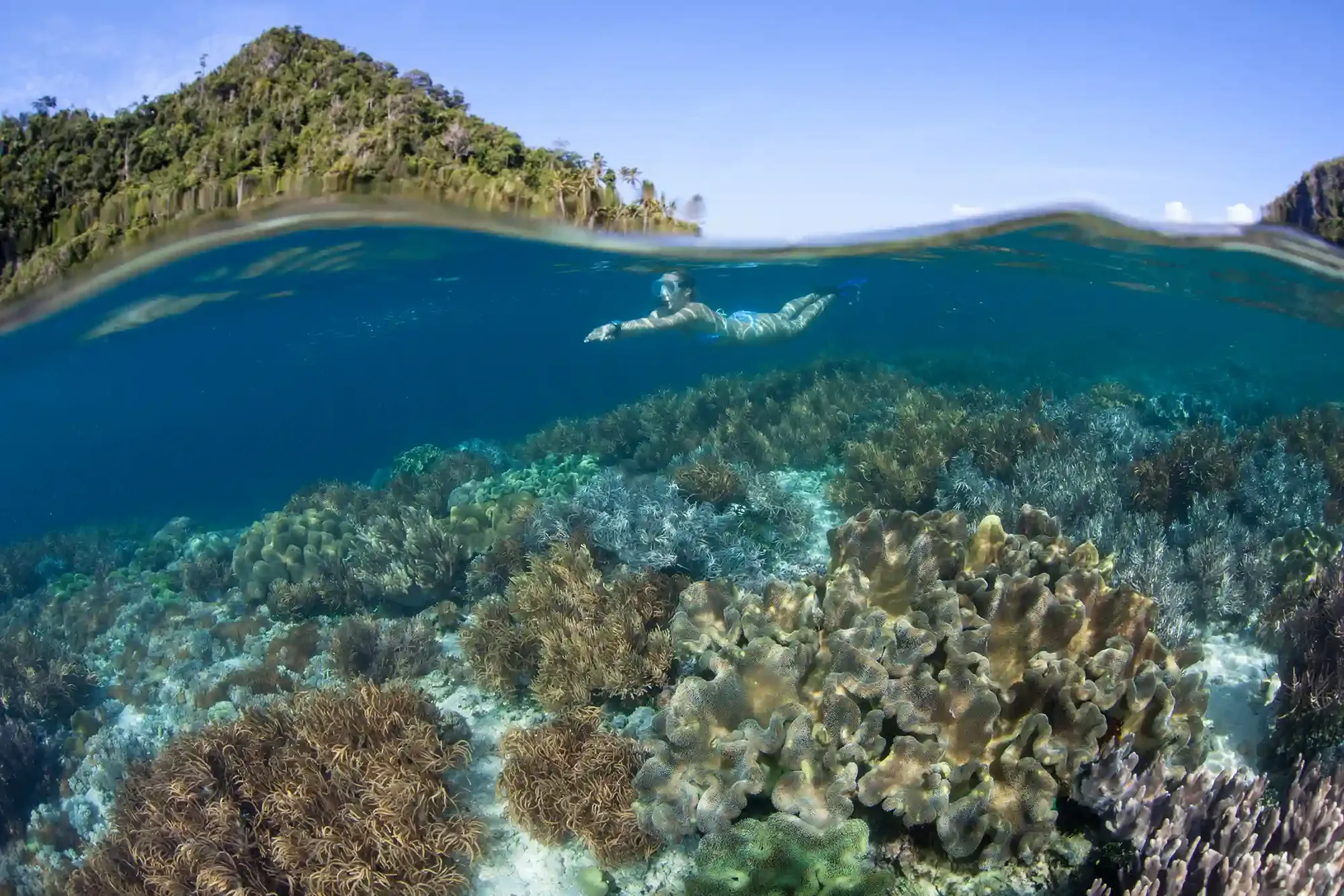
Komodo Dive Conditions Month by Month
Answer: Komodo National Park splits into two seasonal patterns: the north (Batu Bolong, Castle Rock) is best April–November with warmer water (27–29°C) and the clearest visibility, but June–September also brings its strongest currents; the south (Manta Alley) is best October–April with cooler, upwelling-driven water (20–25°C) and more variable visibility, but this is peak manta season.
Verified 26 August 2026. Behind “Komodo Dive Conditions Month by Month” sit Komodo Luxury’s published rates — named on the page so a reader can go and check the original.
Why does Komodo have two different diving seasons?
The park sits at a mixing point between warmer water flowing from the west and cooler, nutrient-rich upwelling from the Indian Ocean to the south, which is also what makes the south so productive for mantas and plankton-feeding species.1 This creates a genuine north-south split rather than one park-wide “best month” — a month that’s excellent diving in the north can be a mediocre month in the south, and vice versa.
North Komodo (Batu Bolong, Castle Rock): month-by-month
Best overall conditions run roughly April to November, with June to September typically cited as the clearest visibility window (often 20–30 m) and also the period of the strongest currents at exposed pinnacle sites.1 Water temperature in the north commonly sits around 27–29°C. The trade-off here is direct: the same dry-season conditions that produce the best visibility also produce the strongest current at exposed sites like Batu Bolong and Castle Rock, so “best visibility” and “easiest diving” are not the same thing in these months.
South Komodo (Manta Alley): month-by-month
Best conditions for manta activity run roughly October to April, peaking in the wet season (November–March) when plankton blooms draw mantas to cleaning stations.1 Water is noticeably cooler here, commonly 20–25°C due to upwelling, and visibility is more variable, sometimes as low as 5–20m depending on the month and the day’s upwelling conditions. A 5mm wetsuit is commonly recommended for this zone specifically, rather than the lighter exposure protection that suffices in the warmer north.
Which months suit beginner divers?
The transition months — March–May and October–November — often give a reasonable middle ground: the north is improving or still good without hitting its peak current strength, and the south hasn’t fully committed to its coolest, most current-affected upwelling period. June to September’s strongest north currents and the deep wet-season south are both better suited to more experienced divers comfortable with current diving.
Seasonal snapshot
| Period | North Komodo | South Komodo (Manta Alley) |
|---|---|---|
| Dec-Feb | Rougher, less predictable | Best manta window, variable visibility |
| Mar-May | Improving rapidly | Transitioning out, still active |
| Jun-Sep | Best visibility, strongest currents | Cooler, upwelled water |
| Oct-Nov | Still very good, transitioning | Mantas returning, season reopens |
What should you pack for Komodo diving across seasons?
A 3mm shorty is often enough for warmer north-only itineraries; a 5mm full wetsuit is the safer default if your itinerary includes the south, given the noticeably cooler upwelling water there.1 A surface marker buoy and reef hook are standard current-diving equipment worth having regardless of season, since even “calmer” months can produce a stronger-than-expected current on a given dive.
Does the season affect which islands you visit, not just dive sites?
Indirectly, yes. An itinerary weighted toward diving will naturally prioritise whichever zone (north or south) is in season, which affects which trekking islands and viewpoint stops fit naturally into the same route. See our island-hopping route planner for how dive-site season interacts with the sequencing of Padar, Komodo, and Rinca stops on the same trip.
How does visibility differ from current strength, practically?
These are two separate variables that don’t always move together. A month can have excellent visibility and strong current at the same time (common in the north’s June-September peak), or moderate visibility with gentler current. Visibility affects what you can see and photograph; current affects how physically demanding the dive is and what skill level it requires. Ask your operator for both figures, not just one, when planning a trip around specific conditions.
Do liveaboard itineraries adjust routes based on season?
Yes, experienced operators typically weight a multi-day itinerary toward whichever zone is currently performing best, sometimes spending more days in the north during peak dry-season months and shifting south-weighted for wet-season manta trips. If a specific dive site matters most to your trip, confirm with the operator that their planned season and route actually includes it, rather than assuming every itinerary covers the whole park evenly.
How Komodo’s dive seasons affect currents, caves and cash
The famous sites with strong currents, such as the Cauldron and Batu Tiga, feel very different across the year. In the peak of the dry season, when many liveaboards focus on the north, tidal exchanges can create fast horizontal flow and sudden downwellings. Guides usually time entries for slack or early flood to keep things manageable.
Current strength at the Cauldron and Batu Tiga
At the Cauldron you usually drift in, then hook in on the lip. On big-tide days during the main season, expect powerful surges and rapid changes in direction. Off-peak months with smaller tides tend to give gentler drifts, with more time to look for sharks and rays before the “washing machine” effect builds.
Batu Tiga is a more challenging dive almost year-round because it is very exposed. Swell and current can combine here, especially around transitional months when wind and tide oppose each other. Conditions sometimes look fine at the surface but feel very different at 15–20 metres, so operators often decide on arrival whether it suits your experience level that day.
Short surface stop at Batu Cermin and paying for souvenirs
Many boats add a quick visit to Batu Cermin cave before or after diving, as it sits close to Labuan Bajo. Bring solid walking shoes or sandals with grip, a small torch or headlamp, and a dry bag for your phone if you want photos of the mirror-like rock walls inside.
Light clothing that you can climb in is better than just a sarong or wet swimsuit, as the cave passages can be narrow and damp. For buying snacks or souvenirs around Komodo National Park and in town, carry small-denomination cash. Some stalls and small kiosks now accept QR or card, but it is far from universal.
Frequently asked questions
What is the best month overall for Komodo diving?
There isn’t one single best month for the whole park — it depends on whether you’re prioritising the north (best April-November, strongest currents June-September) or the south’s manta season (best October-April, peaking November to March).
How cold does the water get in south Komodo?
Upwelling can bring temperatures down to roughly 20-25°C in the south, noticeably cooler than the north’s 27-29°C, which is why a thicker wetsuit is commonly recommended there.
Is Komodo diving suitable for beginners year-round?
Some sheltered sites suit beginners in most months, but the park’s signature current-diving sites (Batu Bolong, Castle Rock, Manta Alley) are generally better suited to divers with some current experience, especially in peak-current months.
How strong are the currents at the Cauldron in Komodo?
The Cauldron can range from a relaxed drift to very strong, swirling currents, especially in the heart of the dry season and around larger tidal ranges. Guides usually plan the dive for slack or early flowing tide and may skip it if conditions build into downcurrents or uncontrolled washing-machine-style flow unsuitable for your experience level.
Is Batu Tiga in Komodo a challenging dive site?
Yes. Batu Tiga is exposed to both current and swell, so it is usually treated as an advanced dive. Even outside peak season you can meet strong lateral flow and choppy surface conditions. Operators typically assess it on the day and may brief negative entries, reef hooks, or decide to move if conditions are too demanding.
Do souvenir sellers around Komodo National Park accept cashless payment?
Do not rely on cashless payment. Some shops and a few stalls in Labuan Bajo take cards or local QR systems, but many small souvenir sellers and snack kiosks still work in cash only — bring enough small rupiah notes for market buys, drinks and simple meals around the harbour and jetties.
Are currents strong around Komodo Islands?
Yes — currents are the defining feature of diving here, and the main reason the marine life is so rich, since they carry nutrients through the park and draw abundant pelagic life. Some sites sit sheltered enough to stay calm. Others, Batu Bolong and The Cauldron among the best known, are famous for powerful flow and suit experienced divers. Drift diving is the norm at many sites: exhilarating, but it asks for some current experience.
Is it better to visit Komodo National Park in the dry season or shoulder season?
The shoulder seasons, April to June and September to October, often give the best balance: diving conditions and surface weather close to the July–August peak, but with fewer crowds and often lower prices. The dry season itself runs April to October.
What is the water temperature in Komodo National Park?
Water temperatures in Komodo National Park vary significantly between the northern and southern areas, and also seasonally. Northern sites generally have warmer waters, while the southern sites, particularly Manta Alley, can experience cooler upwellings, especially during the dry season. Divers should be prepared for a range of temperatures.
When is manta season in Komodo exactly what months?
Mantas can turn up year-round, but at Manta Alley in the south the reliable window runs roughly October to April, peaking November to March. That is the wet season, when plankton blooms draw mantas to the cleaning stations.
What about shoulder-season gaps in the data?
Named operator sources agree far more closely on the peak months in each zone than on the exact turning points between seasons, which shift year to year with broader monsoon timing. Treat March, October and November as genuine transition windows. Conditions in those weeks can lean either way, and no fixed calendar date marks the changeover. If your trip falls in one of them, ask your operator for their current on-the-water read rather than relying on a general seasonal chart.
How does surface weather differ from underwater conditions?
A calm, sunny surface day doesn’t guarantee mild current underwater, and conversely a choppier surface day can still have manageable conditions at depth on a sheltered site. Dive briefings before entry should cover the specific day’s current read rather than relying solely on the general seasonal pattern, since day-to-day variation within any given month can be significant, particularly around tide changes.
Should non-divers care about this seasonal split too?
Yes, indirectly. Snorkellers at Pink Beach or during a manta stop are affected by the same underlying current and visibility patterns as divers, even in shallower water, and the same north-south seasonal logic applies to planning a strong snorkelling day. If snorkelling quality specifically matters to your trip timing, use this same month-by-month guidance rather than assuming it only applies to certified divers.
Plan a season-matched dive trip with Komodo Luxury
For dive-focused itineraries matched to the right season, see the Komodo liveaboard page.
Related Komodo Luxury pages: Fleet and vessels · Komodo boat tour · Private trip.
Source: [1] Aggregated named dive-operator and liveaboard sources (Komodo Resort, Neptune Liveaboards, Labuan Bajo Diving, Komodo Diving, ScubaDiverLife, TechDiveTravels), 2025-2026.